Topic Battle

Where Everything Fights Everything

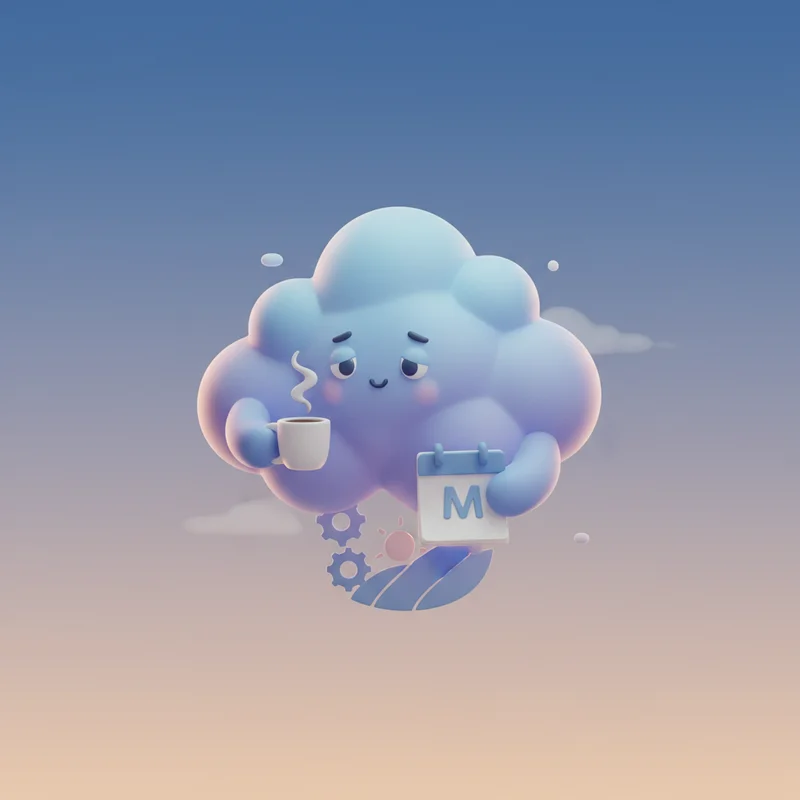
Monday

Monday

The day that exists purely to remind you that weekends are finite. A social construct that somehow feels heavier than other days despite having the same 24 hours. Coffee's best customer.

VS
Tiger

Tiger

Largest wild cat species featuring distinctive stripes and solitary hunting prowess across Asian forests.

Battle Analysis

Cultural impact monday Wins
70%
30%
Monday Tiger

Monday

Monday has spawned an entire cultural ecosystem of shared suffering. The Boomtown Rats' 'I Don't Like Mondays' achieved chart success on the strength of universal relatability. 'Case of the Mondays' entered the cultural lexicon through Office Space, requiring no explanation to any viewer familiar with employment. Monday memes constitute a significant percentage of workplace internet traffic. This cultural production represents humanity's collective processing of cyclical dread - art born from the particular anguish of weekly reset. Monday has, quite literally, inspired more creative works than any big cat.

Tiger

The tiger's cultural impact spans millennia and continents. From William Blake's 'Tyger Tyger, burning bright' to the Chinese zodiac, from Shere Khan to Tony the Tiger, the species has embedded itself into humanity's mythological consciousness. Tigers symbolise power, danger, beauty, and wild freedom across dozens of cultures. Conservation efforts have mobilised billions in funding precisely because of this cultural significance. Yet much of this impact derives from the tiger as symbol rather than lived experience - a beautiful abstraction of danger rather than danger itself.

VERDICT

Monday generates constant contemporary cultural content; tiger's impact, whilst profound, is largely historical and symbolic.
Unpredictability tiger Wins
30%
70%
Monday Tiger

Monday

Monday's arrival possesses an almost supernatural predictability. It materialises every seven days with the precision of celestial mechanics, allowing no possibility of surprise or evasion. Paradoxically, this very predictability amplifies its terror. One cannot outrun Monday, outsmart it, or bargain with it. It arrives whether one is prepared or not, rested or exhausted, willing or defiant. The inevitability becomes its own form of psychological torture. Calendar applications across the globe serve as countdown timers to weekly dread, each notification a reminder of approaching doom.

Tiger

The tiger represents the quintessence of unpredictability in the natural world. Its hunting strategy relies entirely upon surprise - the explosive ambush from concealment that gives prey no opportunity for reaction. A tiger may strike at any moment from any direction, its approach masked by evolutionary perfection in stealth. This genuine unpredictability creates acute terror in those who dwell within striking distance. However, for most of humanity, tiger attacks occupy the same category as lightning strikes: theoretically possible but practically irrelevant to daily existence.

VERDICT

The tiger's ambush strategy represents true unpredictability; Monday's threat lies precisely in its clockwork inevitability.
Survival instinct tiger Wins
30%
70%
Monday Tiger

Monday

Surviving Monday requires psychological fortitude rather than physical prowess. The coping mechanisms humanity has developed are numerous: caffeine consumption spikes by 40% on Mondays, motivational content floods social media channels, and elaborate morning routines serve as ritual armour against the day's assault. Some individuals have evolved remarkable adaptation strategies - the compressed work week, remote working, or the strategic deployment of annual leave. Yet fundamentally, Monday survival means simply enduring until Tuesday arrives.

Tiger

Tiger survival demands the activation of every primitive instinct encoded in human DNA. The encounter triggers the full flight-or-fight response: adrenaline floods the system, time perception alters, and the body prepares for either explosive escape or desperate combat. Survival strategies are brutally simple - appear large, make noise, never run, never turn your back. These instructions, whilst helpful, offer limited guarantee against 300 kilograms of muscle capable of leaping 10 metres horizontally. The survival instinct engaged by tigers is existential; that engaged by Monday is merely motivational.

VERDICT

Tiger encounters trigger genuine survival instincts; Monday activates only coping mechanisms and caffeine dependency.
Global recognition monday Wins
70%
30%
Monday Tiger

Monday

Monday enjoys universal recognition across virtually every culture that has adopted the seven-day week - which is to say, nearly all of them. The concept transcends linguistic barriers; whether one calls it Lundi, Montag, or simply signals exhaustion whilst pointing at a calendar, the meaning transfers instantly. Monday has achieved what few phenomena can claim: complete global saturation as a symbol of reluctant obligation. Brand campaigns, social media hashtags, and the entire genre of workplace humour revolve around Monday's universally acknowledged burden.

Tiger

The tiger commands extraordinary global recognition despite its limited geographical range. It serves as a national symbol for multiple nations, features prominently in mythology from Korea to India, and dominates popular culture from children's literature to corporate branding. Panthera tigris is arguably the world's most recognised big cat, surpassing even the lion in contemporary cultural consciousness. Yet this recognition is often divorced from the actual animal - most humans who 'know' the tiger have never seen one outside a zoo or screen.

VERDICT

Monday is experientially recognised by billions weekly; tiger recognition is largely symbolic and media-derived.
Psychological impact monday Wins
70%
30%
Monday Tiger

Monday

The psychological footprint of Monday extends far beyond its 24-hour duration. Studies from the British Psychological Society indicate that anticipatory anxiety begins affecting individuals as early as Sunday afternoon, a phenomenon colloquially termed the 'Sunday Scaries'. This effectively extends Monday's psychological reach to approximately 36 hours per week. The condition manifests across all demographics, affecting an estimated 3.5 billion members of the global workforce with varying degrees of severity. Heart attack rates spike by 20% on Mondays, a statistical reality that speaks to its profound physiological impact.

Tiger

The tiger's psychological impact, whilst undeniably intense, operates within a limited geographical radius. Approximately 4,500 wild tigers remain, concentrated across 13 Asian nations. For the vast majority of humanity, tiger-related anxiety exists purely in the theoretical realm. Those dwelling within tiger territory experience genuine fear, yet this affects fewer than 500 million individuals globally. The tiger's psychological impact, whilst profound for the few, simply cannot match Monday's democratic distribution of dread across the entire working population of Earth.

VERDICT

Monday affects 3.5 billion workers weekly with measurable physiological consequences; tiger fear remains geographically limited.
👑

The Winner Is

Monday

54 - 46

The assessment of these two formidable entities reveals a counterintuitive truth: the abstract terror of Monday surpasses the concrete threat of the tiger for the simple reason that Monday cannot be avoided. The tiger, for all its lethal efficiency, occupies a defined ecological niche. One may live an entire existence without encountering Panthera tigris outside controlled environments. Monday, however, arrives without fail, without mercy, and without the possibility of geographical escape.

The tiger wins decisively in categories requiring genuine physical threat - its unpredictability and the survival instincts it triggers are beyond Monday's capacity. Yet in the metrics that matter to modern existence - psychological impact, global recognition, and cultural relevance - Monday emerges triumphant. It is the more democratic adversary, distributing its burden equally across humanity rather than concentrating its menace in shrinking habitats.

Monday
54%
Tiger
46%

Share this battle

More Comparisons