
Topic Battle

Where Everything Fights Everything

Monday

Monday

The day that exists purely to remind you that weekends are finite. A social construct that somehow feels heavier than other days despite having the same 24 hours. Coffee's best customer.

VS
Tokyo

Tokyo

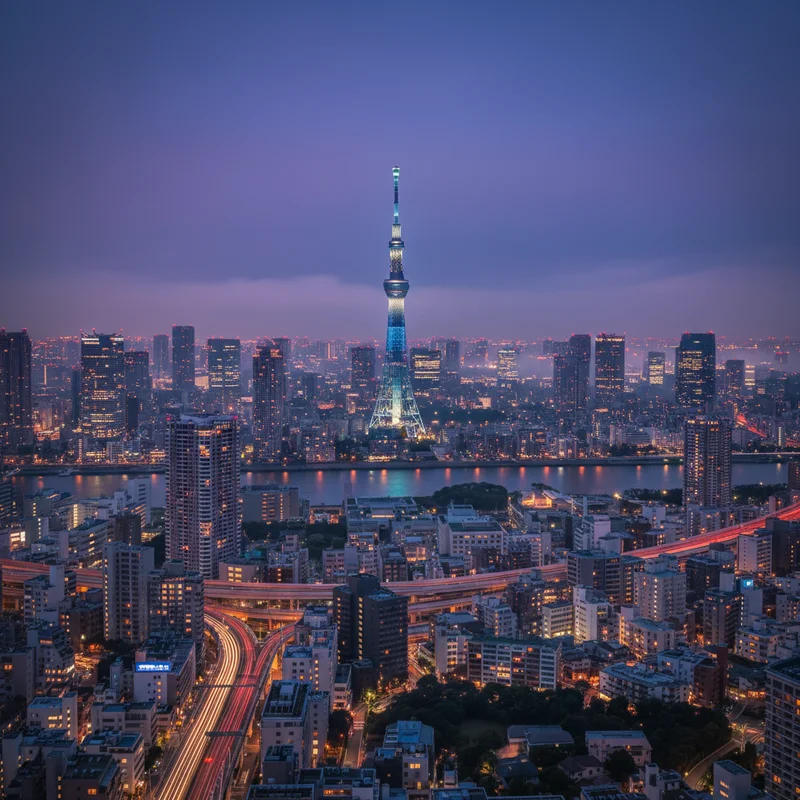
Neon-lit metropolis blending ancient and ultramodern.

Battle Analysis

Efficiency Tokyo Wins
30%
70%
Monday Tokyo

Monday

Monday operates with the brutal efficiency of inevitability. It requires no infrastructure, no maintenance budget, and no urban planning committee. Every seven days, without fail, Monday arrives—regardless of political instability, natural disasters, or the collective prayers of office workers worldwide.

The temporal mechanism underlying Monday has functioned flawlessly for approximately 4.5 billion years, predating both human civilisation and the concept of work itself. This represents an unmatched operational track record.

However, critics note that Monday's efficiency is purely destructive—it excels only at terminating weekends and manufacturing despair.

Tokyo

Tokyo's efficiency borders on the supernatural. The city processes 8.7 million daily train passengers with an average delay of merely 18 seconds per journey. When a train arrives 20 seconds late, the railway company issues formal apologies.

The metropolis has elevated efficiency to an art form: capsule hotels maximise sleeping density, conveyor belt sushi optimises food delivery, and vending machines dispense everything from hot coffee to fresh eggs at any hour.

Tokyo demonstrates that efficiency need not be oppressive—it can, remarkably, be civilised.

VERDICT

Tokyo's efficiency creates value and order; Monday's efficiency merely ensures the reliable delivery of collective despair.
Punctuality Monday Wins
70%
30%
Monday Tokyo

Monday

In matters of punctuality, Monday is absolutely unassailable. Not once in recorded history has Monday failed to arrive precisely on schedule. It has never been delayed by weather, labour disputes, or infrastructure failures.

Monday's punctuality is, in fact, the very definition of punctuality—the standard against which all other arrivals are measured. The Gregorian calendar, the Julian calendar, even ancient Babylonian timekeeping systems all confirm: Monday comes when Monday comes.

This cosmic reliability has earned Monday a peculiar form of respect, albeit one tinged with existential horror.

Tokyo

Tokyo's relationship with punctuality has achieved legendary status. The Shinkansen bullet train network maintains an average annual delay of approximately 54 seconds—a figure that includes delays caused by earthquakes and typhoons.

In 2017, a train company issued a formal apology because a train departed 20 seconds early. This incident made international headlines, as the concept of apologising for excessive punctuality baffled Western observers.

Yet Tokyo cannot escape one fundamental truth: it remains subject to Monday, and must experience it like everywhere else.

VERDICT

Tokyo achieves remarkable punctuality through tremendous effort; Monday achieves perfect punctuality simply by existing.
Orderly chaos Tokyo Wins
30%
70%
Monday Tokyo

Monday

Monday introduces chaos through temporal mechanics. The transition from weekend freedom to weekday obligation creates a predictable yet somehow always surprising disruption to human equilibrium.

Office workers worldwide experience what researchers term "Monday Cognitive Fog"—a measurable decrease in productivity and decision-making capacity. Traffic patterns spike chaotically. Email servers groan under accumulated weekend messages.

Yet this chaos follows predictable patterns, making Monday a study in ordered disorder—chaos that arrives on schedule, disrupts according to formula, and dissipates by Tuesday morning.

Tokyo

Tokyo has mastered orderly chaos at a scale unmatched in human history. During rush hour, professional pushers compress passengers into train carriages at 200% capacity—yet this occurs with remarkable civility and zero violence.

The famous Shibuya Crossing sees 3,000 people cross simultaneously during peak periods, flowing through each other like schools of fish through coral. No traffic lights could coordinate this; it emerges from collective spatial awareness.

Earthquakes strike regularly; the city absorbs them and continues functioning. Typhoons arrive; trains merely adjust schedules slightly. Tokyo demonstrates that chaos, properly managed, becomes choreography.

VERDICT

Monday creates chaos; Tokyo has learned to conduct it like a symphony orchestra performing during an earthquake.
Cultural fusion Tokyo Wins
30%
70%
Monday Tokyo

Monday

Monday's cultural impact is remarkably universal yet monotonous. Across virtually every human society, Monday evokes similar emotions: reluctance, fatigue, and a profound sense of opportunities squandered during the preceding weekend.

The cultural expressions of Monday hatred span from The Bangles' "Manic Monday" to the Garfield comic strip's decades-long documentation of feline Monday aversion. Yet these expressions, while numerous, lack diversity.

Monday has achieved global cultural penetration whilst remaining stubbornly one-dimensional—a remarkable feat of branding, if nothing else.

Tokyo

Tokyo represents perhaps the most extraordinary cultural fusion on Earth. Ancient Shinto shrines stand metres from neon-drenched electronics districts. Traditional tea ceremonies occur in buildings overlooking robot restaurants.

The city has absorbed Western fashion, Chinese cuisine, Korean pop culture, and American technology, transforming each into something distinctly Tokyo. A single neighbourhood might contain a 400-year-old temple, a maid café, and a Michelin-starred French restaurant.

This cultural synthesis has produced phenomena that exist nowhere else: the concept of kawaii as aesthetic philosophy, the precision of Japanese service culture, and the world's most elaborate convenience store food ecosystem.

VERDICT

Monday inspires universal complaint; Tokyo inspires universal wonder through its synthesis of ancient and ultramodern.
Global influence Monday Wins
70%
30%
Monday Tokyo

Monday

Monday's global influence is total and inescapable. Every nation, every culture, every economic system must contend with Monday. Stock markets worldwide synchronise their despair. International business depends on the shared understanding that Monday means work resumes.

The International Date Line was specifically designed to ensure Monday's orderly progression around the globe, allowing the day to sweep across time zones like a temporal wave of obligation.

Few concepts achieve such universal recognition. Monday requires no translation; its meaning transcends language and culture.

Tokyo

Tokyo's influence radiates outward through soft power mechanisms that reshape global culture daily. Japanese animation, video games, fashion, and cuisine have achieved worldwide penetration that would make imperial powers envious.

The city pioneered concepts now considered universal: the convenience store as lifestyle institution, the capsule hotel, the automated vending ecosystem, the robot companion. Tokyo's influence on technology, from the Walkman to emoji, has fundamentally altered human communication.

Yet Tokyo's influence remains that of a teacher rather than a tyrant—it inspires imitation rather than demanding submission.

VERDICT

Tokyo's influence is profound but optional; Monday's influence is universal and utterly non-negotiable.
👑

The Winner Is

Tokyo

42 - 58

After exhaustive analysis, we must declare Tokyo the victor in this most unusual confrontation. The metropolis has achieved something Monday never could: it has transformed the experience of existing within its boundaries into something approaching transcendence.

Monday, for all its cosmic inevitability, remains a passive force—it arrives, it is endured, it departs. Tokyo, by contrast, actively shapes reality around itself. The city has taken the raw materials of human density, temporal pressure, and geographical limitation and forged them into a functioning miracle.

Most remarkably, Tokyo has partially domesticated Monday itself. The phenomenon of "Blue Monday" depression is reportedly less severe in Tokyo, where the week begins with such efficiency and purpose that the transition feels less like death and more like rebirth into productive harmony.

In the end, Monday is merely a day. Tokyo is a civilisation unto itself—one that has learned to make Monday almost bearable.

Monday
42%
Tokyo
58%

Share this battle

More Comparisons