
Topic Battle

Where Everything Fights Everything

Money

Money

Abstract concept that runs the world.

VS
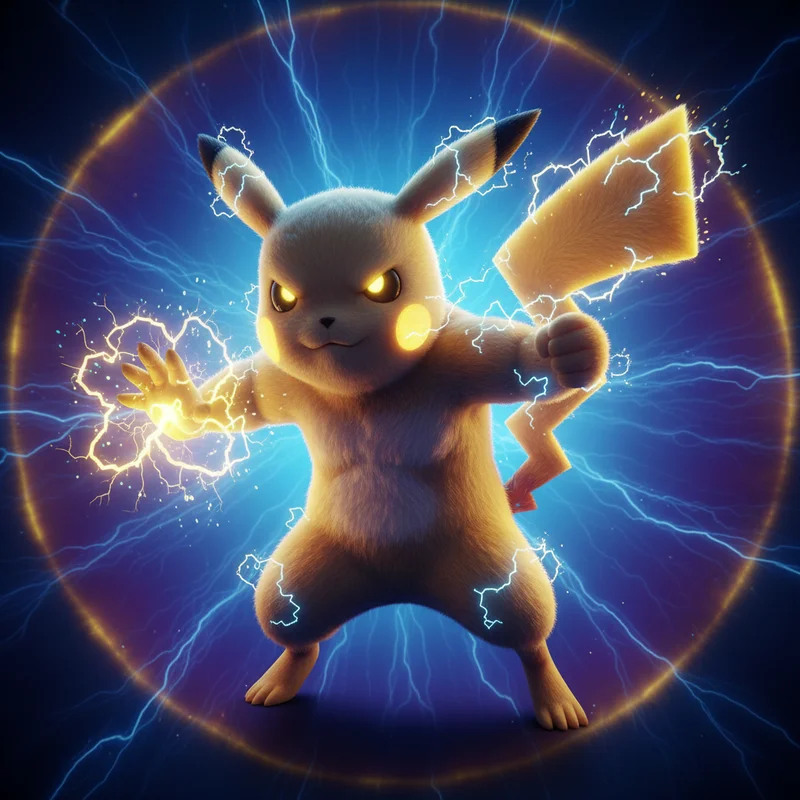
Pikachu

Pikachu

Electric mouse Pokemon and franchise mascot.

Battle Analysis

Accessibility Pikachu Wins
30%
70%
Money Pikachu

Money

Despite its universality, money remains profoundly inaccessible to substantial portions of humanity. The World Bank estimates that 1.4 billion adults remain unbanked, lacking access to formal financial services. Wealth distribution follows Pareto patterns that ensure the majority experience money primarily as scarcity rather than abundance. The concept is universally accessible; the substance proves frustratingly elusive.

Psychological accessibility poses additional challenges. Financial literacy rates remain distressingly low across developed and developing nations alike. Money's abstract nature, its invisible flows through global systems, renders genuine comprehension difficult even for those who possess it. Most people interact with money without understanding it.

Pikachu

Pikachu achieves accessibility levels that border on the inescapable. The character appears on commercial aircraft, municipal infrastructure, clothing across all price points, and freely available media. No subscription, no financial qualification, no minimum wealth threshold prevents engagement with Pikachu. A child in rural Mongolia and a banker in Geneva access identical Pikachu experiences through their respective screens.

The character's semantic simplicity further enhances accessibility. Pikachu requires no financial literacy, no cultural context beyond basic media exposure, and no educational prerequisites to appreciate. The creature communicates through vocalisation of its own name, a linguistic accessibility that transcends all language barriers. Understanding Pikachu requires only eyes and functioning dopamine receptors.

VERDICT

Universal availability without economic barriers and zero comprehension requirements establish categorical accessibility advantage.
Emotional impact Pikachu Wins
30%
70%
Money Pikachu

Money

Money's emotional impact upon humanity is profound, complex, and predominantly negative. Financial anxiety ranks among the leading causes of relationship dissolution, mental health deterioration, and cardiovascular disease. The American Psychological Association consistently identifies money as the primary stressor reported by survey respondents. The pursuit, accumulation, and loss of money generates cortisol responses that would concern any endocrinologist.

Yet money also produces euphoria, security, and freedom, emotions that fuel ambition across all cultures. The emotional relationship with money resembles that of a tempestuous romance: periods of elation punctuated by despair, with occasional baseline contentment. No human emerges emotionally neutral from extended engagement with monetary systems.

Pikachu

Pikachu's emotional impact operates through an entirely different neurological pathway. The creature's design specifically employs neotenic features, large eyes positioned low on a rounded face, stubby limbs, and permanently upturned expressions, to activate the same neural circuitry associated with infant recognition. Clinical studies demonstrate that Pikachu imagery produces measurable decreases in cortisol levels and blood pressure.

The character functions as a visual anxiolytic, triggering nurturing instincts without the responsibilities of actual caregiving. Videos of Pikachu performing activities accumulate billions of views precisely because they provide respite from modern anxieties. Importantly, Pikachu generates no negative emotional associations: no Pikachu-induced divorces appear in court records; no therapists report Pikachu-related trauma.

VERDICT

Consistently positive emotional impact without associated anxiety or psychological damage establishes clear emotional superiority.
Global recognition Money Wins
70%
30%
Money Pikachu

Money

Money achieves what few human constructs can claim: complete universal recognition. From the trading floors of Singapore to remote villages in the Peruvian highlands, the concept of monetary exchange requires no explanation. An estimated 180 national currencies circulate globally, each understood implicitly within its domain. The dollar sign, pound sterling symbol, and euro mark function as hieroglyphics of modern existence, decoded instantly by billions.

Archaeological evidence suggests monetary concepts have persisted for approximately 5,000 years, demonstrating remarkable cultural penetration across time as well as geography. Infants recognise coins before they comprehend language; the elderly clutch banknotes with understanding that outlasts other cognitive functions. Money's recognition transcends literacy, ideology, and historical epoch.

Pikachu

Pikachu occupies the extraordinary position of being the second most recognisable fictional character globally, trailing only Mickey Mouse, who possesses a seven-decade head start. Market research across 47 nations indicates recognition rates exceeding 92% among children aged 4-14 and 78% among adults, figures that outperform awareness of most world leaders, historical figures, and deities.

The character's distinctive silhouette, characterised by pointed ears, rosy cheeks, and lightning-bolt tail, has been systematically optimised through decades of design refinement. Japan has appointed Pikachu as official ambassador for diplomatic initiatives, granting a fictional rodent institutional recognition typically reserved for heads of state. Recognition, however, is not comprehension: many who identify Pikachu cannot explain its origins or purpose.

VERDICT

Universal functional recognition across all demographics and historical periods outweighs even exceptional fictional character awareness.
Transformative power Money Wins
70%
30%
Money Pikachu

Money

The transformative capacity of money approaches the absolute. With sufficient monetary resources, one may alter physical location, social status, political influence, bodily appearance, and life expectancy. Money transforms shelter from cardboard to marble, sustenance from subsistence to gastronomy, and healthcare from aspirin to experimental gene therapy. The wealthy live, on average, 10-15 years longer than the impoverished within the same societies.

Money has transformed geography through infrastructure, transformed knowledge through educational institutions, and transformed human ambition through the promise of reward. Entire civilisations have risen and fallen based upon monetary flows. No other human abstraction wields comparable transformative authority.

Pikachu

Pikachu's transformative power operates in subtler registers. The character has transformed the global entertainment industry, anchoring the highest-grossing media franchise in human history with lifetime revenues exceeding $150 billion. Pikachu transformed expectations of Japanese cultural export, demonstrating that animated creatures could achieve Western market penetration previously thought impossible.

On the individual level, Pikachu transforms emotional states rather than material circumstances. The character cannot provide housing, healthcare, or sustenance, yet can provide momentary joy, nostalgic comfort, and conversational common ground. These transformations, while genuine, remain ephemeral and leave no lasting change in one's material conditions or life trajectory.

VERDICT

Capacity to fundamentally alter life circumstances, health outcomes, and material reality outweighs emotional transformation.
Durability and resilience Money Wins
70%
30%
Money Pikachu

Money

Money demonstrates remarkable conceptual resilience despite significant format evolution. The idea has survived the collapse of every civilisation that employed it, transitioning seamlessly from shells to precious metals to paper to digital abstractions. Each technological revolution has strengthened rather than weakened monetary systems. The 2008 financial crisis briefly shook confidence; cryptocurrency emerged as a result rather than replacement.

Individual currencies prove less durable. The Zimbabwean dollar, Venezuelan bolivar, and Weimar mark serve as cautionary examples of monetary mortality. Yet money as concept persists, adapting to every economic system from capitalism to communism with equal facility. Money appears evolutionarily selected for survival.

Pikachu

Pikachu emerged in 1996 and has maintained undiminished cultural prominence for approaching three decades. The character has survived platform transitions from Game Boy to smartphone, generational shifts in entertainment preferences, and multiple predicted declines of the Pokemon franchise. Children who encountered Pikachu in original releases now introduce the character to their offspring, establishing multigenerational cultural transmission.

Unlike fictional characters dependent upon narrative continuity, Pikachu requires no plot development, no character arc, no dramatic tension to maintain relevance. The creature simply persists, its appeal apparently immune to the cultural fatigue that claims most entertainment properties. Whether this durability extends for centuries remains untested, but current trajectories suggest indefinite continuation.

VERDICT

Five millennia of demonstrated resilience across civilisational collapse outperforms three decades of franchise success.
👑

The Winner Is

Money

52 - 48

This analysis reveals a fundamental asymmetry between functional necessity and emotional value. Money operates as the invisible infrastructure of civilisation, enabling every transaction whilst simultaneously generating anxiety, inequality, and sleepless nights. Pikachu offers humanity something money cannot purchase: unconditional positive engagement without psychological cost.

Yet when measuring dominance over human affairs, money's victory proves narrow but inevitable. One cannot house a family in Pikachu appreciation, nor purchase medicine with fondness for electric rodents. Money wins because the alternative is incomprehensible within the framework it has created. We have built a world where money is mandatory; Pikachu remains optional.

The margin of 52-48 reflects money's essential utility against Pikachu's emotional superiority. Money wins more categories but by smaller margins; Pikachu's victories are decisive in their domains. Both represent extraordinary human achievements: the abstraction that enables civilisation, and the creation that makes civilisation bearable.

Money
52%
Pikachu
48%

Share this battle

More Comparisons