
Topic Battle

Where Everything Fights Everything

Money

Money

Abstract concept that runs the world.

VS
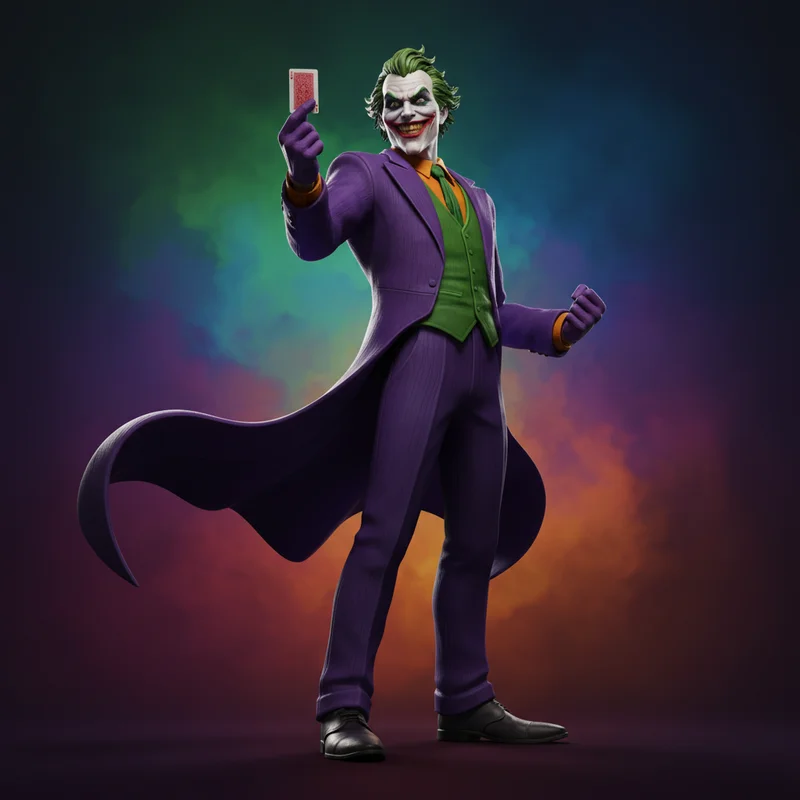
The Joker

The Joker

Chaos-loving clown prince of crime.

Battle Analysis

Global influence Money Wins
70%
30%
Money The Joker

Money

The reach of monetary systems defies comprehension. From the fishing villages of Indonesia to the trading floors of Wall Street, money speaks a universal language. Approximately 190 currencies circulate globally, yet the concept transcends them all. It shapes international relations, determines access to healthcare, education, and sustenance. Central banks wield its power to stabilise or destabilise entire economies. The influence extends beyond the living—inheritance laws ensure money's grip persists across generations.

The Joker

Since his debut in Batman #1 (1940), The Joker has achieved remarkable cultural penetration. Heath Ledger's portrayal earned a posthumous Academy Award. Joaquin Phoenix's interpretation grossed over one billion dollars. The character transcends comic books, appearing in video games, animated series, and academic discourse on moral philosophy. Yet this influence remains fundamentally representational—The Joker inspires thought and merchandise, but cannot purchase bread or negotiate treaties.

VERDICT

Money operates as genuine infrastructure; The Joker remains powerful symbolism without material agency.
Unpredictability The Joker Wins
30%
70%
Money The Joker

Money

Despite centuries of economic theory, markets remain stubbornly chaotic. Black Monday, the 2008 financial crisis, cryptocurrency volatility—each demonstrates money's capacity to defy expert prediction. Yet patterns emerge over sufficient time horizons. Compound interest, inflation rates, and boom-bust cycles follow recognisable rhythms. Economists cannot predict specific crashes but understand the underlying dynamics. Money behaves chaotically but not randomly.

The Joker

The Joker elevates unpredictability to philosophical principle. He has killed allies, spared enemies, and contradicted his own stated motivations within single narratives. Multiple origin stories exist—he sometimes claims different pasts within the same storyline. "If I'm going to have a past, I prefer it to be multiple choice," he famously declared. This commitment to chaos makes him uniquely dangerous; conventional threat assessment becomes impossible when the subject actively undermines causality itself.

VERDICT

Markets follow patterns despite volatility; The Joker has made randomness his defining characteristic and weaponised it completely.
Societal commentary The Joker Wins
30%
70%
Money The Joker

Money

Every civilisation develops economic parables and cautionary tales. The Bible warns that the love of money is the root of all evil. Marx constructed entire philosophical systems around its critique. The Great Gatsby exposes wealth's spiritual emptiness. Money serves as lens through which we examine inequality, justice, and human worth. It forces uncomfortable questions: why do nurses earn less than hedge fund managers? Is a system measuring human value through productivity morally defensible?

The Joker

The Joker functions as society's dark mirror. His critiques strike at civilisation's foundations: law is arbitrary, morality is performance, and sanity is merely socially approved madness. He exposes how thin the veneer separating civilisation from chaos truly is. Academic papers analyse his philosophical implications. His question—"Why so serious?"—challenges our investment in systems that may be fundamentally absurd. He is nihilism given theatrical form.

VERDICT

Money prompts economic discourse; The Joker challenges the legitimacy of discourse itself—a more fundamental critique.
Transformative power Money Wins
70%
30%
Money The Joker

Money

Consider the metamorphic capabilities of sufficient capital. It transforms geography—Dubai emerged from desert through petroleum wealth. It alters human bodies through cosmetic surgery, extends life through private healthcare. Money converts ignorance into education, isolation into connectivity. The nouveau riche become old money within generations. Criminals become philanthropists; robber barons become cultural benefactors. Few forces reshape reality with such efficiency.

The Joker

The Joker's transformations operate on a more intimate scale. He converts Harleen Quinzel, accomplished psychiatrist, into Harley Quinn, devoted accomplice. His influence transformed Jason Todd from Robin into the violent Red Hood. Each victim represents a philosophical proof: anyone can become anything under sufficient pressure. However, his transformations are predominantly destructive rather than constructive, chaos rather than creation.

VERDICT

Money enables both construction and destruction; The Joker specialises primarily in elegant demolition.
Psychological manipulation The Joker Wins
30%
70%
Money The Joker

Money

The psychology of wealth presents a fascinating paradox. Studies demonstrate that beyond approximately £60,000 annually, additional income yields diminishing happiness returns, yet the pursuit continues relentlessly. Money triggers dopamine responses associated with addiction. It creates anxiety when absent, breeds paranoia when abundant. The wealthy fear loss; the poor fear perpetual exclusion. Financial stress correlates with increased cortisol, cardiovascular disease, and shortened lifespans.

The Joker

The Joker operates as a masterclass in psychological warfare. His methods bypass rational thought entirely. Consider the ferry experiment from The Dark Knight: ordinary citizens contemplating mass murder to preserve themselves. His genius lies not in physical threat but in exposing humanity's capacity for darkness. He transforms heroes into villains, turns Harvey Dent into Two-Face through tragedy and manipulation. His unpredictability is itself a weapon—terror of the unknown exceeds fear of the known.

VERDICT

Money manipulates through desire; The Joker dismantles the very psychological frameworks we use to understand ourselves.
👑

The Winner Is

Money

54 - 46

This investigation reveals a surprisingly balanced contest between abstraction and anarchist. Money commands the material world with unparalleled authority—it feeds billions, funds civilisations, and shapes humanity's physical reality. The Joker operates in the realm of ideas, exposing uncomfortable truths about human nature and societal fragility.

What separates them ultimately is domain of influence. Money is infrastructure; The Joker is commentary upon that infrastructure. One builds the systems through which modern life flows; the other asks whether those systems deserve to exist. Both derive power from collective belief, yet money's believers construct while The Joker's believers deconstruct.

The philosophical victory may belong to chaos, but practical dominion remains with currency.

Money
54%
The Joker
46%

Share this battle

More Comparisons