
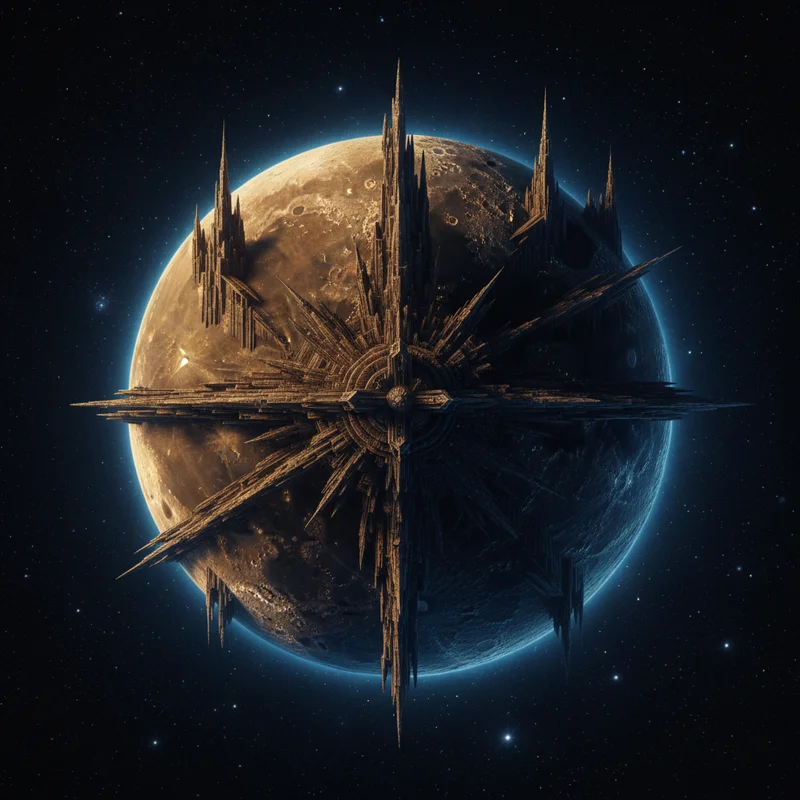
Where Everything Fights Everything

Money vs The Moon

😜 Just for fun — a tongue-in-cheek, gloriously unscientific showdown.

Money

Money

Abstract concept that runs the world.

VS
The Moon

The Moon

Earth's natural satellite and space race destination.

Battle Analysis

Gravitational influence The Moon Wins · 65%
35%
65%
Money The Moon

Money

Money's gravitational pull operates not through physics but through psychology and social architecture. It draws humans toward certain professions, certain postcodes, and certain compromises with their youthful ideals. The average adult spends approximately 90,000 hours working during their lifetime, predominantly in pursuit of monetary compensation. Money pulls entire populations across continents, redirects rivers of human talent, and bends the trajectory of individual lives with a force Newton never thought to calculate.

The Moon

The Moon's gravitational influence is scientifically quantifiable and rather impressive. It raises ocean tides by up to 16 metres in extreme locations, stabilises Earth's axial tilt at a comfortable 23.5 degrees, and gradually slows our planet's rotation by approximately 1.4 milliseconds per century. Without the Moon, Earth would wobble chaotically, seasons would become unpredictable, and coastal property values would require significant reassessment. The Moon's gravity is measurable, consistent, and completely indifferent to market fluctuations.

VERDICT

The Moon's gravity is literally gravitational; money's is merely metaphorical, however powerful.
Historical significance Money Wins · 65%
65%
35%
Money The Moon

Money

Money has shaped the entire trajectory of human civilisation since its inception. The shift from barter to currency enabled trade networks spanning continents, the rise of banking dynasties that outlasted empires, and the development of financial instruments complex enough to crash global economies. Money financed the Renaissance, the Industrial Revolution, and that suspiciously expensive coffee machine in your colleague's kitchen. Every major historical event can be traced, at some point, to someone asking who was paying for it.

The Moon

The Moon has influenced human history primarily through timekeeping, navigation, and mythology. Lunar calendars governed agricultural societies for millennia; sailors navigated by moonlight before the invention of GPS; and countless religions incorporated lunar symbolism into their cosmologies. The Moon landing of 1969 represented humanity's greatest technological achievement, unifying global attention in a manner seldom replicated since. However, the Moon's historical role has been largely passive, witnessing rather than directly causing human events.

VERDICT

Money has actively shaped every civilisation; the Moon has mostly watched from a distance.
Long term sustainability The Moon Wins · 80%
20%
80%
Money The Moon

Money

Money's long-term prospects involve considerable conceptual uncertainty. Currencies rise and collapse with empires; inflation erodes purchasing power; and economists cannot agree whether cryptocurrency represents the future of finance or an elaborate collective hallucination. The average currency lifespan is approximately 27 years before devaluation, redenomination, or outright abandonment. Money persists as a concept whilst individual monetary systems prove remarkably temporary.

The Moon

The Moon's sustainability outlook spans billions of years. It will continue orbiting Earth long after the last human economy has inflated into irrelevance. The Moon is, however, slowly retreating at 3.8 centimetres annually, suggesting even celestial bodies eventually seek distance from Earth's complications. In approximately 600 million years, the Moon will have receded far enough to end total solar eclipses. In 50 billion years, gravitational interactions may resolve differently. Still, by any human-relevant timescale, the Moon's future appears considerably more secure than any currency's.

VERDICT

The Moon operates on billion-year timescales; money operates on quarterly earnings reports.
Influence on human behaviour Money Wins · 75%
75%
25%
Money The Moon

Money

Money's influence upon human conduct constitutes perhaps the most comprehensive behavioural modification system ever devised. It determines what humans eat, where they live, whom they marry, and how much dignity they will tolerate sacrificing for a promotion. Financial considerations drive approximately 94% of career decisions and feature in the majority of divorces. Money transforms otherwise reasonable individuals into participants in pyramid schemes, lottery systems, and cryptocurrency speculation with equal facility.

The Moon

The Moon's behavioural influence, whilst culturally significant, proves largely unverifiable under scientific scrutiny. Despite persistent beliefs in lunar effects on crime rates, hospital admissions, and general lunacy, controlled studies consistently fail to demonstrate correlations. The Moon does influence human behaviour indirectly through its effect on tides, which in turn affects fishing schedules, surfing conditions, and the timing of romantic beach proposals. Its primary behavioural contribution appears to be inspiring humans to look upward occasionally and feel appropriately small.

VERDICT

Money demonstrably drives human behaviour; the Moon's influence remains largely folkloric.
Accessibility and distribution The Moon Wins · 65%
35%
65%
Money The Moon

Money

Money's distribution across humanity follows patterns of spectacular inequality. The wealthiest 1% control approximately 46% of global wealth, whilst half the world's population possesses less than 1%. Money flows toward existing money with a dedication physicists might describe as self-reinforcing accumulation. Its accessibility depends entirely upon accidents of birth, geography, and the mysterious algorithms that determine whose small business loan application succeeds.

The Moon

The Moon distributes its presence with perfect egalitarianism. Billionaires and subsistence farmers observe the same lunar phases; no amount of wealth purchases a superior view of the full Moon. It rises over penthouse terraces and refugee camps with identical punctuality, offering its silvery light to all viewers regardless of credit score. The Moon represents perhaps the only genuinely shared resource in human experience, though certain nations are investigating how to change this through lunar mining operations.

VERDICT

The Moon offers universal access; money offers universal desire with severely restricted supply.
👑

The Winner Is

The Moon

Takes 3 of 5 rounds

This investigation reveals a fundamental asymmetry between our competitors. Money dominates the human experience with an intensity the Moon cannot match, infiltrating every decision, relationship, and anxious 3 AM calculation about retirement savings. Yet the Moon operates on scales that render monetary concerns appropriately microscopic: timescales measured in billions of years, distances measured in hundreds of thousands of kilometres, and an influence that requires no human belief to function.

The Moon claims the contest three rounds to two, prevailing decisively where it matters most — literal gravitational influence, universal accessibility, and billion-year sustainability — while conceding that Money dominates the narrower but noisier arena of day-to-day human behaviour and historical civilisation-building. Money wins battles; the Moon wins the war of attrition across geological time. Perhaps the wisest perspective involves recognising that both forces illuminate human priorities. We have walked upon the Moon precisely once, at considerable expense. We think about money constantly, at no expense whatsoever except to our peace of mind.

Share this battle

More Comparisons