
Topic Battle

Where Everything Fights Everything

Money

Money

Abstract concept that runs the world.

VS
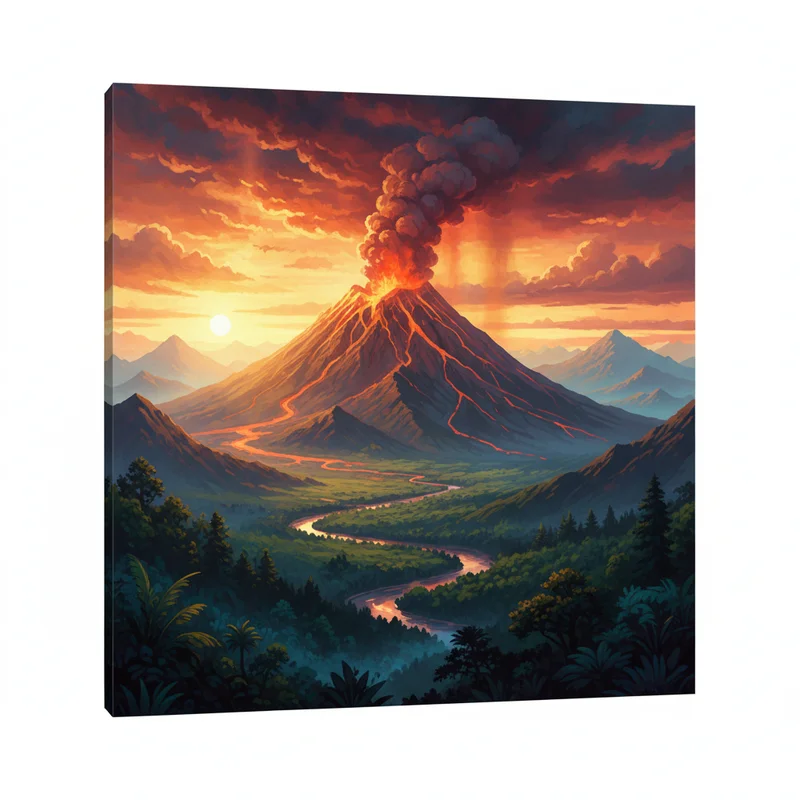
Volcano

Volcano

Mountain that occasionally reminds us Earth is angry.

Battle Analysis

Global reach Money Wins
70%
30%
Money Volcano

Money

Money's reach is genuinely universal. There exists no inhabited corner of Earth untouched by monetary systems. Even communities that reject currency find themselves defined by that rejection, measured against the monetary standard. The US dollar's fluctuations affect farmers in rural Bangladesh, textile workers in Vietnam, and coffee growers in Ethiopia simultaneously. Digital currency flows ignore borders entirely, moving $6.6 trillion daily through foreign exchange markets. Money has achieved what no empire could: total global penetration without physical conquest.

Volcano

Volcanoes number approximately 1,500 potentially active specimens worldwide, concentrated along tectonic boundaries in a distribution that leaves vast regions entirely unaffected. Whilst supervolcanic events can influence global climate, the direct impact radius of even major eruptions rarely exceeds a few hundred kilometres. The 2010 Eyjafjallajokull eruption disrupted European air travel for weeks, demonstrating volcanic capacity for indirect global reach, yet most eruptions remain local news, their ash plumes a concern only for immediate neighbours.

VERDICT

Money has achieved total planetary coverage, affecting every human regardless of geography, whilst volcanoes remain geologically constrained.
Predictability Volcano Wins
30%
70%
Money Volcano

Money

Financial markets exhibit behaviour that economists charitably describe as complex. Despite centuries of study, the timing and magnitude of market crashes remain essentially unpredictable. The 1987 Black Monday crash, the 2000 dot-com bubble, the 2008 housing crisis, and the 2020 pandemic sell-off all caught professional forecasters largely unaware. Central banks employ thousands of PhD economists and yet consistently fail to anticipate major monetary events. Money's behaviour appears governed by human psychology, which is to say, by forces fundamentally chaotic.

Volcano

Volcanology has achieved remarkable predictive success relative to economics. Modern monitoring detects magma chamber inflation, harmonic tremors, gas emissions, and ground deformation weeks or months before eruptions. The 1991 Pinatubo evacuation, based on accurate predictions, saved tens of thousands of lives. Whilst the precise timing of eruptions remains uncertain, the general behaviour of volcanic systems follows physical laws that, unlike market psychology, do not change according to collective belief. Volcanoes are difficult but not impossible to predict.

VERDICT

Volcanic systems follow physical laws that permit meaningful prediction, whilst financial markets defy systematic forecasting despite intense study.
Creative capacity Money Wins
70%
30%
Money Volcano

Money

Money has commissioned the Sistine Chapel, funded the Apollo programme, and enabled the construction of every university, hospital, and research institution on Earth. The profit motive, for all its moral ambiguities, has driven innovation from the printing press to the smartphone. Venture capital, patent systems, and research grants transform monetary abstraction into tangible human advancement. Money creates nothing directly but enables nearly everything indirectly, serving as the universal solvent in which human creativity dissolves and recombines.

Volcano

Volcanic creation operates on grander scales but with complete indifference to human utility. The Hawaiian archipelago, the Galapagos Islands, much of Indonesia and Japan exist only through volcanic activity. Volcanic glass (obsidian) enabled early tool-making; volcanic ash created the concrete that built Rome. Geothermal energy from volcanic systems powers entire nations. Yet volcanoes create through destruction, their gifts emerging from processes that care nothing for the life they simultaneously nurture and annihilate.

VERDICT

Money enables intentional human creativity across all domains, whilst volcanic creation remains accidental and indifferent to human purposes.
Destructive potential Volcano Wins
30%
70%
Money Volcano

Money

The destructive capacity of money operates through abstraction, which paradoxically makes it more devastating. The 2008 financial crisis erased $10 trillion in global wealth within eighteen months, causing widespread unemployment, foreclosures, and a measurable increase in suicide rates across affected nations. Unlike volcanic destruction, financial catastrophe offers no visual spectacle, no warning rumbles. Markets crash with the click of a mouse, pension funds evaporate overnight, and entire generations find their futures mortgaged by decisions made in distant boardrooms.

Volcano

A volcanic eruption operates in the realm of the viscerally immediate. The 1883 Krakatoa eruption released energy equivalent to 200 megatons of TNT, generated tsunamis that killed over 36,000 people, and produced sound waves that circled the globe four times. Mount Tambora's 1815 eruption ejected such quantities of ash that 1816 became the 'Year Without a Summer,' causing crop failures across the Northern Hemisphere. Yet volcanic destruction, whilst spectacular, remains geographically constrained and temporally finite.

VERDICT

Volcanic destruction achieves in hours what economic collapse requires years to accomplish, with physical finality that markets cannot match.
Longevity of influence Volcano Wins
30%
70%
Money Volcano

Money

Currency systems prove remarkably ephemeral when examined historically. The average fiat currency survives approximately 27 years before replacement or collapse. The Roman denarius, often cited as history's most successful currency, maintained value for roughly 400 years before debasement rendered it worthless. Even gold, humanity's most persistent store of value, has seen its purchasing power fluctuate wildly across centuries. Money's influence, whilst intense, tends toward the generational rather than the geological.

Volcano

Volcanic influence operates on civilisational timescales. The volcanic soils of Java support population densities impossible elsewhere, a legacy of eruptions millennia past. The eruption that destroyed Minoan Crete around 1600 BCE may have contributed to the collapse of Bronze Age civilisations across the eastern Mediterranean. Volcanic activity created the Hawaiian islands, the fertile Deccan Traps, Iceland's geothermal wealth. These geological gifts persist for millions of years, shaping human settlement patterns long after specific eruptions fade from memory.

VERDICT

Volcanic effects persist across geological ages, whilst even the most stable currencies measure their influence in mere centuries.
👑

The Winner Is

Volcano

48 - 52

The contest between money and volcano illuminates a fundamental distinction between human systems and natural forces. Money represents humanity's most successful collective fiction, a shared belief system that coordinates the activities of eight billion people across every conceivable endeavour. Volcanoes represent geological reality indifferent to belief, operating according to thermodynamic principles unchanged since Earth's formation.

Money claims victory in global reach and creative capacity, demonstrating humanity's remarkable ability to construct systems that exceed natural boundaries. Volcanoes prevail in destructive potential, longevity, and predictability, reminding us that human constructs, however powerful, remain subordinate to physical reality.

The final tally favours Volcano by the narrowest margin: 52 to 48. This victory reflects not volcanic superiority in human terms, but rather the humbling truth that our most powerful inventions remain footnotes in geological time.

Money
48%
Volcano
52%

Share this battle

More Comparisons