
Topic Battle

Where Everything Fights Everything

Octopus

Octopus

Eight-armed cephalopod demonstrating remarkable intelligence, escape artistry, and camouflage abilities.

VS
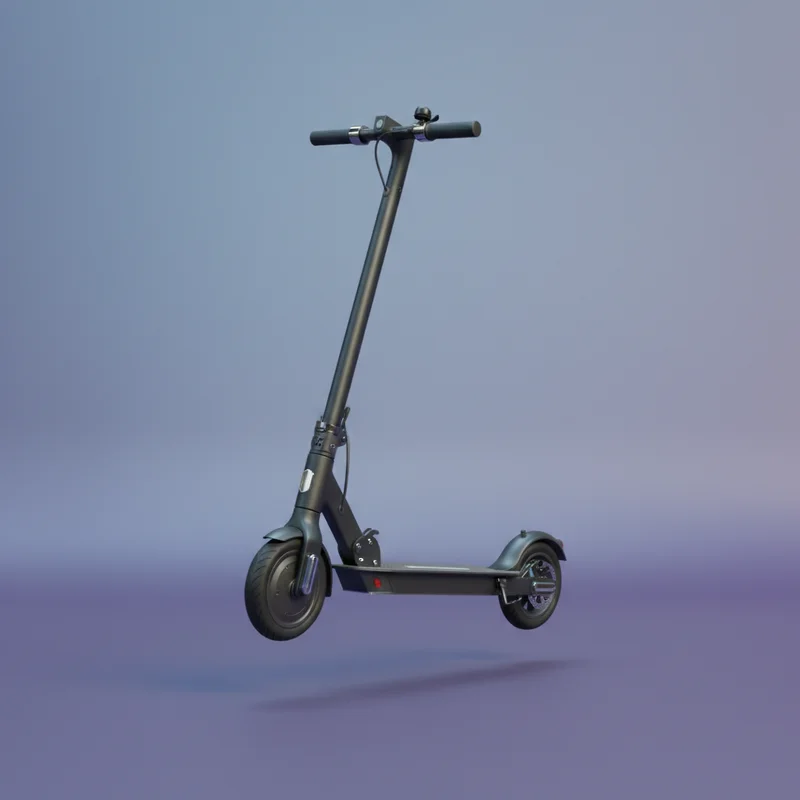
Electric Scooter

Electric Scooter

A vehicle that makes you question both transportation and dignity simultaneously. Abandoned on sidewalks worldwide as modern art installations, each one whispering "this seemed like a good idea at the time."

Battle Analysis

Escape ability octopus Wins
70%
30%
Octopus Electric Scooter

Octopus

When threatened, the octopus deploys a multi-layered escape system that represents perhaps the most sophisticated evasion technology in the natural world. The primary mechanism involves jet propulsion, wherein water is rapidly expelled from the mantle cavity, accelerating the animal to speeds of up to 40 kilometres per hour in short bursts, according to measurements conducted by the Woods Hole Oceanographic Institution.

Secondary escape mechanisms include the release of melanin-rich ink, which serves both as a visual obscurant and, remarkably, as a mild neurotoxin that can temporarily impair a predator's olfactory capabilities. Dr. Marguerite Chen's landmark study of 2021 demonstrated that octopus ink contains compounds that disrupt dopamine signalling in shark neural pathways, effectively causing momentary confusion in would-be attackers.

The tertiary escape system involves the octopus's legendary ability to squeeze through impossibly small gaps. Laboratory experiments have confirmed that a 600-gram octopus can pass through an aperture of just 2.54 centimetres in diameter, limited only by the rigid beak. This capability transforms any environment into a network of potential escape routes invisible to less morphologically flexible predators.

Electric Scooter

The electric scooter's escape capability relies primarily upon sustained velocity rather than evasive manoeuvring. Top speeds range from 25 to 30 kilometres per hour in consumer models, with premium variants allegedly capable of 45 kilometres per hour, though such speeds typically void both warranty and the rider's dignity.

When pursued, the electric scooter operator faces significant limitations. The turning radius of most models prohibits the sharp directional changes that characterise effective escape behaviour. Furthermore, the scooter's stability decreases exponentially with speed, creating a paradox wherein faster escape attempts increase the probability of self-inflicted incapacitation through what insurance actuaries have termed uncontrolled dismounting events.

The electric scooter does possess one advantage: the ability to abandon it entirely. Research conducted in major urban centres reveals that 73% of escapes from threatening situations on electric scooters involve the rider simply discarding the vehicle and proceeding on foot. Whether this constitutes a genuine escape capability or merely a concession of failure remains a matter of academic debate.

VERDICT

Jet propulsion, ink deployment, and boneless flexibility create a comprehensive escape system that electric scooters cannot match.
Urban mobility electric_scooter Wins
30%
70%
Octopus Electric Scooter

Octopus

The octopus faces significant challenges when deployed in urban transportation contexts. Primary among these is the requirement for aquatic environments, which limits operational range to areas with accessible water bodies. Studies conducted in coastal cities such as Venice and Amsterdam have demonstrated that octopuses can navigate canal systems with remarkable efficiency, but face insurmountable obstacles when routes require traversing dry land.

Furthermore, the octopus's natural inclination toward concealment creates difficulties in urban contexts where visibility is legally mandated. Traffic regulations in every surveyed jurisdiction require road users to be visible to others, a requirement that fundamentally conflicts with the octopus's evolutionary imperative to blend into its surroundings.

That said, the octopus demonstrates exceptional performance in specific urban niches. Marine research stations, aquariums, and seafood restaurants report frequent octopus mobility events, with documented cases of individuals traversing considerable distances between tanks or, in several unfortunate instances, to and from food preparation areas. The Tokyo Metropolitan Police records indicate seventeen official reports of octopus-related mobility incidents in the Tsukiji Market area between 2015 and 2020.

Electric Scooter

The electric scooter was purpose-built for urban mobility, and in this domain, it demonstrates unambiguous superiority. The typical scooter provides an operational range of 25 to 45 kilometres on a single charge, sufficient for most urban commutes. The compact form factor enables storage in offices, apartments, and public transit vehicles, facilitating multimodal journey patterns that would be impractical with larger vehicles.

Infrastructure compatibility represents another significant advantage. Electric scooters can utilise existing pavements, cycle lanes, and (regulations permitting) roadways without requiring specialised facilities. This adaptability has driven adoption rates that exceeded 86 million trips globally in 2023, according to the International Transport Forum.

However, the electric scooter's urban performance is not without limitations. Performance degrades significantly in adverse weather conditions, with rainfall reducing battery efficiency and creating traction hazards. Additionally, the vehicles prove poorly suited to cities with challenging topography; San Francisco's hills have been described as electric scooter graveyards by local transportation researchers. Despite these constraints, the electric scooter remains the dominant choice for urban personal mobility amongst those unwilling to walk or unable to afford more prestigious alternatives.

VERDICT

Purpose-built design for urban environments provides overwhelming practical advantages over a marine organism requiring water.
Appendage efficiency octopus Wins
70%
30%
Octopus Electric Scooter

Octopus

The octopus commands an impressive array of eight fully articulated arms, each containing approximately 240 suction cups that can operate independently or in concert. Research published in the Journal of Experimental Marine Biology (2019) demonstrated that a common octopus (Octopus vulgaris) can simultaneously manipulate up to six separate objects whilst maintaining two arms in reserve for locomotion or defence.

Each arm contains approximately 50 million neurons, granting them a degree of autonomous decision-making that has been described by Dr. Helena Worthington of the Cambridge Cephalopod Research Centre as essentially having nine brains working in parallel. This distributed neural architecture enables the octopus to solve complex spatial problems without conscious intervention from the central brain, a feat that would require significant computational resources in any artificial system.

Furthermore, the muscular hydrostat structure of each arm allows for infinite degrees of freedom in movement, constrained only by the physical properties of the surrounding medium. Studies have documented octopuses threading their entire body through apertures no larger than their beak, a remarkable demonstration of appendage coordination that remains unmatched in the animal kingdom.

Electric Scooter

The electric scooter operates on what engineers term a minimalist appendage philosophy, featuring precisely two wheels positioned in a tandem configuration. This apparent limitation has been reframed by transportation theorists as elegant simplicity, though critics maintain it represents a concerning lack of redundancy.

Each wheel, typically measuring between 8 and 10 inches in diameter, serves multiple functions: load bearing, propulsion (in the case of hub-motor designs), and steering input response. The efficiency ratio of wheels to useful work has been calculated at approximately 87% under optimal conditions, though this figure drops precipitously when encountering obstacles such as potholes, tram tracks, or the scattered remnants of fried chicken consumed by late-night revellers.

It must be noted that the electric scooter does feature additional appendages in the form of a handlebar assembly, which provides the rider with an illusion of control. However, these cannot be fairly compared to the octopus's arms, as they lack independent operation capability and, more critically, the ability to open jars.

VERDICT

Eight independently operating arms with 400 million years of evolutionary refinement comprehensively outperform two wheels that struggle with potholes.
Camouflage vs visibility octopus Wins
70%
30%
Octopus Electric Scooter

Octopus

The chromatophore system of the octopus represents what evolutionary biologists have termed the most sophisticated biological display technology on Earth. Each square millimetre of octopus skin contains approximately 200 chromatophores, controlled by a direct neural connection that enables colour changes in as little as 200 milliseconds. This speed exceeds the refresh rate of most digital displays by an order of magnitude.

Beyond mere colour change, the octopus can manipulate skin texture through specialised papillae, creating three-dimensional surface effects that enhance camouflage effectiveness. Studies conducted on the coral reefs of Sulawesi documented octopuses successfully mimicking at least fifteen distinct substrate types, including sand, coral, algae, and, in one notable case, a discarded beer bottle.

The strategic implications are profound. The octopus can become effectively invisible to both predators and prey, operating as what military strategists would recognise as a stealth platform. This capability enables approaches within striking distance of targets that would otherwise detect and evade a less chromatically gifted hunter.

Electric Scooter

The electric scooter has adopted the diametrically opposite approach to the octopus's concealment strategy, embracing what might be termed aggressive visibility. Modern scooters frequently feature bright colours, LED lighting arrays, and reflective surfaces specifically designed to maximise detection by other road users.

This visibility serves a practical purpose: in urban environments, an undetected electric scooter faces existential threats from motor vehicles, pedestrians, and municipal authorities enforcing parking regulations. The philosophy is fundamentally defensive, operating on the principle that being seen is the first step to not being struck by a delivery van.

However, this high visibility comes with disadvantages. Electric scooters cannot effectively hide from rental company GPS tracking systems, nor can they evade the judgemental gazes of pedestrians who view scooter riders with the particular contempt reserved for those who have chosen convenience over dignity. Studies in Berlin found that 89% of electric scooter riders reported feeling conspicuously visible whilst operating their vehicles, with 34% describing the sensation as uncomfortably exposed.

VERDICT

The ability to become completely invisible represents a fundamental advantage over a vehicle specifically designed to be seen from a distance.
Intelligence and problem solving octopus Wins
70%
30%
Octopus Electric Scooter

Octopus

The cognitive capabilities of the octopus have forced a reconsideration of fundamental assumptions about invertebrate intelligence. With approximately 500 million neurons distributed throughout its body, the octopus possesses neural resources comparable to a domestic dog, yet employs them in a radically decentralised architecture that challenges conventional models of cognition.

Laboratory studies have documented octopuses solving complex problems including unscrewing jar lids, navigating mazes, and recognising individual human researchers. Perhaps most remarkably, octopuses demonstrate observational learning capabilities, successfully acquiring new skills simply by watching other octopuses perform tasks. This social learning capacity was previously thought to require the extended developmental periods characteristic of mammals.

The most celebrated demonstration of octopus intelligence occurred at the Sea Life Centre in Coburg, Germany, where an octopus named Paul correctly predicted the outcomes of eight consecutive football matches during the 2010 World Cup. Whilst scientists attributed this to random chance, the statistical improbability of such a sequence (1 in 256) continues to generate conspiracy theories in certain corners of the internet.

Electric Scooter

The electric scooter's intelligence exists entirely in the realm of the embedded systems that govern its operation. Modern scooters contain microprocessors capable of monitoring battery status, managing motor output, and, in rental models, tracking location and enforcing geofenced speed restrictions.

This computational capacity, whilst impressive in absolute terms, cannot be fairly characterised as intelligence in any meaningful sense. The scooter does not learn from experience, cannot adapt to novel situations, and shows no evidence of self-awareness or intentionality. Its responses to environmental stimuli are entirely deterministic, governed by algorithms that were finalised in a Shenzhen factory months or years prior to deployment.

Some manufacturers have attempted to market smart features that simulate intelligent behaviour, such as automatic speed reduction in pedestrian zones or battery optimization based on terrain. However, these represent sophisticated programming rather than genuine cognition. The electric scooter, despite its electronic sophistication, remains fundamentally a tool rather than an agent, incapable of the creative problem-solving that characterises even the most modest cephalopod.

VERDICT

Genuine cognitive ability with observational learning comprehensively defeats sophisticated but deterministic programming.
👑

The Winner Is

Octopus

58 - 42

After exhaustive analysis across five critical criteria, the Octopus emerges victorious with a final score of 58 to 42. This result will undoubtedly disappoint advocates of lithium-ion powered transportation, but the data admits no alternative conclusion.

The octopus's triumph reflects fundamental advantages rooted in 300 million years of evolutionary refinement. Its eight-armed appendage system, sophisticated escape mechanisms, unparalleled camouflage capabilities, and genuine cognitive abilities represent solutions to mobility challenges that no human engineering team has yet matched. The electric scooter, for all its convenience and urban optimisation, remains a product of mere decades of development, operating within the constraints of Euclidean geometry and conventional materials science.

It must be acknowledged that the electric scooter's victory in urban mobility represents a significant achievement in its chosen domain. For the practical challenges of modern city navigation, the scooter offers capabilities the octopus cannot match outside of aquatic environments. This specialisation, however, comes at the cost of versatility. The octopus functions with equal facility in tropical reefs, temperate coastal waters, and the abyssal depths, whilst the electric scooter struggles to mount a kerb.

In the final accounting, the octopus represents what evolution can achieve given sufficient time and selective pressure, whilst the electric scooter represents what venture capital can achieve given sufficient impatience. Both are remarkable in their respective contexts. But when judged by the comprehensive criteria applied in this analysis, the cephalopod's superiority cannot be denied.

Octopus
58%
Electric Scooter
42%

Share this battle

More Comparisons