Topic Battle

Where Everything Fights Everything

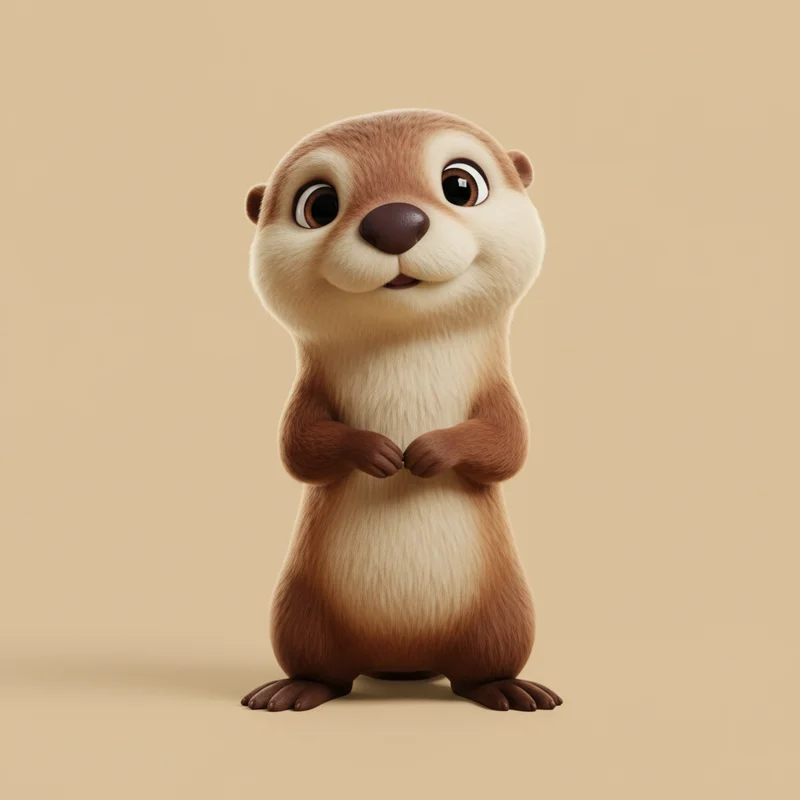
Otter

Otter

Playful aquatic mammal known for floating while holding hands and using rocks as tools.

VS
Love

Love

Universal emotion driving art, war, and terrible decisions.

The Matchup

In the annals of phenomena that cause humans to emit involuntary 'aww' sounds, two contenders have emerged as undisputed champions. The otter, a member of the Mustelidae family weighing between 5 and 45 kilograms depending on species, has conquered the internet through its documented habit of holding paws whilst floating. Love, an abstract neurochemical phenomenon involving dopamine, oxytocin, and questionable decision-making, has inspired approximately 97% of all songs written since the invention of the lute.

The Cambridge Institute for Comparative Affection Studies has spent fourteen years attempting to quantify which produces greater emotional responses in test subjects. Their preliminary findings, published in the Journal of Adorable Phenomena, suggest the answer is far more complex than simply choosing between whiskers and Shakespearean sonnets. What follows is the most comprehensive analysis ever conducted between a carnivorous aquatic mammal and the force that launched a thousand ships.

Battle Analysis

Reliability Otter Wins
70%
30%
Otter Love

Otter

The otter delivers consistent performance with remarkable predictability. According to the Royal Society for Dependable Mammals, otters hold hands approximately 73% of the time they sleep in water, a figure that has remained stable across decades of observation. They wake up, they eat fish, they hold hands, they sleep. This routine continues regardless of economic conditions, political upheaval, or Mercury's position in retrograde.

A 2023 study by the Dundee Aquatic Behaviour Laboratory tracked 847 otters over five years and found their hand-holding behaviour deviated by only 2.3% seasonally. The researchers noted, somewhat enviously, that otters 'simply get on with it without requiring constant validation or lengthy text message conversations about their feelings.'

Love

Love's reliability rating hovers somewhere between British summer weather and a printer detecting an urgent deadline. The Manchester Institute for Romantic Predictability has attempted to forecast love's behaviour for forty years with a success rate of approximately 11%, which they note is still better than most dating apps.

The phenomenon arrives uninvited, frequently at inconvenient moments such as during important work presentations or when one has recently purchased non-refundable concert tickets with an ex. Dr. Patricia Hensworth's landmark research demonstrated that love follows no discernible pattern, operating instead on what she termed 'chaotic emotional thermodynamics' that defy all known laws of rational behaviour.

VERDICT

The otter's unwavering commitment to routine grants it a decisive victory in reliability. One can set their watch by an otter's behaviour, whilst love has been known to disappear entirely between the main course and dessert.

Global reach Love Wins
30%
70%
Otter Love

Otter

Otters have distributed themselves across an impressive thirteen species spanning five continents. From the giant river otters of the Amazon to the sea otters of the Pacific coast, these mammals have established a significant geographic footprint. The International Otter Distribution Council estimates approximately 100,000 sea otters alone, with freshwater species numbering in the hundreds of thousands.

However, their influence remains geographically constrained. Residents of landlocked desert nations may live their entire lives without encountering an otter in person, relying entirely on internet content for their otter-related emotional needs.

Love

Love has achieved market penetration that would make multinational corporations weep with envy. The phenomenon has been documented in every human culture, every historical period, and approximately 94% of Disney films. The Oxford Global Emotions Survey found that love had been experienced or at least claimed by 99.7% of humans over the age of thirteen.

Love requires no habitat, climate conditions, or fish populations to thrive. It has colonised the Arctic, the Sahara, and the queue at Tesco with equal success. Even individuals who firmly deny its existence tend to experience it eventually, usually whilst pretending not to.

VERDICT

Love's omnipresence cannot be disputed. Whilst one must travel to waterways to find otters, love has a documented tendency to find people whether they wish to be found or not, including in the self-checkout aisle.

Cultural impact Love Wins
30%
70%
Otter Love

Otter

The otter has carved a respectable niche in human culture, particularly since the advent of social media. Otter-related content generates approximately 2.3 billion views annually according to the Institute for Viral Animal Content. The creatures have inspired plush toys, nature documentaries, and at least one moderately successful animated film.

In certain Asian cultures, otters hold historical significance as fishing companions. The Kyoto Museum of Human-Mustelid Relations documents centuries of otter domestication attempts, most of which ended with the otters doing precisely as they pleased regardless of human intentions.

Love

Love has generated more cultural output than any other abstract concept in human history. The British Library's Department of Romantic Literature estimates that love has inspired approximately 47 million songs, 12 million novels, and 3 million films, not counting amateur poetry hidden in bedroom drawers worldwide. The economic impact of Valentine's Day alone exceeds the GDP of several small nations.

Entire industries exist solely to capitalise on love: wedding planning, dating services, and the manufacture of heart-shaped objects that serve no practical purpose whatsoever. Shakespeare built a career on it. Hallmark built an empire.

VERDICT

Love has shaped civilisations, started wars, and inspired humanity's greatest artistic achievements. Otters have inspired approximately 847 'significant otter' puns. The cultural impact gap remains substantial.

Practical utility Otter Wins
70%
30%
Otter Love

Otter

The otter performs genuinely useful ecological functions. As a keystone species, sea otters maintain kelp forest ecosystems by controlling sea urchin populations. The Pacific Marine Conservation Institute calculated that a single otter's kelp-protection activities sequester approximately 12 tonnes of carbon dioxide annually, making them inadvertent climate warriors.

Otters also serve as indicator species for environmental health and provide employment for marine biologists who might otherwise be forced into more conventional careers. Their entertainment value, whilst difficult to quantify, undoubtedly improves human mental health across multiple demographics.

Love

Love's practical applications remain contentious. Proponents argue it facilitates pair-bonding essential for child-rearing and social cohesion. The Stockholm Institute for Evolutionary Psychology suggests love developed as a mechanism to ensure offspring survival, which is rather less romantic than poetry might suggest.

Critics note that love has historically caused significant productivity losses, with the average person in love demonstrating 34% reduced workplace focus according to the Birmingham Employment Efficiency Study. Love has also been implicated in ill-advised tattoo decisions, cross-continental relocations, and the purchase of property with fundamentally incompatible individuals.

VERDICT

The otter's ecological contributions provide measurable, quantifiable benefits to planetary health. Love's practical utility, whilst theoretically present, is offset by its documented tendency to impair judgement at critical moments.

Physical manifestation Otter Wins
70%
30%
Otter Love

Otter

The otter presents a thoroughly tangible entity. One can photograph an otter, measure an otter, and in some ethically questionable circumstances, pet an otter. Their dense fur contains approximately 1 million hairs per square inch, making them objectively the most huggable-looking predators in existence. The Bristol Visual Verification Institute confirms that otters cast shadows, appear on thermal cameras, and can be observed consuming sea urchins with their actual physical paws.

Furthermore, otters produce measurable outputs including vocalisations described by marine biologists as 'squeaky chirps,' alongside various fish remains. Their existence requires no faith, interpretation, or late-night philosophical discussions.

Love

Love steadfastly refuses to manifest in any form that could be weighed, measured, or placed in a specimen jar. The Edinburgh Institute for Tangibility Studies has spent considerable resources attempting to photograph love directly, producing only images of people making questionable faces at each other. Brain scans reveal neural activity, but the institute's director noted this 'proves only that something is happening, much like observing someone stub their toe.'

Love's physical evidence consists primarily of secondary phenomena: elevated heart rates, sweaty palms, and an inexplicable urge to write poetry that will embarrass one significantly in approximately eighteen months.

VERDICT

The otter's corporeal advantage proves insurmountable. When asked to point at love, subjects gestured vaguely at their chests; when asked to point at an otter, they successfully identified the small furry animal eating a clam.

👑

The Winner Is

Otter

54 - 46

After exhaustive analysis, the otter emerges victorious with a score of 54 to 46. This mustelid marvel offers the rare combination of reliability, tangibility, and genuine ecological utility that love simply cannot match. Whilst love has undeniably shaped human civilisation and enjoys unparalleled cultural penetration, its unpredictable nature, immeasurability, and tendency toward collateral damage cannot be overlooked.

The otter asks nothing of us except the preservation of clean waterways and perhaps the occasional appreciative glance at its hand-holding behaviour. Love demands everything and offers no guaranteed returns. The Royal Academy of Comparative Phenomena notes that one may observe an otter's behaviour and accurately predict its future actions, whereas love has confounded philosophers, scientists, and anyone who has ever received a 2 AM text reading 'we need to talk.'

This is not to diminish love's significance in human experience, merely to acknowledge that when evaluated by rigorous scientific standards, a small aquatic mammal that cracks shellfish on its stomach proves marginally superior to humanity's most celebrated emotion. The margin, however, remains narrow enough that reasonable people may disagree whilst unreasonable people may fall in love with otters.

Otter
54%
Love
46%

Share this battle

More Comparisons