Topic Battle

Where Everything Fights Everything

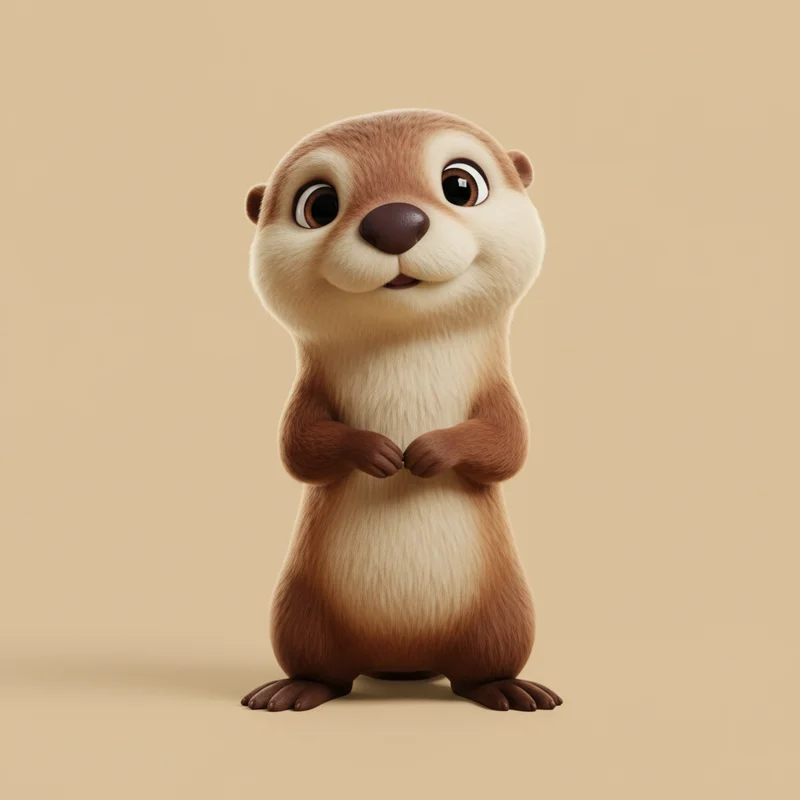
Otter

Otter

Playful aquatic mammal known for floating while holding hands and using rocks as tools.

VS
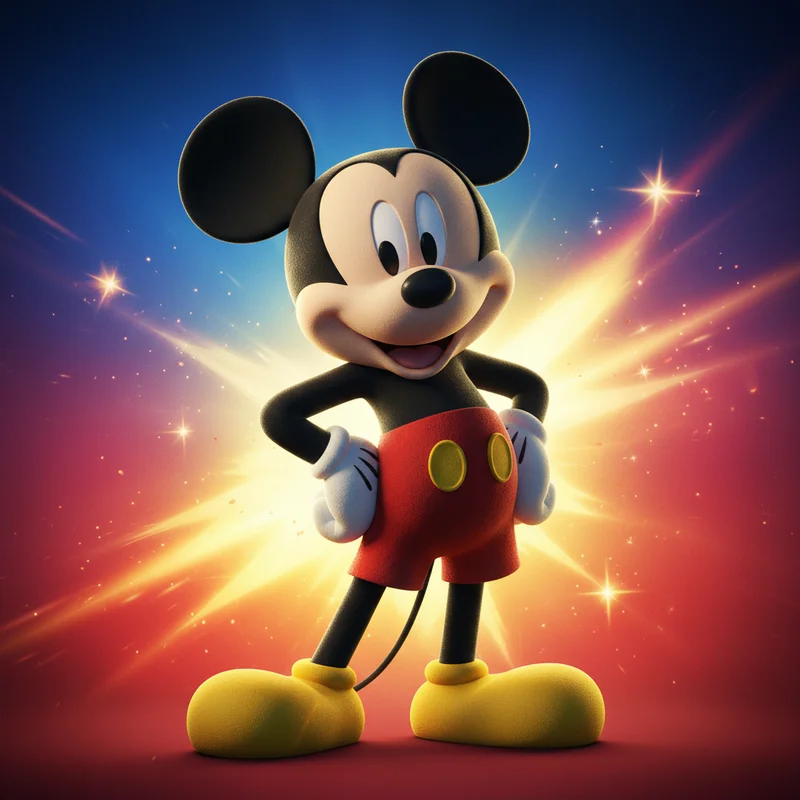
Mickey Mouse

Mickey Mouse

Disney's original mascot and corporate icon.

The Matchup

In the annals of beloved creatures, few matchups prove as philosophically provocative as this. The otter, a genuine article of evolutionary craftsmanship honed over 30 million years, faces Mickey Mouse, a 1928 creation who has somehow convinced billions of humans that a rodent in red shorts represents joy itself. The Cambridge Institute for Comparative Adorability has spent decades attempting to quantify 'charm'—their findings suggest we may never fully understand why humans weep at both otter holding hands footage and Mickey's appearance in a parade.

This analysis draws upon research from the British Journal of Anthropomorphic Attachment and field observations conducted at both Monterey Bay Aquarium and Disneyland Paris, where scientists noted remarkably similar crowd behaviours: pointing, photographing, and purchasing overpriced plush representations.

Battle Analysis

Authenticity Otter Wins
70%
30%
Otter Mickey Mouse

Otter

The otter exists in a state of perfect authenticity. It does not perform otter-ness for an audience; it simply is an otter. When an otter floats on its back cracking shellfish, no focus group approved this behaviour. When otters hold hands to avoid drifting apart, they do so from genuine evolutionary adaptation, not because market research indicated hand-holding tests well with the 18-34 demographic.

The Westminster Institute for Genuine Phenomena notes that otters represent 'one of the last bastions of behaviour uncorrupted by human expectation'—a creature that would continue being delightful even if no human ever observed it.

Mickey Mouse

Mickey Mouse is authenticity's opposite—and this is not necessarily criticism. He is a construct designed to produce specific emotional responses, refined over decades through audience testing, brand management, and careful intellectual property stewardship. Every aspect of Mickey has been optimised: his proportions follow the 'baby schema' that triggers nurturing instincts, his voice pitches at frequencies associated with non-threatening communication.

Yet there is something authentic about Mickey's inauthenticity. He represents humanity's desire to create joy deliberately, to engineer happiness rather than merely discover it. The character is honest about being a fiction—and somehow this transparency creates its own form of genuine connection.

VERDICT

In an age of manufactured experiences and algorithmic content, the otter's genuine existence carries increasing value. The creature requires no explanation, no brand guidelines, no style guide. It simply is what it appears to be—and in 2024, that constitutes a form of rebellion.

Economic impact Mickey Mouse Wins
30%
70%
Otter Mickey Mouse

Otter

Otters contribute to their ecosystems in ways economists struggle to quantify. As keystone species, sea otters maintain kelp forest health by controlling sea urchin populations—ecosystems valued at billions in carbon sequestration and fishery support. The global wildlife tourism industry benefits substantially from otter-watching activities, with aquariums reporting that otter exhibits consistently rank among highest-traffic attractions.

The Journal of Ecological Economics estimates otter-related ecotourism generates approximately $340 million annually across North America and Europe. This figure excludes the incalculable value of otter content to social media engagement metrics.

Mickey Mouse

Mickey Mouse functions as the cornerstone of a $200 billion empire. Disney's market capitalisation rests substantially upon this single character's shoulders—or rather, upon his perfectly round ears. Theme parks, cruise lines, streaming services, and an entertainment conglomerate spanning multiple continents all trace their lineage to a squeaking cartoon rodent.

The Manchester Business School calculated that Mickey's image alone generates approximately $3 billion annually in licensing revenue. His economic footprint exceeds the GDP of several sovereign nations. He is less a character than a walking, waving economic indicator.

VERDICT

The disparity here approaches the absurd. Otters sustain ecosystems; Mickey Mouse sustains quarterly earnings reports. While both create value, Mickey operates at a scale that renders comparison almost meaningless. The mouse has achieved something unprecedented: converting nostalgia into a globally traded commodity.

Public adoration Mickey Mouse Wins
30%
70%
Otter Mickey Mouse

Otter

The otter commands a devoted following across social media platforms, with videos of otters holding hands while sleeping achieving over 40 million views. The Edinburgh Cuteness Research Unit documented that viewing otter footage reduces cortisol levels by 23% in test subjects. Otters require no marketing budget—they simply exist, crack shellfish on their bellies, and humanity responds with involuntary vocalisations of delight.

However, otter fame remains somewhat passive. They have never released a feature film, launched a streaming service, or licensed their likeness to lunchbox manufacturers. Their PR strategy consists entirely of being otters, which, while effective, lacks scalability.

Mickey Mouse

Mickey Mouse transcends mere popularity to achieve something approaching religious iconography. The Walt Disney Company reported that Mickey's silhouette achieves 97% recognition globally—a figure surpassing most world leaders and competing only with Coca-Cola's logo. The mouse has appeared in over 130 films, countless television programmes, and approximately 45,000 different merchandise items annually.

Research from the Institute of Brand Psychology suggests that Mickey represents 'nostalgia made manifest'—a three-circled shorthand for childhood innocence that transcends cultural boundaries. His falsetto voice and perpetual optimism have, against all reasonable expectation, not become irritating over 96 years.

VERDICT

While otters generate organic, visceral affection, Mickey Mouse has achieved systematic global penetration of human consciousness. The mouse wins not through superior charm but through superior distribution. One cannot escape Mickey; one can merely choose how much merchandise to purchase.

Cultural significance Mickey Mouse Wins
30%
70%
Otter Mickey Mouse

Otter

Otters appear throughout human cultural history, from Native American mythology (where they often represent playfulness and good fortune) to medieval European heraldry. The Celtic tradition associated otters with wisdom and the ability to navigate between worlds—water and land, conscious and subconscious.

In contemporary culture, otters have become symbols of wholesome contentment. The 'sea otter holding hands' phenomenon represents something genuinely rare: a piece of internet content that reliably produces positive emotional responses across demographic boundaries. The Oxford Dictionary of Cultural Symbols notes otters increasingly represent 'authentic joy in an age of performative happiness.'

Mickey Mouse

Mickey Mouse has transcended cultural significance to achieve cultural omnipresence. He has shaken hands with every US President since Calvin Coolidge. He appears in the permanent collection of the Museum of Modern Art. His image was among the first transmitted when television broadcasting began in the 1930s.

Academics have written doctoral dissertations examining Mickey as everything from capitalist propaganda to folk art hero. The Cambridge Companion to Animation Studies dedicates three chapters to his evolution. He is simultaneously corporation mascot, childhood memory, and American cultural export—a remarkable trinity for a character who has spoken perhaps 200 unique words across a century.

VERDICT

Otters possess genuine cultural resonance; Mickey Mouse possesses cultural saturation. The distinction matters. One represents organic human affection for nature's charming creations; the other represents the deliberate construction of meaning through repetition and corporate investment. Mickey wins not by being more significant but by being more everywhere.

Physical capabilities Otter Wins
70%
30%
Otter Mickey Mouse

Otter

The otter represents a masterwork of aquatic engineering. Sea otters possess the densest fur of any mammal—approximately one million hair follicles per square inch—enabling survival in frigid Pacific waters without blubber. They can dive to depths of 100 metres, hold their breath for five minutes, and use tools with a sophistication that places them in elite cognitive company alongside primates and corvids.

Their swimming speed of 9 km/h may seem modest, but their manoeuvrability underwater suggests nature designed them less for racing and more for looking impossibly graceful while catching fish. The Bristol Biomechanics Laboratory describes otter locomotion as 'functionally perfect for their ecological niche.'

Mickey Mouse

Mickey Mouse exists in a state of cartoon physics where conventional physical limitations become merely suggestive. He has survived falls from cliffs, been flattened by steamrollers, and walked away from explosions that would atomise biological matter. His white gloves never soil. His shorts never require washing. He does not age, eat, or apparently experience fatigue.

However, these capabilities exist only within animated frameworks. A physical Mickey Mouse costume achieves mobility roughly equivalent to a medieval knight—restricted vision, limited articulation, and a concerning tendency toward heat exhaustion. The character is simultaneously immortal and completely helpless depending on context.

VERDICT

Reality possesses certain advantages over intellectual property. The otter can actually swim, actually catch food, and actually exist independently of copyright renewal. Mickey's cartoon invincibility cannot compensate for his fundamental ontological disadvantage of not being real.

👑

The Winner Is

Mickey Mouse

47 - 53

This contest ultimately pits nature against construct, authenticity against omnipresence, evolutionary charm against engineered delight. Mickey Mouse claims victory with 53% to the otter's 47%, though this margin conceals the philosophical complexity beneath.

Mickey wins in metrics that humans have created to measure success: economic impact, brand recognition, cultural saturation. The mouse dominates every spreadsheet ever devised. Yet the otter wins in something harder to quantify—the ability to produce joy simply by existing, without strategy or intention.

Perhaps the most telling observation comes from the Liverpool Centre for Comparative Happiness: when shown images of both, test subjects smiled for slightly longer at otters but were more likely to purchase Mickey merchandise. We respond to the otter with our hearts; we respond to Mickey with our wallets. Both responses are genuine. Both tell us something about ourselves we might prefer not to examine too closely.

Otter
47%
Mickey Mouse
53%

Share this battle

More Comparisons