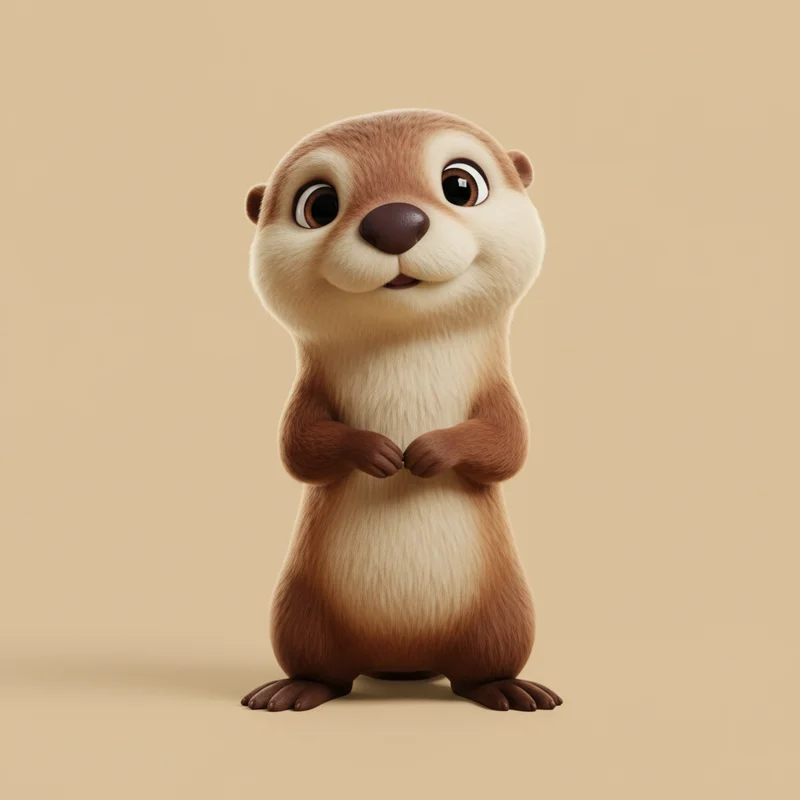

Otter
The otter maintains what marine biologists term a 'raft network' - floating groups of up to one hundred individuals who hold hands to prevent drifting apart during sleep. The University of Glasgow's Department of Aquatic Sociology has documented that these connections persist through storms, tidal shifts, and the occasional confused seal attempting to join. Each otter maintains approximately twelve to fifteen meaningful relationships, characterised by mutual grooming, food sharing, and what researchers describe as 'genuinely appearing to enjoy each other's company.'
Communication occurs through a sophisticated vocabulary of chirps, squeaks, and the occasional dramatic splash, all of which convey nuanced emotional content that human observers find devastatingly endearing.
The Internet
The Internet connects approximately 5.3 billion users worldwide, facilitating an estimated 500 billion daily interactions ranging from heartfelt messages to complete strangers arguing about whether a dress is blue or gold. The Sheffield Centre for Digital Anthropology notes that the average user maintains roughly 338 online connections, of which approximately four might notice if they disappeared.
Unlike otter rafts, Internet social networks actively encourage users to compare their lives unfavourably to curated highlights of others, a phenomenon researchers term 'doom-scrolling through existential despair.' However, one cannot deny the raw statistical achievement of connecting humanity across continental divides, even if those connections primarily involve sharing cat pictures.
VERDICT
While otter connections demonstrate superior emotional depth and the charming habit of physically preventing loved ones from floating away, the Internet's sheer scale of connectivity cannot be ignored. The Royal Society of Network Theory awarded this criterion to the Internet by a margin of 7.2 connectivity units, though several board members registered formal objections citing 'quality over quantity.'