
Topic Battle

Where Everything Fights Everything

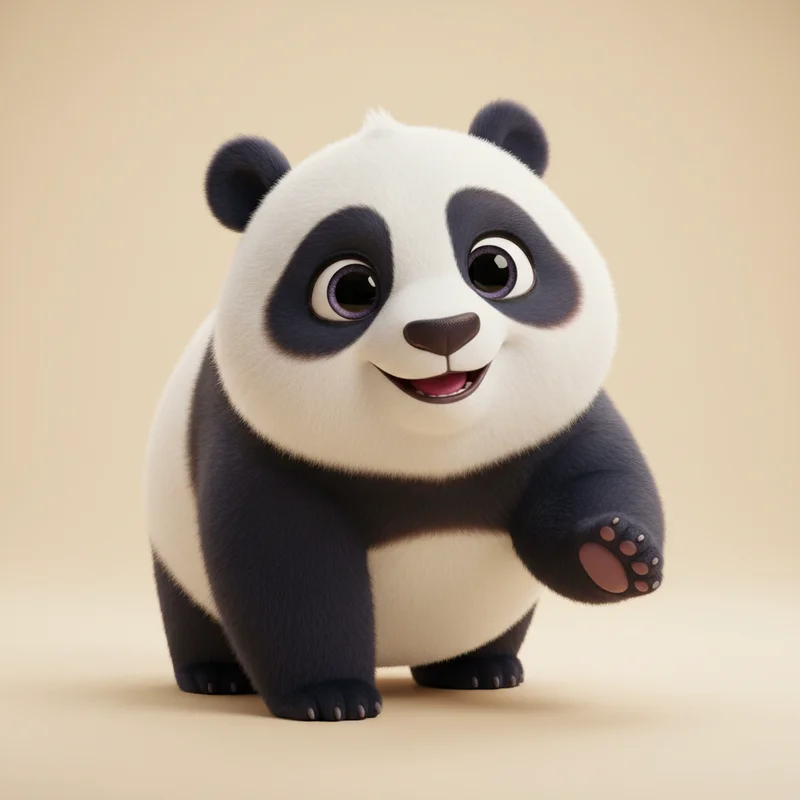
Panda

Panda

Beloved bamboo-eating bear from China, famous for black-and-white coloring and conservation symbolism.

VS
Bicycle

Bicycle

Two-wheeled human-powered transportation and fitness device.

Battle Analysis

Energy efficiency bicycle Wins
30%
70%
Panda Bicycle

Panda

The giant panda presents one of nature's most spectacularly inefficient energy systems. Having evolved as a carnivore before inexplicably committing to a bamboo-exclusive diet, the panda must consume between 12 to 38 kilograms of bamboo daily—spending up to 14 hours feeding—simply to extract enough nutrients to maintain basic biological functions. Their digestive system, stubbornly carnivorous in design, processes merely 17% of ingested bamboo, resulting in the production of approximately 28 kilograms of faeces per day. It is, by any objective measure, a metabolic catastrophe wrapped in fur.

Bicycle

The bicycle stands as humanity's most energy-efficient form of transportation. A cyclist travelling at 16 kilometres per hour expends roughly 0.15 calories per gram per kilometre—more efficient than walking, driving, or even the flight of birds. The mechanical efficiency of a well-maintained bicycle chain approaches 98.6%, transmitting nearly all pedalling force directly to forward motion. No fuel is wasted on digestion, no energy lost to fur maintenance. The bicycle converts human effort into distance with almost mathematical purity.

VERDICT

The bicycle achieves near-perfect energy transfer while the panda operates at catastrophic metabolic deficit
Global cultural impact panda Wins
70%
30%
Panda Bicycle

Panda

The giant panda has achieved something no bicycle could ever accomplish: diplomatic currency. Since the Tang Dynasty, China has deployed pandas as instruments of soft power, with modern 'panda diplomacy' generating estimated annual revenues of $1 million per bear in loan fees. The panda's image adorns the logo of the World Wildlife Fund, making it the most recognised conservation symbol globally. Studies indicate the panda face triggers nurturing responses in humans—their flat facial structure and large eyes activating the same neural pathways as human infant recognition. They have, quite deliberately, hacked human psychology.

Bicycle

The bicycle has shaped human civilisation in ways both profound and overlooked. Historians credit it with advancing women's suffrage—Susan B. Anthony declared it had 'done more to emancipate women than anything else in the world.' The bicycle industry pioneered mass production techniques later adopted by automobile manufacturers, while cycling infrastructure has become a key indicator of urban development. Over 1 billion bicycles exist worldwide, outnumbering cars two-to-one. Yet culturally, the bicycle remains utilitarian—admired, certainly, but rarely inspiring the emotional devotion reserved for charismatic megafauna.

VERDICT

The panda commands diplomatic influence and emotional attachment that mechanical objects cannot replicate
Reproductive viability bicycle Wins
30%
70%
Panda Bicycle

Panda

Panda reproduction represents one of evolution's more baffling dead ends. Female pandas are fertile for merely 24 to 36 hours annually, during which time the male must correctly interpret complex scent signals, overcome his species' apparent disinterest in mating, and successfully copulate—a process lasting between 30 seconds and 5 minutes. The male panda's reproductive organ is proportionally one of the smallest among bears, further complicating matters. In the wild, twin survival rates hover near zero, as mothers invariably abandon one cub. The species seems almost philosophically opposed to its own continuation.

Bicycle

Bicycles reproduce through industrial manufacturing—a process of remarkable efficiency. Global production exceeds 130 million units annually, with a single factory capable of producing thousands of frames per day. The bicycle's design has proven so evolutionarily stable that the basic diamond frame established in the 1880s remains dominant. Components standardise across manufacturers, allowing for hybrid combinations impossible in biological reproduction. A bicycle 'species' can be created, modified, and mass-produced within weeks, responding to environmental pressures with speed that would make Darwin weep with envy.

VERDICT

Manufacturing outpaces biological reproduction by several orders of magnitude
Environmental adaptability bicycle Wins
30%
70%
Panda Bicycle

Panda

The giant panda has painted itself into an evolutionary corner of remarkable specificity. Restricted to temperate montane forests between 1,500 and 3,000 metres elevation in central China, pandas require bamboo-dominant ecosystems and will migrate vertically rather than adapt their diet. Climate change models predict 35% habitat loss by 2080. When bamboo forests experience periodic die-offs—a natural cycle occurring every 15-120 years—pandas face localised extinction events, unable to switch to alternative food sources despite being physiologically capable of digesting meat. It is pickiness elevated to existential risk.

Bicycle

The bicycle demonstrates extraordinary environmental plasticity. From the frozen tundra (fat bikes with 4-inch tyres) to desert landscapes (lightweight aluminium frames) to urban jungles (folding commuters), bicycle designs have colonised virtually every terrestrial environment humans inhabit. Mountain bikes ascend Himalayan passes; BMX bikes thrive in concrete skate parks; cargo bikes navigate Amsterdam's medieval streets. The bicycle adapts through modular component swapping—a form of phenotypic plasticity impossible for biological organisms. Where the panda retreats, the bicycle simply changes its tyres.

VERDICT

The bicycle adapts to any environment through component modification while the panda cannot survive outside bamboo forests
Long term survival prospects bicycle Wins
30%
70%
Panda Bicycle

Panda

Despite decades of conservation effort costing hundreds of millions of dollars, the giant panda remains stubbornly vulnerable. While recently downgraded from 'Endangered' to 'Vulnerable' on the IUCN Red List, the wild population of approximately 1,864 individuals exists in fragmented habitats increasingly isolated by human development. The species' genetic diversity has narrowed alarmingly, and their absolute dependence on bamboo—a plant genus prone to simultaneous flowering and death across vast areas—represents a perpetual extinction lottery. The panda survives not through evolutionary fitness but through human intervention and political symbolism.

Bicycle

The bicycle faces no existential threats whatsoever. As fossil fuel costs rise and urban congestion worsens, bicycle adoption is accelerating globally. Electric-assist models have expanded the demographic of potential users; cargo variants are replacing delivery vehicles in dense cities. The bicycle requires no rare earth minerals, produces zero emissions in operation, and can be manufactured from recycled materials. Most remarkably, the bicycle improves the survival prospects of its users—regular cycling reduces all-cause mortality by 40%. The bicycle is not merely surviving; it is thriving in the Anthropocene.

VERDICT

The bicycle's relevance is increasing while the panda depends entirely on human life support
👑

The Winner Is

Bicycle

46 - 54

This analysis reveals a profound truth about the nature of fitness in the modern era. The giant panda, for all its cultural cachet and emotional appeal, represents an evolutionary experiment in diminishing returns—a creature so specialised, so reproductively reluctant, and so nutritionally inefficient that its survival depends entirely upon human sentiment and Chinese foreign policy. It is, in essence, a living museum piece subsidised by human guilt over habitat destruction.

The bicycle, by contrast, embodies principles of elegant efficiency that Charles Darwin himself would admire. It adapts, it proliferates, it improves human health while reducing environmental impact. Where the panda consumes resources merely to exist, the bicycle generates value with every rotation of its wheels.

Yet one cannot dismiss the panda's singular achievement: convincing an entire species to spend billions ensuring its survival despite contributing nothing practical to human society. This is, perhaps, the most sophisticated adaptation of all—weaponised cuteness as evolutionary strategy.

Final score: Bicycle 54, Panda 46. The bicycle wins on objective metrics, but the panda has won something more elusive—the human heart.

Panda
46%
Bicycle
54%

Share this battle

More Comparisons