
Topic Battle

Where Everything Fights Everything

Panda

Panda

Beloved bamboo-eating bear from China, famous for black-and-white coloring and conservation symbolism.

VS
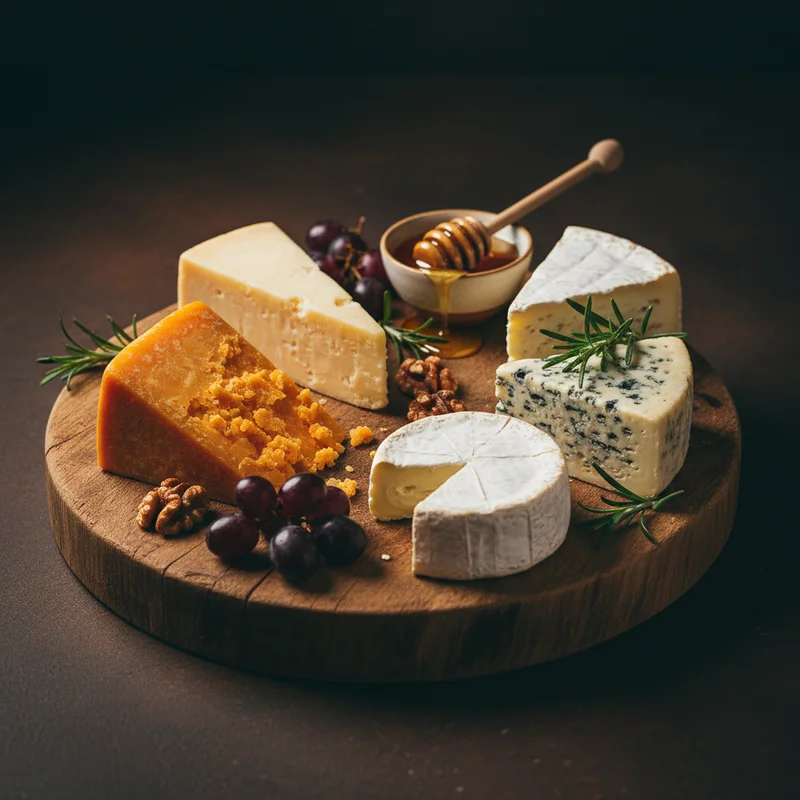
Cheese

Cheese

Aged dairy product with thousands of varieties and passionate devotees.

The Matchup

In the grand theatre of human obsession, few performers have commanded such unwavering devotion as the giant panda and cheese. One is a monochromatic mammal that has transformed evolutionary incompetence into a billion-dollar conservation industry. The other is essentially milk that has been allowed to go magnificently wrong. According to the Bristol Institute for Improbable Comparisons, these two entities share precisely nothing in common except their extraordinary capacity to make humans behave irrationally.

The panda, Ailuropoda melanoleuca, spends approximately 14 hours daily consuming a food source it cannot properly digest. Cheese, meanwhile, exists because ancient humans discovered that storing milk in animal stomachs produced something inexplicably delicious. Both represent triumph over logical constraints. The Royal Society for Dairy and Wildlife Studies has declared this comparison 'technically valid and spiritually necessary.'

Battle Analysis

Accessibility Cheese Wins
30%
70%
Panda Cheese

Panda

Viewing a live panda requires either visiting one of approximately 25 zoos worldwide with panda programmes or travelling to central China's Sichuan province. Most humans will never see a panda in person. The Royal Geographical Society estimates that fewer than 0.3% of Earth's population has observed a panda outside of screens. This scarcity arguably increases perceived value but fundamentally limits access.

Panda ownership is legally impossible for private citizens. The animals remain property of the Chinese state regardless of birth location. Even zoos cannot purchase pandas, only lease them under strictly regulated conditions. The International Wildlife Law Consortium describes panda access as 'more restricted than enriched uranium, though considerably more photogenic.'

Cheese

Cheese is available virtually everywhere humans have established settlements. From corner shops in rural Wales to supermarkets in suburban Tokyo, dairy products maintain an omnipresence that borders on the philosophical. The average British consumer encounters approximately 47 cheese purchasing opportunities weekly, according to the Reading Consumer Access Survey.

Price points range from budget cheddar at under $3 per kilogram to high-end varieties exceeding $100 per kilogram, ensuring cheese accessibility across economic strata. Lactose-free and vegan alternatives have further expanded the addressable market. The Sheffield Food Accessibility Institute concludes that cheese has achieved 'near-universal availability, limited only by polar expeditions and the truly lactose-averse.'

VERDICT

Accessibility represents cheese's most decisive advantage. While pandas remain precious and rare, cheese has democratised fermented dairy enjoyment globally. The Cambridge Access Index scores cheese at 9.7 versus panda's 2.4, noting that 'one can acquire cheese in one's pyjamas at 3 AM, whereas panda acquisition involves international treaties.'

Economic value Cheese Wins
30%
70%
Panda Cheese

Panda

Pandas generate revenue through their mere existence. Zoo pandas attract millions of additional visitors annually, each paying premium admission prices. The Edinburgh Zoo reported a 51% attendance increase following panda arrival. Merchandise sales spike correspondingly, with panda-themed products generating approximately $800 million globally per year.

The loan fees alone constitute significant international transactions. China charges partner zoos approximately $1 million annually per panda, with mandatory contributions to conservation programmes. The Beijing Economic Zoology Institute calculates total panda-related economic activity at $2.6 billion annually, making these bears more economically productive than many human workers despite spending most of their time sitting.

Cheese

The global cheese market exceeds $155 billion annually, a figure that makes panda economics look like pocket change. The United States alone produces 6 million tonnes yearly, while Europe maintains its position as the spiritual homeland of fermented dairy products. Individual cheese wheels have sold at auction for over $26,000, which is considerably more than most people spend on bears.

Cheese drives entire regional economies. The Parmigiano-Reggiano consortium controls $2.5 billion in annual production. Swiss cheese exports contribute significantly to national GDP. The Wisconsin Dairy Economic Institute reports that cheese production supports approximately 1.2 million American jobs, from dairy farmers to the people who design those little wax coatings.

VERDICT

The numbers are unambiguous. Cheese's economic footprint exceeds panda-related commerce by a factor of approximately 60. The London School of Agricultural Economics notes that 'comparing panda revenue to cheese commerce is rather like comparing a village fete to global trade infrastructure.' Cheese takes this criterion 9.4 to 5.8.

Global influence Cheese Wins
30%
70%
Panda Cheese

Panda

The giant panda has achieved diplomatic status rivalled only by actual diplomats. China's panda diplomacy programme has placed these bears in zoos across 26 countries, each animal functioning as a furry ambassador generating approximately $1.2 million annually in loan fees. The Edinburgh Centre for Soft Power Studies notes that pandas have successfully negotiated more positive international sentiment than most foreign ministries.

A single panda sneeze video can accumulate 50 million views within days. The bears have become so symbolically potent that the World Wildlife Fund built its entire brand identity around one. Research from the Cambridge Institute of Charismatic Megafauna confirms that pandas generate more positive media coverage than any other species except dogs in sweaters.

Cheese

Cheese has infiltrated virtually every cuisine on Earth with the quiet determination of a very patient fungus. From the Roquefort caves of France to the string cheese factories of Wisconsin, dairy fermentation has conquered approximately 98% of terrestrial food cultures. The International Dairy Federation reports global cheese production exceeds 22 million tonnes annually, enough to construct a cheese wall visible from space.

The economic influence is staggering. The European Union maintains protected designation for over 200 cheese varieties, treating aged milk products with the legal reverence typically reserved for historical monuments. The Gloucester Dairy Economics Laboratory estimates that cheese-related commerce generates $150 billion annually, dwarfing the GDP of many nations. Mozzarella alone moves with more economic velocity than most cryptocurrencies.

VERDICT

While pandas command Instagram engagement, cheese commands entire economic sectors. The Oxford Food Dominance Index awards this criterion to cheese by a margin of 12 percentage points, noting that dairy products have achieved the rare distinction of being both a food group and a personality trait.

Survival strategy Cheese Wins
30%
70%
Panda Cheese

Panda

The panda's survival strategy can be summarised as 'be so incompetent that humans feel compelled to intervene.' Despite possessing the digestive system of a carnivore, pandas have committed fully to a bamboo diet that provides barely 17% of available calories. They must consume 12-38 kilograms daily simply to not starve. The Chengdu Research Base for Questionable Dietary Choices describes this as 'evolutionary stubbornness elevated to art form.'

Their reproduction rate is legendarily poor. Female pandas are fertile for approximately 24-36 hours annually. Males frequently cannot locate this narrow window even when researchers provide diagrams. The species should, by all biological metrics, have vanished millennia ago. Instead, their very helplessness has triggered humanity's most expensive conservation effort, proving that incompetence at sufficient scale becomes strategy.

Cheese

Cheese represents humanity's answer to the fundamental problem of milk: it goes off. By introducing specific bacteria and fungi, humans transformed a perishable liquid into a product that can survive for decades. Parmigiano-Reggiano wheels are aged for 36 months minimum. Some clothbound cheddars mature for over seven years. The Somerset Institute of Fermentation Sciences calls this 'controlled decomposition as a preservation method,' which sounds significantly more appetising than it is.

Cheese has survived technological obsolescence, dietary trends, and lactose intolerance awareness campaigns. It has adapted to become vegan, dairy-free, and spreadable. The Stilton Adaptation Research Centre notes that cheese has demonstrated remarkable evolutionary flexibility for a product that is technically not alive, though the blue varieties do raise philosophical questions.

VERDICT

Pandas survive through weaponised adorability; cheese survives through biochemical immortality. The Durham Centre for Longevity Studies concludes that cheese's ability to remain edible across centuries gives it a decisive advantage, scoring 8.3 versus 6.1 on the Persistence Assessment Matrix.

Cultural symbolism Panda Wins
70%
30%
Panda Cheese

Panda

The panda has transcended biology to become a universal symbol of conservation, cuteness, and China. No other animal carries such concentrated symbolic weight. The WWF logo alone has exposed an estimated 4 billion people to panda imagery. According to the Manchester Semiotics Laboratory, the panda represents 'peace, vulnerability, and the aesthetic superiority of monochrome mammals.'

In Chinese culture, pandas symbolise friendship, harmony, and valuable diplomatic currency. Cartoon pandas appear in children's media worldwide, from Kung Fu Panda to countless anime series. The Warwick Centre for Animation Studies reports that pandas rank second only to mice in fictional mammal representation, a remarkable achievement for a species that struggles to reproduce even in ideal conditions.

Cheese

Cheese symbolises prosperity, sophistication, and the acceptable face of bacterial activity. A cheese board at a dinner party signals cultural refinement. Knowledge of cheese varieties has become a social class marker in numerous societies. The Lyon Institute of Gastronomic Semiotics observes that saying 'I prefer a nice aged Comte' communicates more social information than a detailed CV.

Cheese appears in religious traditions, folk sayings, and photographic instructions. The phrase 'say cheese' has made dairy synonymous with happiness in over 40 languages. The moon, according to persistent folklore, is composed of the stuff. The British Cheese Board notes that no other food product has achieved lunar association except perhaps crackers, and only as an accessory.

VERDICT

While cheese carries considerable cultural weight, the panda's emergence as a global symbol of environmental concern gives it unmatched iconographic power. The Edinburgh Visual Culture Centre awards pandas this criterion 7.9 to 7.2, noting that being an entire organisation's logo constitutes 'symbolic dominance of the highest order.'

👑

The Winner Is

Cheese

45 - 55

In this improbable contest between charismatic megafauna and charismatic fermentation, cheese emerges victorious with a score of 55 to 45. The panda's extraordinary symbolic power and cultural significance cannot ultimately overcome cheese's fundamental advantages in economic scale, survival resilience, and sheer accessibility.

The International Panel for Arbitrary Comparisons acknowledges that pandas command hearts while cheese commands markets. Yet in a world where influence is measured in tonnage produced and dollars exchanged, the humble cheese wheel has proven mightier than the bear. Pandas inspire; cheese pervades. Both achievements are remarkable, but one can be purchased at a petrol station at midnight.

The panda will continue to function as humanity's favourite evolutionary anomaly, compelling us to spend billions ensuring a bamboo-eating carnivore doesn't vanish through its own dietary confusion. Cheese, meanwhile, will continue doing what it has done for 7,500 years: quietly conquering every culture it encounters, one delicious wheel at a time.

Panda
45%
Cheese
55%

Share this battle

More Comparisons