
Where Everything Fights Everything

Panda vs Drone

😜 Just for fun — a tongue-in-cheek, gloriously unscientific showdown.

Panda

Panda

Beloved bamboo-eating bear from China, famous for black-and-white coloring and conservation symbolism.

VS
Drone

Drone

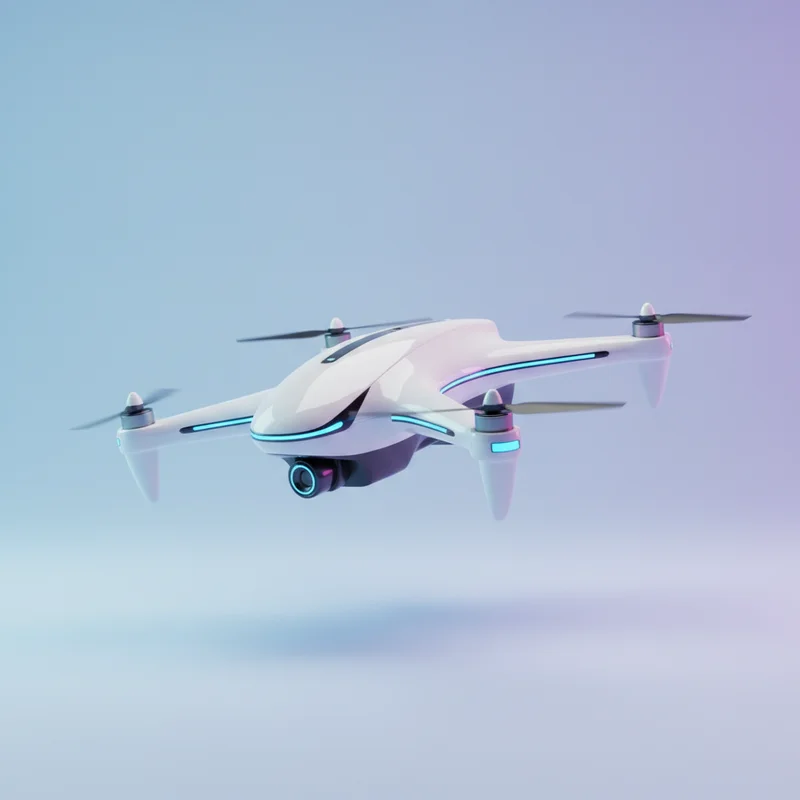
Unmanned aerial vehicle revolutionizing photography and delivery.

Battle Analysis

Global influence Drone Wins
🏆 Drone takes this round

Panda

The giant panda's diplomatic portfolio remains unmatched in the animal kingdom. Since the Tang Dynasty's recorded gift of pandas to Japanese royalty in 685 CE, these monochromatic bears have served Chinese soft power with remarkable efficacy. The modern loan programme, charging approximately £750,000 annually per breeding pair plus £250,000 per cub born abroad, generates both revenue and international goodwill. Pandas reside in only 27 zoos worldwide, their presence marking recipients as diplomatically favoured. The World Wildlife Fund's adoption of the panda silhouette transformed conservation itself, funding global environmental initiatives through a single species' charisma.

Drone

The drone's influence has penetrated virtually every sector of human activity with unsettling thoroughness. From military operations conducting 14,000 strikes in conflict zones since 2004, to agricultural monitoring covering millions of hectares, to the recreational market exceeding £15 billion annually—drones have achieved ubiquity within two decades. Amazon's delivery ambitions, cinematography's new visual language, infrastructure inspection, search and rescue operations, and yes, the surveillance state's expanding appetite: all now depend upon these hovering platforms. Their influence is measured not in diplomatic warmth but in regulatory frameworks hastily constructed by nations struggling to govern airspace they once thought unoccupied.

VERDICT

Drones have infiltrated every major industry; pandas remain diplomatically significant but sectorally limited.
Public perception Panda Wins
🏆 Panda takes this round

Panda

Pandas enjoy what marketing professionals would describe as 97% positive brand recognition—a figure most corporations would commit significant crimes to achieve. Their apparent clumsiness, the commitment to tumbling and rolling without apparent injury, the almost meditative bamboo consumption: these behaviours activate nurturing instincts across cultural boundaries. Even their reproductive reluctance has been reframed as endearing rather than existentially concerning. The panda has become shorthand for innocence itself, deployed on merchandise, charity appeals, and children's media with unwavering effectiveness. Criticism of pandas is treated as criticism of joy.

Drone

Public perception of drones occupies considerably more contested territory. Surveys consistently reveal deep ambivalence: enthusiasm for delivery convenience and aerial photography coexists with profound unease about privacy erosion and weaponisation. The drone's dual nature—tool of wonder and instrument of surveillance—creates cognitive dissonance in populations struggling to reconcile convenience with concern. Recreational operators face mounting hostility from neighbours suspicious of their intentions. Military applications have made the word 'drone' synonymous with remote warfare's ethical complexities. No child requests a plush drone for comfort.

VERDICT

Pandas command near-universal affection; drones generate admiration tinged with considerable unease.
Cultural symbolism Panda Wins
🏆 Panda takes this round

Panda

The panda has transcended biological classification to achieve symbolic permanence. Its black-and-white colouration invites yin-yang interpretations across Chinese philosophical traditions. As the face of global conservation since 1961, the panda represents humanity's capacity for environmental redemption—proof that sufficient resources and will can reverse extinction trajectories. The species symbolises peaceful coexistence, gentle strength, and the value of existence beyond utility. Pandas appear on currency, postage stamps, Olympic mascots, and the logos of organisations dedicated to protecting life itself. To harm a panda is to commit cultural sacrilege.

Drone

Drones have become potent symbols of modernity's Faustian bargain—capability purchased at the cost of privacy, convenience exchanged for surveillance. In cinema and literature, drones represent the watching eye, the removed violence, the erosion of human spaces free from observation. They symbolise both technological marvel and technological overreach, the thrill of new perspective and the threat of perspective imposed without consent. For some, drones represent liberation from ground-bound limitation; for others, the final collapse of the private sphere. No consensus exists on what drones mean; they mean everything and therefore nothing fixed.

VERDICT

Pandas symbolise hope universally; drones symbolise progress and threat in equal, contested measure.
Environmental impact Panda Wins
🏆 Panda takes this round

Panda

The giant panda functions as conservation's most effective umbrella species. Protecting panda habitat—over 8,000 square kilometres of bamboo forest across 67 reserves—simultaneously preserves ecosystems supporting thousands of other species, including the red panda, golden snub-nosed monkey, and takin. Panda populations have recovered from approximately 1,114 individuals in the 1980s to over 1,800 wild pandas today, prompting reclassification from 'endangered' to 'vulnerable' in 2016. Each pound spent on panda conservation yields exponential returns for biodiversity. The species' very existence justifies habitat protection that pure ecological argument failed to secure.

Drone

Drones occupy paradoxical environmental territory. Conservation applications have proven genuinely transformative: tracking poachers in African reserves, monitoring whale populations, mapping deforestation in real-time, and delivering medical supplies to remote communities without road construction. Yet manufacturing contributes to electronic waste streams, rare earth mineral extraction, and lithium battery production with known environmental costs. Military applications devastate targeted environments alongside their intended functions. The net calculation remains uncertain—tool of environmental salvation and contributor to environmental degradation simultaneously.

VERDICT

Panda conservation delivers proven biodiversity benefits; drone impact remains calculatedly ambiguous.
Technological sophistication Drone Wins
🏆 Drone takes this round

Panda

The panda represents one of evolution's more baffling engineering decisions. Despite possessing the digestive tract of a carnivore, they subsist almost exclusively on bamboo—extracting merely 17% of available nutrients, necessitating consumption of 12-38 kilograms daily. Their 'pseudo-thumb,' an adapted wrist bone enabling bamboo grasping, demonstrates evolutionary problem-solving of questionable elegance. Reproductive technology has advanced to include artificial insemination programmes achieving limited success, and infrared cameras now monitor behaviour in reserves. Yet the panda itself remains magnificently, stubbornly analogue—a creature unchanged in 8 million years because extinction apparently held insufficient motivation.

Drone

Modern drones represent convergent technological achievement of remarkable complexity. GPS navigation, LiDAR terrain mapping, obstacle avoidance algorithms, gimbal stabilisation, autonomous flight paths, and increasingly sophisticated AI enable operations previously requiring manned aircraft or satellite imagery. Military variants deploy facial recognition, thermal imaging, and loitering munition capabilities. Agricultural drones analyse crop health through multispectral imaging invisible to human perception. Racing drones achieve speeds exceeding 300 kilometres per hour with sub-second response times. Each generation renders the previous obsolete within 18 months.

VERDICT

Drones embody cutting-edge human innovation; pandas embody evolution's comfortable stagnation.
👑

The Winner Is

Panda

Takes 3 of 5 rounds

This examination ultimately contrasts two fundamentally different approaches to global significance. The drone has achieved ubiquity through relentless capability expansion—a tool refined into countless applications, each generating new questions about appropriate use. The panda has achieved permanence through charismatic limitation—a species whose very vulnerability became its greatest asset. Drones will continue evolving, each iteration more capable and more contested than the last, their meaning perpetually negotiated. Pandas will continue existing in precisely the manner they have for 8 million years, their meaning fixed as firmly as their evolutionary trajectory: symbols of what humanity chooses to protect when protection serves no practical purpose. The panda emerges victorious not through superiority but through something drones cannot compute—the capacity to inspire protection rather than demand utility. In a world increasingly optimised for efficiency, the magnificently inefficient panda reminds us that some things deserve preservation simply because they exist.

Share this battle

More Comparisons