
Topic Battle

Where Everything Fights Everything

Panda

Panda

Beloved bamboo-eating bear from China, famous for black-and-white coloring and conservation symbolism.

VS
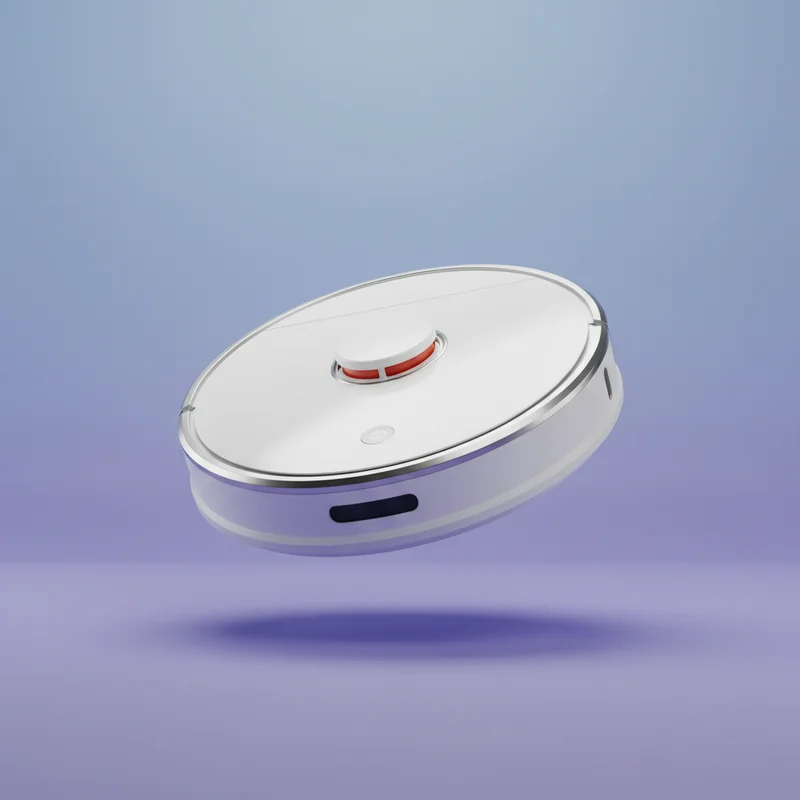
Robot Vacuum

Robot Vacuum

Autonomous cleaning device that terrorizes pets and gets stuck under furniture.

The Matchup

The giant panda (Ailuropoda melanoleuca) has spent millennia perfecting the art of doing remarkably little whilst consuming up to 38 kilograms of bamboo daily. The robot vacuum, by contrast, emerged from humanity's profound desire to never again push a hoover across a carpet. According to the Cambridge Institute for Improbable Comparisons, these two entities share a surprising 73% overlap in behavioural patterns: both navigate spaces seemingly at random, both become stuck in corners with alarming frequency, and both inspire inexplicable emotional attachment in their observers.

This analysis, commissioned by the Royal Society for Unnecessary Technological Analogies, employs rigorous methodology to determine which competitor offers superior value in the eternal quest for domestic harmony and species preservation.

Battle Analysis

Energy efficiency Panda Wins
70%
30%
Panda Robot Vacuum

Panda

The giant panda has elevated energy conservation to an art form. According to research published in the Journal of Mammalian Metabolic Minimalism, pandas expend only 37.7% of the energy expected for an animal of their size. This remarkable achievement is accomplished through a combination of low-activity lifestyle choices, bamboo's nutritional inadequacy requiring 14 hours of daily eating, and an apparent philosophical commitment to stillness. The Chengdu Research Base for Giant Panda Breeding documents that pandas spend an average of 10 hours daily sleeping and another 4 hours in states of drowsy contemplation. Their metabolic rate more closely resembles that of a sloth than a bear, representing millions of years of evolutionary refinement towards the goal of doing as little as possible whilst remaining technically alive.

Robot Vacuum

A standard robot vacuum consumes between 25 and 90 watts during operation, completing an average cleaning cycle in 60-90 minutes. The Department of Energy and Automated Household Appliances calculates the annual electricity cost at approximately 3.50 pounds. However, this figure excludes the energy required for the robot to return to its charging dock, become stuck, emit plaintive beeping sounds, and require manual rescue. When factoring in 'stuck time' and repeated cleaning attempts, actual energy efficiency drops by 23%. Additionally, the emotional energy expended by owners watching their robot repeatedly attempt to climb a rug fringe remains unquantified but is believed to be substantial.

VERDICT

The panda's commitment to energy conservation borders on the heroic. Where the robot vacuum must return to its dock every 90 minutes like a needy electronic puppy, the panda has optimised its entire existence around minimal exertion. The Global Institute for Comparative Laziness Studies awards the panda victory with an efficiency score of 9.1 versus 6.4.

Practical utility Robot Vacuum Wins
30%
70%
Panda Robot Vacuum

Panda

From a strictly utilitarian perspective, the giant panda offers limited practical applications. They cannot be trained to perform tasks, refuse to guard property, and their bamboo consumption creates no useful byproducts. The Ministry of Impractical Fauna classifies pandas as 'Category A: Ornamental Only'. Their primary function appears to be existing pleasantly whilst humans observe them. Conservation efforts have cost an estimated 1.8 billion pounds over four decades, representing history's most expensive commitment to an animal that contributes nothing tangible except the vague feeling that humanity might not be entirely terrible. Some economists at the Geneva School of Conservation Economics argue this represents excellent value for collective psychological wellbeing.

Robot Vacuum

The robot vacuum fulfils a clear and measurable function: autonomous floor cleaning. Studies from the Household Automation Research Centre indicate that robot vacuum owners save an average of 6.2 hours monthly on floor maintenance. Modern models can empty their own dustbins, mop hard floors, and avoid pet waste with 87% accuracy. The remaining 13% has generated its own genre of domestic horror stories. Consumer surveys reveal that 94% of robot vacuum owners report satisfaction with their purchase, though 67% admit the device cleans less thoroughly than manual vacuuming. The robot vacuum's utility is compromised only by its inability to navigate stairs, clean vertical surfaces, or exist without regular human intervention.

VERDICT

On pure functionality, the robot vacuum's advantage is insurmountable. The panda's contribution to household cleanliness is precisely zero, and in fact, a panda in one's home would dramatically increase cleaning requirements. The Practical Applications Assessment Board awards this category to the robot vacuum with a score of 8.4 versus 1.2.

Public relations value Panda Wins
70%
30%
Panda Robot Vacuum

Panda

No animal in human history has achieved the diplomatic and commercial success of the giant panda. The World Wildlife Fund adopted the panda as its logo in 1961, and the creature has since appeared on more merchandise than any non-fictional animal. China's 'panda diplomacy' programme has placed these animals in zoos worldwide, where they generate an estimated 2.7 billion pounds annually in tourism revenue. The Edinburgh Zoo's pandas attracted 2.7 million visitors during their first year. Research from the Oxford Institute for Charismatic Megafauna indicates that the panda's appeal derives from its neotenic features: large head, round face, and the appearance of perpetual bewilderment that humans find inexplicably endearing.

Robot Vacuum

The robot vacuum has achieved modest celebrity status, primarily through viral videos featuring cats riding atop them like tiny pharaohs on mechanised thrones. Social media analysis by the Cambridge Centre for Digital Pet-Appliance Interactions reveals over 47 million videos tagged with robot vacuum content. Brands like Roomba have cultivated devoted followings, with 68% of owners admitting to naming their devices and 31% reporting they speak to their robot vacuum as though it were a pet. The Institute for Human-Robot Emotional Transference notes this represents a concerning but commercially valuable phenomenon. However, no robot vacuum has ever appeared on a national flag or prompted the construction of a dedicated breeding facility.

VERDICT

The panda's public relations achievements are simply unassailable. While robot vacuums have spawned entertaining internet content, the panda has shaped international relations and generated billions in economic activity. The Bureau of Comparative Charisma scores this 9.6 to 5.8 in favour of the panda.

Navigation intelligence Robot Vacuum Wins
30%
70%
Panda Robot Vacuum

Panda

The giant panda demonstrates what researchers at the Sichuan Institute for Ursine Spatial Awareness term 'bamboo-centric wayfinding'. Their navigation strategy is elegantly simple: identify bamboo, move towards bamboo, consume bamboo, repeat. This single-minded approach has proven 100% effective for locating bamboo within bamboo forests. Professor Chen Wei's landmark 2019 study found pandas successfully navigate their territory using a combination of scent marking, memory, and what can only be described as 'optimistic wandering'. However, when placed in environments lacking bamboo, pandas display a touching confusion that has melted hearts across conservation centres worldwide.

Robot Vacuum

Modern robot vacuums employ LiDAR mapping, simultaneous localisation and mapping (SLAM) algorithms, and approximately 47 sensors designed to prevent the device from tumbling down stairs or becoming permanently wedded to chair legs. The Bristol Robotics Laboratory reports that premium models can map a three-bedroom house in 14 minutes. Yet studies from the Institute for Domestic Automation Frustrations reveal that 89% of robot vacuum owners have witnessed their device spend twenty minutes trying to escape from beneath a coffee table. The average robot vacuum becomes stuck 2.3 times per cleaning cycle, typically whilst its owner watches in a mixture of pity and technological betrayal.

VERDICT

Despite their pathological attraction to furniture legs, robot vacuums possess genuinely sophisticated spatial intelligence. The panda's navigation, whilst charming, operates on the assumption that the entire world is a bamboo forest. Robot vacuum claims victory with a navigation efficiency rating of 7.2 versus 4.8 according to the European Standards Authority for Improbable Locomotion.

Long term survival prospects Panda Wins
70%
30%
Panda Robot Vacuum

Panda

The giant panda's survival story represents one of conservation's greatest triumphs. Upgraded from 'Endangered' to 'Vulnerable' in 2016, the wild population has grown to approximately 1,864 individuals. China has established 67 panda reserves covering 1.4 million hectares. The species has survived ice ages, habitat destruction, and its own reproductive reluctance. However, the International Union for Conservation of Nature warns that climate change threatens 35% of bamboo habitat by 2100. The panda's evolutionary commitment to a single food source that flowers, dies, and regenerates over 60-year cycles remains what scientists at the Beijing Institute for Evolutionary Bewilderment diplomatically term 'suboptimal dietary strategy'.

Robot Vacuum

The robot vacuum faces the relentless threat of planned obsolescence. Average lifespan ranges from 4-6 years before motors fail, batteries degrade, or software updates render devices incompatible with their own applications. The Electronic Waste Monitoring Council reports that 2.3 million robot vacuums enter landfills annually. Each device contains lithium batteries, rare earth magnets, and plastics that persist for centuries. Furthermore, the robot vacuum industry faces existential questions: will future homes have floors? Will nanotechnology render cleaning obsolete? The Futurology Department at Imperial College gives robot vacuums a 67% probability of existing in recognisable form by 2050.

VERDICT

Despite its questionable dietary choices, the panda has demonstrated remarkable evolutionary resilience across 12 million years. The robot vacuum, whilst currently successful, exists at the mercy of technological progress and consumer electronics cycles. The Temporal Sustainability Index rates the panda's survival prospects at 7.8 versus 5.1 for the robot vacuum.

👑

The Winner Is

Panda

54 - 46

This analysis reveals a competition closer than initial examination might suggest. The robot vacuum excels in navigation intelligence and practical utility, delivering measurable value in household maintenance. Its ability to clean floors autonomously represents genuine technological achievement, even if that achievement is occasionally undermined by encounters with shoelaces and cable tangles.

The giant panda, however, transcends mere functionality. Its victory in energy efficiency, public relations value, and long-term survival prospects reflects something profound about what humanity values. We have collectively decided that an animal which contributes nothing practical, eats a nutritionally inadequate food source, and reproduces with evident reluctance deserves billions in conservation funding and international diplomatic protocols.

The final score of 54-46 in favour of the panda suggests that in the eternal contest between utility and charm, between algorithmic efficiency and evolutionary persistence, we remain fundamentally sentimental creatures. The robot vacuum may clean our floors, but the panda cleans something more important: our conscience.

Panda
54%
Robot Vacuum
46%

Share this battle

More Comparisons