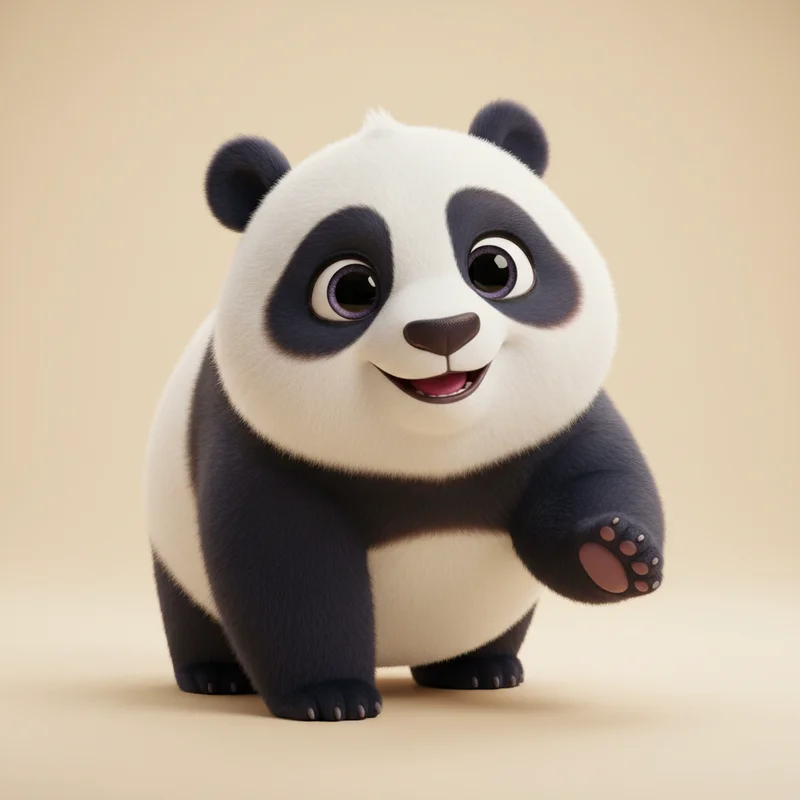

Panda
The giant panda exhibits a lifespan of twenty to thirty years in captivity, though wild specimens rarely exceed fifteen. Their survival depends upon an extraordinarily narrow range of environmental conditions: specific bamboo species, particular altitude ranges, and temperatures that fluctuate within prescribed limits.
A single panda requires approximately twelve kilograms of bamboo daily merely to survive, extracting only seventeen percent of the plant's nutritional content. This metabolic inefficiency renders them vulnerable to any disruption in their food supply. Without continuous human intervention, the species would likely face extinction within decades.
Rubber Duck
Polyvinyl chloride, the primary constituent of the modern rubber duck, demonstrates remarkable resistance to degradation. Specimens have been recovered from ocean floors after decades of submersion, their structural integrity largely preserved. The material resists bacterial colonisation, chemical dissolution, and mechanical stress with equal indifference.
The rubber duck requires neither sustenance nor shelter. It does not succumb to disease, predation, or the psychological distress that plagues captive mammals. A single specimen, properly maintained, might conceivably outlast multiple human generations. This permanence represents a form of immortality that biological organisms can only approximate.