
Topic Battle

Where Everything Fights Everything

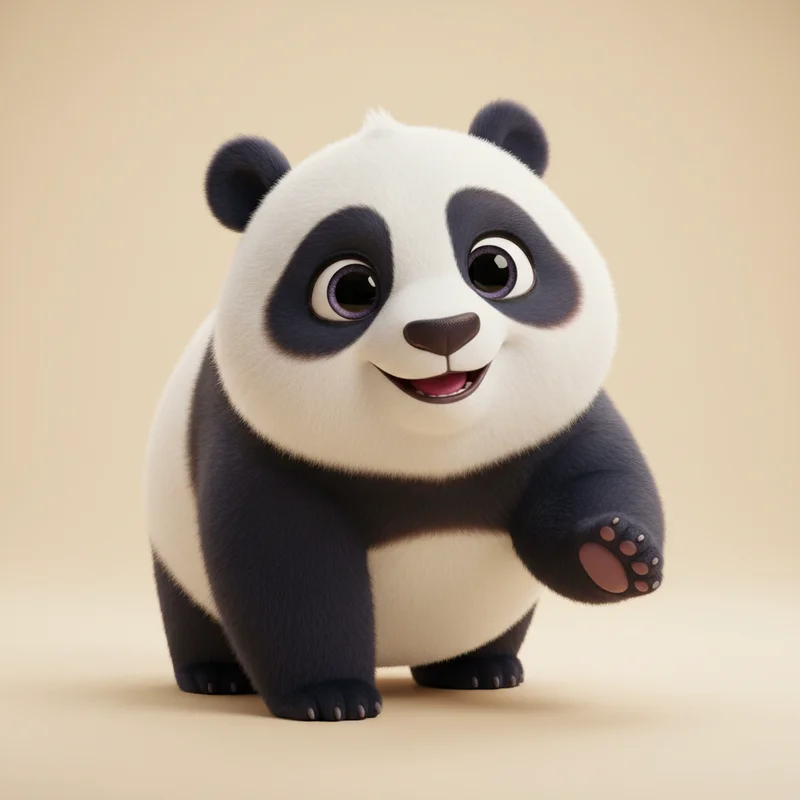
Panda

Panda

Beloved bamboo-eating bear from China, famous for black-and-white coloring and conservation symbolism.

VS
Skateboard

Skateboard

Four-wheeled plank and counterculture icon.

Battle Analysis

Global cultural impact panda Wins
70%
30%
Panda Skateboard

Panda

The giant panda occupies a position in global culture that few creatures can match. As the official logo of the World Wildlife Fund since 1961, this bear has become synonymous with conservation itself. Chinese diplomacy has employed 'panda diplomacy' since the Tang Dynasty, with these creatures serving as gifts to foreign nations. The panda's image adorns everything from airline liveries to children's animated features, generating an estimated $2.6 billion annually in tourism revenue for China alone.

The creature's distinctive black-and-white colouration has inspired countless designers, whilst its somewhat hapless demeanour has made it the subject of viral videos numbering in the hundreds of millions of views. No other animal commands such universal affection across cultural boundaries.

Skateboard

The skateboard emerged from 1950s California surf culture and has since colonised every continent except Antarctica. Its cultural footprint extends through music (punk rock, hip-hop), fashion (the entire streetwear industry), and visual arts (from Thrasher magazine to gallery exhibitions). The 2020 Tokyo Olympics marked skateboarding's admission to the world's premier sporting event, legitimising decades of counter-cultural practice.

Skateboard-adjacent industries generate approximately $5 billion annually in equipment, apparel, and media. The activity has produced its own vocabulary, aesthetic, and philosophy of urban space utilisation. From the streets of Seoul to the plazas of Barcelona, the skateboard has fundamentally altered how humans interact with architectural environments.

VERDICT

The panda's diplomatic significance and conservation symbolism grant it marginally superior cultural weight across a broader demographic spectrum.
Operational efficiency skateboard Wins
30%
70%
Panda Skateboard

Panda

The panda's operational parameters present something of a biological paradox. Despite possessing the digestive system of a carnivore, this creature has committed fully to a bamboo-based diet, requiring it to consume 12 to 38 kilograms of bamboo daily to extract sufficient nutrition. The panda's gut bacteria remain stubbornly carnivorous, resulting in an energy extraction efficiency of merely 17 percent.

This necessitates spending up to 14 hours per day eating, with the remainder allocated to rest and occasional reproduction attempts. The panda defecates approximately 40 times daily, processing bamboo with the efficiency of a poorly designed industrial shredder. However, it requires no external maintenance, self-repairs minor damage, and operates across a temperature range of -10 to 25 degrees Celsius without mechanical failure.

Skateboard

The skateboard achieves remarkable efficiency through mechanical simplicity. Its core components, comprising a wooden deck, aluminium trucks, polyurethane wheels, and steel bearings, convert human kinetic energy into forward motion with minimal friction loss. A competent operator can achieve speeds of 10-15 kilometres per hour with modest effort, scaling to 50+ kilometres per hour on suitable gradients.

Maintenance requirements are minimal: periodic bearing lubrication, wheel replacement every 3-6 months of heavy use, and occasional deck replacement. The device operates indefinitely without fuel, emits zero direct emissions, and stores compactly. However, it remains entirely dependent on human operation and environmental conditions. Rain renders it hazardous; rough terrain renders it useless.

VERDICT

The skateboard's energy conversion efficiency and minimal maintenance requirements outperform the panda's calorie-intensive operational model.
Durability and longevity panda Wins
70%
30%
Panda Skateboard

Panda

Wild pandas demonstrate a lifespan of 15 to 20 years, whilst those in captivity regularly exceed 30 years, with the record holder reaching the venerable age of 38. The panda's constitution includes a robust immune system, thick fur insulation, and skeletal structure capable of withstanding falls from considerable heights, a not-infrequent occurrence given their arboreal tendencies.

However, the species' durability as a population remains precarious. With fewer than 1,900 individuals in the wild, the giant panda exists perpetually on the edge of extinction, saved only by intensive human intervention. Individual resilience contrasts sharply with collective fragility, a biological contradiction of considerable magnitude.

Skateboard

A quality skateboard deck endures approximately 2-6 months of regular use before structural integrity becomes compromised. Professional skaters may destroy decks within days through aggressive technical manoeuvres. The complete assembly, with component rotation, might persist for 1-2 years. Some vintage boards from the 1970s remain in collections, though functionally obsolete.

The skateboard's advantage lies in perfect replicability. Unlike the panda, which requires complex reproductive conditions and multi-year gestation, a skateboard can be manufactured in hours and replaced indefinitely. Global production exceeds 6 million units annually. The species, as it were, faces no extinction risk whatsoever.

VERDICT

Individual longevity of 30+ years substantially outperforms the skateboard's 2-year maximum useful lifespan.
Environmental adaptability skateboard Wins
30%
70%
Panda Skateboard

Panda

The giant panda has developed an intimate relationship with precisely one ecosystem: the temperate bamboo forests of central China, specifically elevations between 1,200 and 3,400 metres in Sichuan, Shaanxi, and Gansu provinces. Climate change threatens even this narrow habitat, potentially eliminating 35 percent of available bamboo by 2070.

Attempts to relocate pandas to alternative environments have met with limited success. The creature's dietary specialisation renders it essentially ecosystem-dependent in a manner few large mammals exhibit. Where bamboo flourishes, so may the panda; where it does not, the panda simply cannot survive. This represents either remarkable specialisation or evolutionary inflexibility, depending on one's philosophical orientation.

Skateboard

The skateboard performs optimally on smooth, dry, paved surfaces, a habitat increasingly abundant across human settlements worldwide. From purpose-built skateparks to urban plazas, suitable terrain has expanded exponentially since the 1950s. The device operates effectively across a temperature range of -10 to 45 degrees Celsius, limited primarily by bearing lubricant viscosity and wheel compound performance.

However, environmental constraints remain significant. Wet conditions render skateboarding dangerous; sand, gravel, or rough surfaces halt progress entirely. The skateboard cannot navigate forests, climb mountains, or cross bodies of water. Its adaptability, whilst superior to the panda's in terms of geographic range, remains fundamentally dependent on human infrastructure.

VERDICT

Global operational range across urban environments outweighs the skateboard's surface-type limitations when compared to the panda's single-ecosystem dependency.
Social and emotional intelligence panda Wins
70%
30%
Panda Skateboard

Panda

Despite their reputation as solitary creatures, pandas exhibit sophisticated social behaviours mediated through chemical communication. They maintain territory through scent marking, utilising a complex array of compounds to convey reproductive status, individual identity, and territorial claims. Cubs remain with mothers for up to three years, learning foraging techniques and social norms.

Pandas demonstrate recognisable emotional states including contentment, anxiety, and playfulness. Captive individuals develop bonds with keepers and display distress at separation. Their play behaviours, including tumbling, sliding, and mock-wrestling, suggest a capacity for joy that has captivated human observers worldwide. Intelligence assessments place them comparable to other bear species, capable of problem-solving and memory retention.

Skateboard

The skateboard possesses no neural tissue whatsoever and therefore exhibits zero capacity for social interaction or emotional experience. It cannot recognise its owner, form preferences, or experience satisfaction at a well-executed kickflip. The object remains as emotionally sophisticated as the tree from which its deck was fashioned, which is to say, not at all.

What the skateboard does facilitate is remarkable human social bonding. Skate culture has created global communities, mentorship relationships, and shared identity among millions of practitioners. The object serves as a catalyst for human connection whilst possessing none itself. Whether this transferred social value should count in its favour remains a matter of philosophical debate.

VERDICT

Possessing actual consciousness and demonstrated emotional capacity definitively outranks inanimate object status.
👑

The Winner Is

Panda

52 - 48

After exhaustive analysis across five rigorous criteria, the giant panda emerges with a narrow victory, securing three categories to the skateboard's two. The margin, however, belies the genuine complexity of this comparison.

The panda's advantages centre on qualities we might term intrinsic: cultural significance rooted in rarity, individual longevity measured in decades, and the irreducible fact of sentient experience. These are qualities the skateboard cannot replicate regardless of manufacturing improvements or design innovations.

The skateboard counters with extrinsic excellence: superior operational efficiency, broader environmental adaptability, and infinite replicability. It serves human needs with elegant simplicity whilst making no demands beyond occasional maintenance.

Ultimately, the panda prevails not through performance metrics but through something harder to quantify: the weight of existence itself. A skateboard can be replaced; a species cannot. The panda's marginal victory, 52 to 48, reflects this fundamental asymmetry between the manufactured and the evolved, the infinite and the irreplaceable.

Panda
52%
Skateboard
48%

Share this battle

More Comparisons