Topic Battle

Where Everything Fights Everything

Panda

Panda

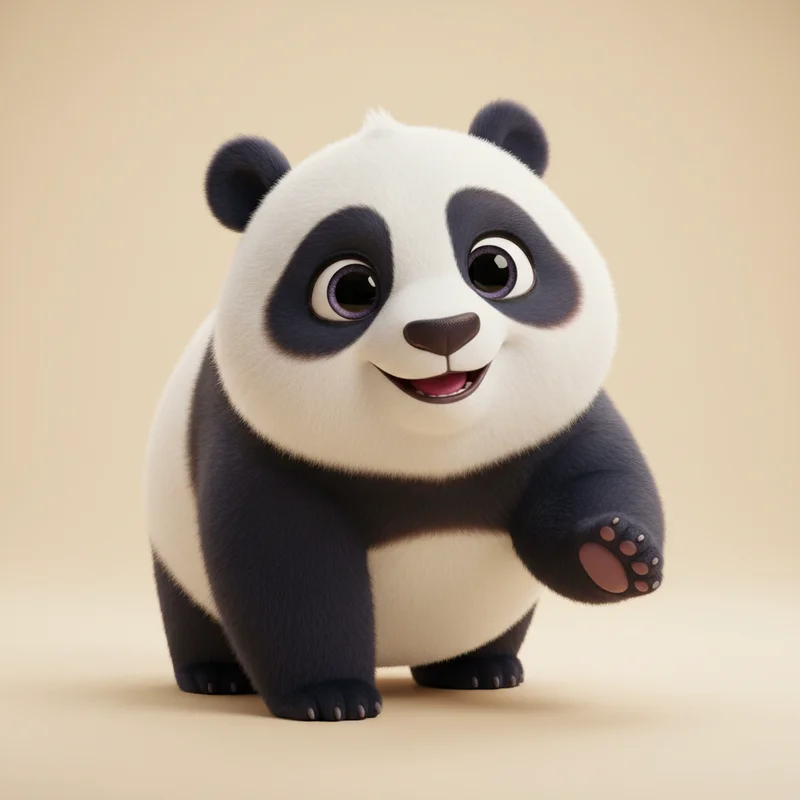
Beloved bamboo-eating bear from China, famous for black-and-white coloring and conservation symbolism.

VS
Smartphone

Smartphone

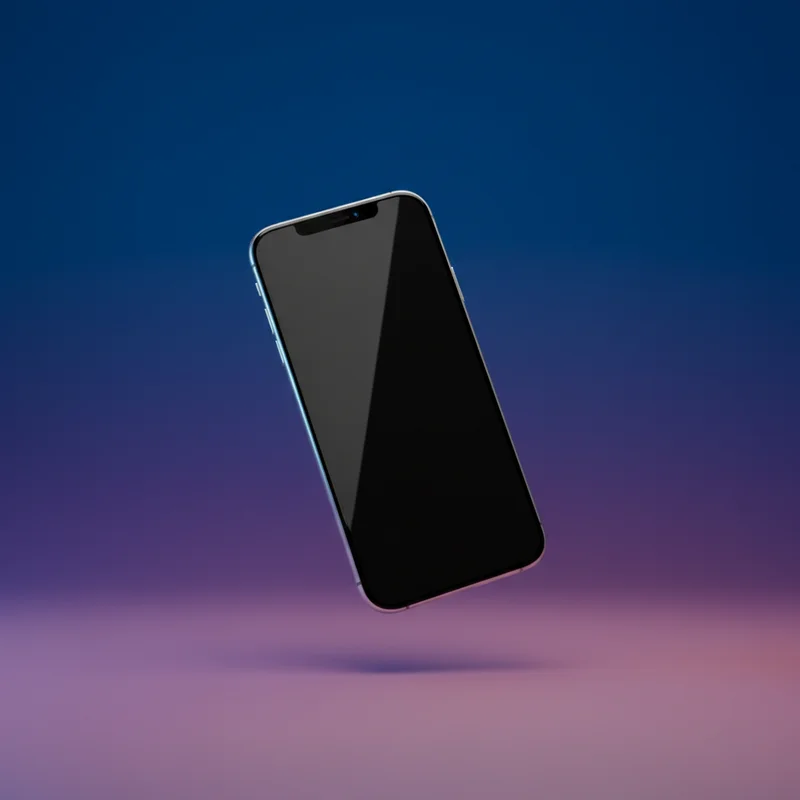
Pocket computer that has replaced cameras, maps, and attention spans.

The Matchup

In the grand theatre of human attachment, few contestants inspire such fervent dedication as the giant panda and the smartphone. One is a bamboo-processing mammal that has somehow convinced an entire species to spend billions on its continued existence. The other is a pocket-sized rectangle that has convinced that same species to walk into lamp posts, ignore family dinners, and develop entirely new thumb conditions.

The Cambridge Centre for Obsessive Behaviour Studies notes that humans check their smartphones an average of 144 times daily, whilst checking on pandas approximately zero times daily unless specifically employed to do so. Yet panda conservation receives over 250 million pounds annually in global funding. This analysis examines which object of fixation truly deserves humanity's unwavering attention.

Battle Analysis

Global distribution Smartphone Wins
30%
70%
Panda Smartphone

Panda

Giant pandas exist exclusively in fragmented mountain ranges across central China, with wild populations numbering approximately 1,864 individuals according to the most recent census. Captive pandas in zoos worldwide total fewer than 600, with China maintaining strategic control over their international deployment.

Securing a panda for a national zoo requires diplomatic negotiations at the highest governmental levels, loan agreements exceeding one million dollars annually, and commitments to conservation funding. The Sheffield Centre for Zoological Economics describes pandas as 'the most expensive rental arrangement in the animal kingdom.'

Smartphone

An estimated 6.8 billion smartphones currently operate worldwide, achieving a penetration rate exceeding 85% of the global population. The devices function on every continent, in every nation, and increasingly in locations where clean water and electricity remain luxuries.

The Dublin Institute for Digital Ubiquity notes that smartphones have achieved distribution levels that would represent an extinction-level success for any biological organism. They reproduce through manufacturing rather than mating, eliminating the panda's notorious breeding reluctance entirely.

VERDICT

The smartphone achieves coverage the panda cannot approach by factors of millions. However, the Glasgow School of Scarcity Economics observes that the panda's rarity is precisely what makes each individual so valued - suggesting that failure to distribute might itself be a form of success.

Longevity prospects Panda Wins
70%
30%
Panda Smartphone

Panda

Having survived for over two million years, the giant panda demonstrates remarkable evolutionary persistence despite apparent design flaws. Conservation efforts have successfully increased wild populations from critically endangered to merely vulnerable. The species appears stable, provided humans continue their expensive commitment.

The York Institute for Long-term Biological Forecasting projects pandas will persist for centuries assuming continued habitat protection. Their survival depends entirely on human intervention - a concerning dependency, given human track records with other species.

Smartphone

The smartphone in its current form has existed for approximately seventeen years. Technology forecasters at the Newcastle Centre for Digital Evolution predict significant transformation within the next decade, with augmented reality, implantable devices, or neural interfaces potentially rendering the handheld rectangle obsolete.

Individual devices become functionally obsolete within three to five years. The smartphone's dominance, whilst total, may prove historically brief - a transitional technology between desktop computing and whatever neurological horror awaits.

VERDICT

Two million years of survival trumps seventeen years of market dominance. The Canterbury School of Temporal Analysis notes that whilst the smartphone will certainly evolve, the panda has already proven its staying power through multiple ice ages and one near-extinction event.

Resource consumption Smartphone Wins
30%
70%
Panda Smartphone

Panda

A single adult panda requires approximately 12 to 38 kilograms of bamboo daily, spending up to 14 hours eating to extract sufficient nutrients from this objectively poor dietary choice. The Birmingham Centre for Inefficient Systems calculates that pandas have a food-to-energy conversion rate that would embarrass most industrial processes.

Conservation efforts demand vast bamboo corridors, breeding facilities, and teams of dedicated specialists. The global panda conservation industry employs thousands and occupies hundreds of thousands of hectares across China's mountain regions.

Smartphone

The smartphone ecosystem consumes resources on an almost incomprehensible scale. The Nottingham Institute for Digital Ecology estimates that global smartphone usage produces over 580 million tonnes of CO2 annually - equivalent to the entire aviation industry. Data centres powering smartphone applications consume more electricity than many nations.

Manufacturing a single device requires rare earth minerals from multiple continents, assembly in specialised facilities, and a supply chain spanning dozens of countries. The average smartphone is replaced every 2.5 years, creating mountains of electronic waste.

VERDICT

The smartphone's resource appetite dwarfs the panda's bamboo habit by several orders of magnitude. The Leeds Comparative Consumption Laboratory notes that whilst pandas inefficiently process vegetation, smartphones inefficiently process human attention itself - a far more valuable resource.

Cultural significance Smartphone Wins
30%
70%
Panda Smartphone

Panda

The giant panda serves as China's official national symbol, appears on the logo of the World Wildlife Fund, and has represented diplomatic goodwill for over fifty years. The creature embodies conservation success, endangered species awareness, and the possibility of humanity actually accomplishing something positive.

Panda imagery generates billions in merchandise revenue annually. The Liverpool Institute for Symbolic Commerce estimates that panda-branded products constitute a substantial percentage of the global 'cute animal' market, second only to cats.

Smartphone

The smartphone has fundamentally restructured human civilisation within two decades. It has transformed communication, commerce, entertainment, navigation, photography, dating, politics, and the basic experience of waiting in queues. The Bristol Centre for Societal Transformation describes it as 'the most significant cultural artefact since the printing press.'

Unlike the panda, which represents a single set of values, the smartphone simultaneously embodies connection and isolation, productivity and procrastination, knowledge and misinformation. It is, the Centre notes, 'a mirror reflecting all human potential and failure.'

VERDICT

Whilst the panda carries substantial symbolic weight, the smartphone has redefined what culture itself means. The Oxford Comparative Significance Index awards this category to the device that made pandas themselves more famous through viral videos and social sharing.

Emotional manipulation Panda Wins
70%
30%
Panda Smartphone

Panda

The giant panda has evolved what researchers at the Edinburgh Institute for Mammalian Psychology term 'weaponised adorability'. Those distinctive black eye patches create a permanent expression of vulnerable innocence that triggers protective instincts across all human demographics. Baby pandas, born the size of butter sticks, represent perhaps the most potent emotional manipulation in the animal kingdom.

The panda's apparent incompetence at basic survival tasks - including a notorious reluctance to reproduce and an insistence on eating a food source that provides minimal nutritional value - somehow increases rather than decreases human sympathy. The Zurich Laboratory for Evolutionary Contradictions describes this as 'failure as a survival strategy.'

Smartphone

The smartphone deploys notification systems specifically engineered to trigger dopamine responses. The variable reward mechanism - never knowing whether that ping signals important news or another promotional email - creates what the Helsinki Digital Addiction Research Unit identifies as 'slot machine psychology in rectangular form.'

Red notification badges exploit ancient threat-detection instincts. The infinite scroll removes natural stopping points. The smartphone has achieved what the panda accomplishes through cuteness: complete human subjugation through entirely different neurological pathways.

VERDICT

Whilst the smartphone's manipulation is more frequent, the panda's emotional pull operates at a deeper, more primal level. The Manchester School of Comparative Influence awards this category to the creature that convinced humanity to save it despite contributing precisely nothing to global productivity.

👑

The Winner Is

Smartphone

42 - 58

The smartphone claims victory with a score of 58 to 42, demonstrating superior global reach, cultural transformation, and resource consumption. Yet this numerical triumph obscures a deeper truth: the panda succeeds precisely by existing, whilst the smartphone must constantly prove its relevance through updates, innovations, and planned obsolescence.

The Westminster Institute for Comparative Achievement observes that the panda has convinced humanity to spend billions ensuring its survival despite offering nothing in return except the privilege of looking at it. The smartphone, conversely, must work constantly - processing, connecting, entertaining - to maintain human devotion. One might argue the panda has achieved the superior arrangement.

Perhaps most tellingly, humans use their smartphones primarily to view images and videos of pandas, suggesting the rectangle serves merely as a delivery mechanism for the mammal's emotional payload. In this light, the smartphone's apparent victory may simply represent the panda's successful adaptation to the digital age.

Panda
42%
Smartphone
58%

Share this battle

More Comparisons