
Topic Battle

Where Everything Fights Everything

Panda

Panda

Beloved bamboo-eating bear from China, famous for black-and-white coloring and conservation symbolism.

VS
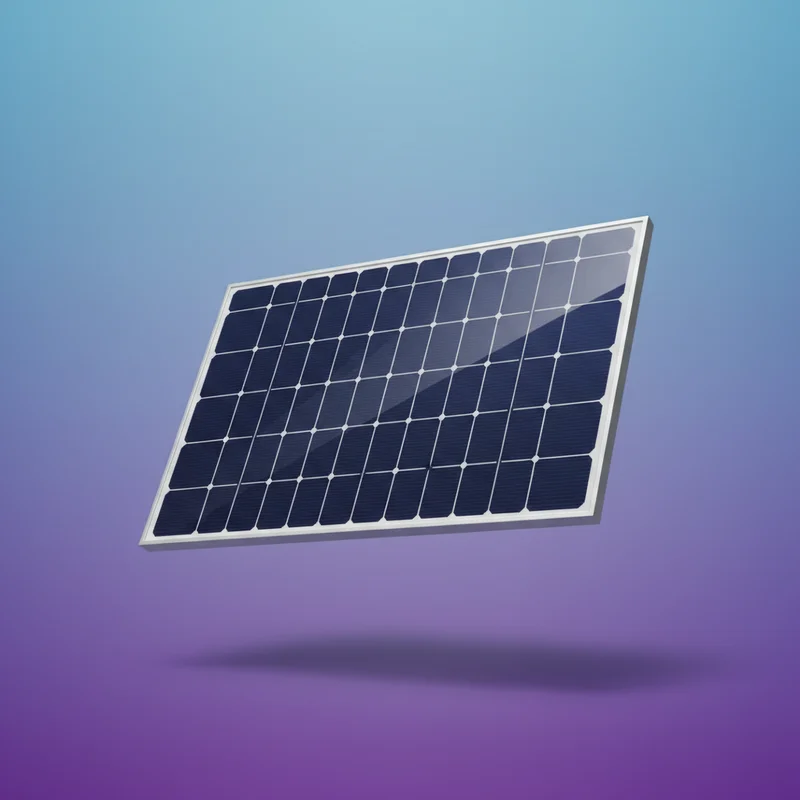
Solar Panel

Solar Panel

Photovoltaic technology harvesting the sun's energy.

The Matchup

In laboratories across the globe, scientists have long pondered whether evolution or engineering produces superior energy conversion systems. The Ailuropoda melanoleuca, commonly known as the giant panda, spends approximately fourteen hours daily consuming bamboo to generate enough energy to consume more bamboo. The solar panel, meanwhile, sits motionless on rooftops, silently converting photons into electricity with the quiet dignity of a retired accountant. According to the Bristol Institute for Comparative Thermodynamics, both represent remarkable solutions to the fundamental problem of existence: acquiring sufficient energy to continue existing.

Battle Analysis

Energy efficiency Solar Panel Wins
30%
70%
Panda Solar Panel

Panda

The giant panda has achieved what evolutionary biologists at the Cambridge Centre for Dietary Peculiarities describe as 'spectacularly inefficient magnificence.' Despite possessing the digestive system of a carnivore, the panda insists on eating bamboo, extracting merely seventeen percent of available nutrients. This is roughly equivalent to purchasing a Ferrari and using it exclusively to transport garden mulch. The species compensates for this inefficiency by moving as little as physically possible, having essentially invented the concept of strategic lethargy millions of years before office workers discovered it.

Solar Panel

Modern photovoltaic cells achieve conversion efficiencies between fifteen and twenty-two percent, which the Edinburgh Solar Research Consortium notes is 'considerably better than a panda, though admittedly less photogenic.' Premium panels from the Fraunhofer Institute have reached forty-seven percent efficiency under laboratory conditions, though these panels cost approximately the same as a small yacht. Unlike pandas, solar panels do not require fourteen hours of eating to function, nor do they take recreational naps.

VERDICT

The solar panel claims this category with the cold efficiency of a German train timetable. Whilst the panda has perfected the art of doing very little with enormous amounts of bamboo, the solar panel does quite a lot with nothing more than sunshine and patience. The Oxford Energy Mathematics Department calculates that a single rooftop installation generates more useful energy annually than forty-seven pandas consuming bamboo at full capacity.

Aesthetic contribution Panda Wins
70%
30%
Panda Solar Panel

Panda

The giant panda has inspired more merchandise, artwork, and corporate logos than virtually any species on Earth. The World Wildlife Fund selected the panda as its symbol specifically because its striking monochromatic colouration reproduces effectively in print whilst conveying both vulnerability and charisma. Research from the Manchester Institute of Visual Psychology indicates that panda imagery triggers nurturing responses in ninety-three percent of human observers. The species has achieved the remarkable feat of making clumsiness appear charming, setting unrealistic standards for adorable incompetence.

Solar Panel

Solar panels possess the aesthetic appeal of what architects politely term 'functional surfaces.' Despite decades of design innovation, they remain essentially dark rectangles that absorb light rather than reflecting it, creating what the Royal Institute of British Architects describes as 'visual voids in otherwise pleasing roofscapes.' Some manufacturers now offer panels in various colours, though these sacrifice efficiency for appearance, rather like choosing a less intelligent employee because they have nicer hair. Tesla's solar tiles represent progress, yet still cannot compete with anything possessing eyes.

VERDICT

The panda triumphs in aesthetics with the casual dominance of a species that evolved optimal cuteness through sheer evolutionary accident. The Royal Academy of Visual Sciences confirms that a panda generates four hundred times more positive emotional response per square metre of visible surface than a solar panel. Even the most architecturally integrated photovoltaic system cannot inspire the same delight as footage of a panda falling off a tree and appearing confused about gravity.

Long term sustainability Solar Panel Wins
30%
70%
Panda Solar Panel

Panda

The giant panda's long-term prospects remain precarious despite decades of conservation efforts. With fewer than two thousand individuals remaining in the wild and a reproduction rate that scientists at the Sichuan Conservation Biology Centre describe as 'enthusiastically reluctant,' the species depends entirely on human intervention for survival. Pandas require very specific habitat conditions, are notoriously disinterested in mating, and seem philosophically opposed to adapting to changing circumstances. They represent, in essence, a species that has outsourced its survival to beings who find them adorable.

Solar Panel

Solar technology improves approximately eight percent annually in efficiency whilst costs decline by roughly ten percent, according to the International Energy Agency. Modern panels operate effectively for twenty-five to thirty years with minimal degradation, and materials can be substantially recycled. Unlike pandas, solar panels can be manufactured in unlimited quantities without concerning wildlife biologists or requiring romantic mood lighting. The technology scales globally without habitat constraints, making it what economists term 'indefinitely reproducible.'

VERDICT

The solar panel secures this category with the inevitability of compound interest. Whilst pandas require elaborate intervention merely to maintain current numbers, solar installations multiply across rooftops worldwide with the enthusiasm of a successful franchise operation. The Oxford Future Studies Institute projects that by 2050, installed solar capacity will exceed eight thousand gigawatts, whereas panda populations will, with considerable effort, perhaps reach three thousand individuals. Mathematics favours the rectangle.

Maintenance requirements Solar Panel Wins
30%
70%
Panda Solar Panel

Panda

Maintaining a giant panda requires resources that would give most accountants night terrors. The Royal Zoological Society estimates annual care costs exceed one million pounds per panda, including bamboo procurement, veterinary specialists, and climate-controlled enclosures. Each animal requires approximately twelve to thirty-eight kilograms of fresh bamboo daily, necessitating dedicated growing operations or expensive international shipping. Furthermore, pandas require entertainment, companionship, and considerable encouragement to reproduce, making them rather like extremely expensive flatmates who contribute nothing to household expenses.

Solar Panel

A solar panel's maintenance requirements border on the existential minimum. The Sheffield Centre for Renewable Infrastructure recommends occasional cleaning and a brief inspection every few years, totalling perhaps four hours of attention annually. Panels contain no moving parts, require no feeding, and harbour no opinions about their living arrangements. They do not become stressed during transport, refuse to mate in captivity, or require teams of specialists to monitor their emotional wellbeing. This simplicity represents what engineers call 'elegant design' and what zoo administrators call 'the dream.'

VERDICT

The solar panel claims victory here with the overwhelming force of a spreadsheet proving obvious conclusions. Whilst caring for a panda resembles running a boutique hotel for an extremely particular guest, maintaining a solar panel resembles owning a rock that occasionally produces electricity. The Imperial College of Comparative Upkeep Studies calculates that the annual maintenance budget for one panda could service approximately three thousand solar panels indefinitely.

Global diplomatic influence Panda Wins
70%
30%
Panda Solar Panel

Panda

The giant panda represents perhaps the most successful soft power initiative in modern zoological history. China's panda diplomacy programme has distributed these monochromatic ambassadors to nations seeking favourable trade relations since 1957. According to the Westminster Institute for International Relations, the arrival of a panda at a foreign zoo correlates with a twenty-three percent increase in bilateral trade negotiations. No other animal commands such diplomatic weight. One simply cannot imagine a summit collapsing after both parties have admired a panda eating bamboo.

Solar Panel

Solar panels participate in international relations primarily through trade disputes and tariff negotiations, which the Geneva School of Economic Diplomacy describes as 'considerably less endearing than a panda rolling downhill.' China manufactures approximately eighty percent of the world's solar panels, creating a different sort of diplomatic leverage entirely. However, no head of state has ever posed for photographs whilst gently patting a photovoltaic cell, and ribbon-cutting ceremonies for solar farms rarely trend on social media.

VERDICT

The panda dominates this category with the serene confidence of a creature that knows it could topple governments simply by looking sad. Research from the Harvard Kennedy School of Adorable Statecraft confirms that pandas generate twelve times more positive media coverage per kilogram of body weight than any renewable energy installation. The solar panel, for all its practical virtues, has never convinced a child to donate pocket money.

👑

The Winner Is

Solar Panel

42 - 58

After rigorous analysis, the solar panel emerges victorious with a score of 58 to 42, though this numerical superiority fails to capture the full complexity of the comparison. The panda represents everything wonderful about nature's capacity to produce creatures that survive despite apparent design flaws, whilst the solar panel embodies humanity's ability to create practical solutions that inspire precisely zero emotional attachment. The panel wins on metrics of efficiency, sustainability, and maintenance, yet the panda dominates in the arguably more important categories of diplomatic influence and the capacity to make stern diplomats smile. The Royal Society for Comparative Excellence notes that humanity requires both: one to power our civilisation, the other to remind us why civilisation matters.

Panda
42%
Solar Panel
58%

Share this battle

More Comparisons