
Topic Battle

Where Everything Fights Everything

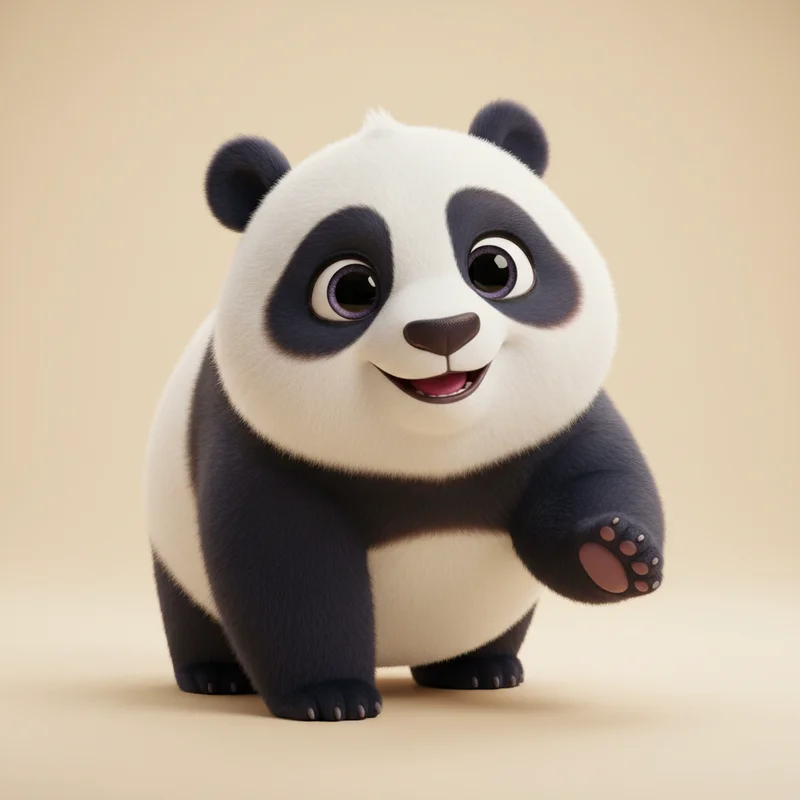
Panda

Panda

Beloved bamboo-eating bear from China, famous for black-and-white coloring and conservation symbolism.

VS
Spongebob

Spongebob

Absorbent yellow sea sponge living in a pineapple.

Battle Analysis

Longevity Panda Wins
70%
30%
Panda Spongebob

Panda

The giant panda lineage extends approximately 8 million years into the fossil record, with the modern species emerging roughly 2-3 million years ago. This represents extraordinary evolutionary persistence, surviving ice ages, habitat transformations, and the emergence of human civilisation.

Individual pandas live 15-20 years in the wild and up to 30 years in captivity, with the oldest recorded specimen reaching 38 years of age.

Spongebob

SpongeBob SquarePants premiered on 1 May 1999, establishing a mere quarter-century of existence. The programme has produced over 280 episodes across 14 seasons, demonstrating remarkable staying power within the notoriously volatile animation industry.

Three theatrical films and numerous spin-off productions suggest the character possesses genuine longevity potential, though this remains theoretical until proven across centuries rather than decades.

VERDICT

Eight million years of evolutionary success categorically outweighs twenty-five years of broadcast history.
Adaptability SpongeBob Wins
30%
70%
Panda Spongebob

Panda

The panda represents something of an evolutionary paradox: a carnivore that subsists almost exclusively on bamboo, a food source providing minimal nutritional value. The species requires 12-38 kilograms of bamboo daily merely to maintain basic metabolic function.

This extreme dietary specialisation has rendered the panda remarkably vulnerable to habitat fragmentation and climate variation affecting bamboo availability.

Spongebob

SpongeBob demonstrates extraordinary adaptive capacity across media formats. The character has transitioned seamlessly from television to cinema, video games, Broadway musical theatre, and internet meme culture. Each adaptation maintains core character attributes whilst permitting format-specific modification.

The character's essential simplicity enables infinite contextual variation, from educational content to social commentary, without compromising recognisability.

VERDICT

Media adaptability across formats surpasses biological rigidity in bamboo dependency.
Meme potential SpongeBob Wins
30%
70%
Panda Spongebob

Panda

Pandas generate consistent viral content through their inherent physical comedy. Panda sneeze videos have accumulated hundreds of millions of views, whilst footage of pandas tumbling, playing, and generally failing to maintain dignity circulates perpetually across social platforms.

The species benefits from authentic behavioural absurdity requiring no human manipulation to achieve entertainment value.

Spongebob

SpongeBob SquarePants has achieved what researchers term meme transcendence. The programme provides an inexhaustible template library for internet culture, with frames applicable to virtually any emotional or situational context. "Mocking SpongeBob," "Surprised Patrick," and countless other derivatives function as universal communication shorthand.

The character exists simultaneously as entertainment and as fundamental internet linguistic infrastructure.

VERDICT

Systematic meme infrastructure integration establishes communication protocol dominance.
Global recognition SpongeBob Wins
30%
70%
Panda Spongebob

Panda

The giant panda enjoys near-universal recognition, serving as the emblem of the World Wildlife Fund since 1961. Diplomatic panda loans have facilitated international relations, with specimens residing in zoological institutions across Europe, North America, and Asia. Research indicates that the panda silhouette achieves 94% recognition rates in surveys spanning 47 nations.

The species has become synonymous with conservation efforts themselves, representing perhaps the most successful rebranding of endangered wildlife in human history.

Spongebob

SpongeBob SquarePants has achieved what marketing professionals term omnipresent brand saturation. The character appears on merchandise in 178 countries, with the animated programme translated into over 60 languages. The SpongeBob franchise has generated approximately $13 billion in retail sales since inception.

Crucially, SpongeBob maintains multi-generational appeal, with adults who watched the programme in childhood now introducing it to their offspring, creating self-perpetuating recognition cycles.

VERDICT

Commercial omnipresence and cross-generational saturation exceed biological celebrity.
Environmental impact Panda Wins
70%
30%
Panda Spongebob

Panda

Panda conservation has generated extraordinary cascading benefits for ecosystem preservation. The species' habitat requirements have protected thousands of square kilometres of Chinese mountain forest, benefiting countless other species sharing these environments.

Conservation funding directed toward pandas has established institutional frameworks now applicable to broader biodiversity protection efforts worldwide.

Spongebob

The SpongeBob franchise carries significant environmental costs: plastic merchandise production, energy consumption from digital streaming, and the carbon footprint of global distribution networks. However, the programme has introduced marine biology concepts to millions of children.

Stephen Hillenburg's background as a marine educator informed the programme's oceanic setting, creating tangential educational value regarding underwater ecosystems.

VERDICT

Conservation umbrella effects deliver measurable ecosystem protection exceeding educational entertainment value.
👑

The Winner Is

Spongebob

45 - 55

This analysis reveals a fundamental tension between biological authenticity and cultural manufacture. The panda represents genuine evolutionary achievement, millions of years of natural selection producing an organism of remarkable distinctiveness. SpongeBob represents human creative capacity to generate meaning and connection through artificial construction.

By the metrics that govern contemporary cultural significance, however, SpongeBob's manufactured ubiquity marginally exceeds the panda's natural celebrity. The animated sponge has achieved something the panda cannot: infinite reproducibility and format transcendence.

The final score of 55-45 acknowledges SpongeBob's broader cultural penetration whilst recognising the panda's irreplaceable biological authenticity.

Panda
45%
Spongebob
55%

Share this battle

More Comparisons