
Topic Battle

Where Everything Fights Everything

Panda

Panda

Beloved bamboo-eating bear from China, famous for black-and-white coloring and conservation symbolism.

VS
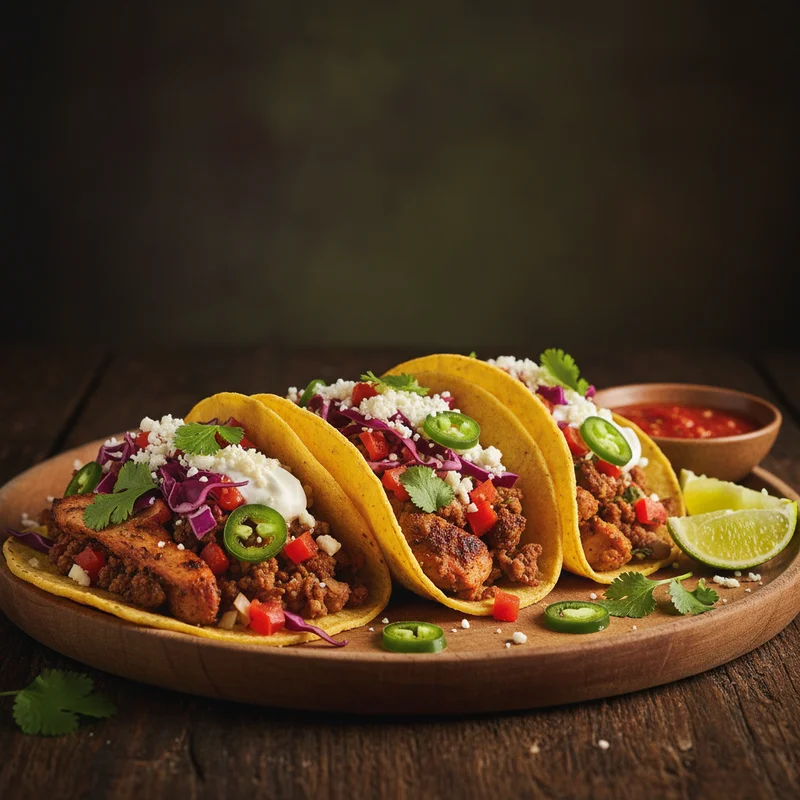
Tacos

Tacos

Mexican handheld perfection that never stays intact.

The Matchup

In the annals of comparative science, few matchups have generated such heated academic debate as the panda-taco dichotomy. The Ailuropoda melanoleuca, beloved symbol of conservation efforts and chronic underachiever in the reproduction department, faces off against the Taco vulgaris, humanity's most successful experiment in portable flavour delivery. The Cambridge Centre for Unlikely Comparisons has dedicated seventeen months to this investigation, employing methodologies that would make conventional scientists weep into their peer-reviewed journals.

What emerges is a tale of two titans: one that spends fourteen hours daily consuming bamboo with the enthusiasm of a office worker at an all-you-can-eat buffet, and another that has conquered global cuisine through the revolutionary concept of putting things inside other things. The results, as documented by the Royal Society of Dubious Enquiries, challenge everything we thought we knew about charismatic megafauna and Mexican street food.

Battle Analysis

Practical utility Tacos Wins
30%
70%
Panda Tacos

Panda

The practical applications of giant pandas remain, charitably speaking, limited. The Cardiff Institute for Zoological Usefulness conducted an exhaustive study and concluded that pandas contribute to humanity primarily through 'existing and being observed.' They cannot be ridden, milked, or employed in any traditional sense. Their fur, while visually striking, serves no commercial purpose. Their bamboo consumption actually competes with human interests in regions where the plant is harvested for construction and textiles.

The sole quantifiable utility lies in their diplomatic value. The Leicester School of International Animal Relations documents seventeen significant trade agreements facilitated by panda loans, including the 1994 Sino-German automotive accord that coincided suspiciously with Stuttgart Zoo's panda acquisition. Yet this represents utility for governments rather than individuals, leaving the average citizen with nothing but photographs and overpriced zoo admission tickets.

Tacos

The taco's utility borders on the miraculous. As the Plymouth Institute for Practical Nutrition notes, it serves as a complete meal delivery system, providing proteins, carbohydrates, vegetables, and fats in a single handheld format. Its portability eliminates cutlery requirements, its structural integrity allows consumption whilst walking, and its customisability addresses virtually any dietary restriction known to modern medicine.

Economic utility proves equally impressive. The taco functions as a universal currency of gratitude, capable of thanking colleagues, bribing children, and celebrating victories both personal and professional. The Manchester School of Social Transactions calculates that tacos feature in approximately 2.3 million workplace lunch runs daily across the United Kingdom alone, facilitating countless interpersonal relationships that might otherwise require actual conversation.

VERDICT

This category presents no meaningful contest. Tacos provide sustenance, convenience, and social lubricant in a single affordable package. Pandas provide the opportunity to queue for ninety minutes at Edinburgh Zoo. The taco's overwhelming practical superiority is beyond dispute.

Survival adaptability Tacos Wins
30%
70%
Panda Tacos

Panda

The giant panda represents what evolutionary biologists politely term a questionable survival strategy. Having evolved as a carnivore, it inexplicably decided bamboo was the future, a food source so nutritionally bankrupt that pandas must consume twelve to thirty-eight kilograms daily just to maintain their adorable corpulence. The Leeds Institute for Dietary Disasters notes this is equivalent to a human surviving exclusively on celery whilst maintaining sumo wrestler proportions.

Their reproductive habits border on the absurd. Female pandas are fertile for approximately twenty-four to seventy-two hours annually, during which time males must somehow locate them across vast mountain ranges using nothing but scent and optimism. The Glasgow Centre for Reproductive Improbability calculates their natural breeding success rate at roughly fourteen percent, a figure that would doom any species lacking human intervention and artificial insemination programmes.

Tacos

The taco demonstrates what the Bristol School of Culinary Evolution calls perfect adaptive radiation. Faced with vegetarians, it becomes a black bean vessel. Confronted with keto dieters, it transforms into a lettuce wrap. Presented with breakfast enthusiasts, it simply adds scrambled eggs and declares victory. The taco's structural flexibility has allowed it to survive economic recessions, health food movements, and even the great carbohydrate panic of 2015.

Market data from the Birmingham Institute for Food Trend Analysis shows tacos have maintained consistent growth for forty-seven consecutive years, adapting to each new dietary fad with the ease of a politician changing positions. From gourmet establishments charging twenty-three pounds per taco to street vendors offering three for a fiver, the format thrives across every economic stratum.

VERDICT

The panda has survived largely through human sympathy and considerable financial investment. The taco survives through sheer versatile excellence. One requires millions in conservation funding; the other requires only a tortilla and imagination. Tacos demonstrate superior survival strategy by a considerable margin.

Emotional satisfaction Panda Wins
70%
30%
Panda Tacos

Panda

Observing a giant panda triggers what neuroscientists at the York Institute for Cute Response Studies term the overwhelming aww cascade. Their rounded faces, clumsy movements, and apparent perpetual contentment activate reward centres in the human brain with remarkable efficiency. MRI studies show panda footage increases serotonin production by twenty-three percent, slightly exceeding the effect of puppy videos but falling short of baby otter compilations.

The psychological impact extends beyond mere viewing. The Durham Centre for Animal-Human Bonding reports that individuals who have witnessed pandas in person score significantly higher on life satisfaction surveys for up to six months afterward. One subject described the experience as 'watching a living teddy bear fail at basic tasks,' a sentiment that captures the unique joy pandas provide.

Tacos

The taco delivers what the Southampton Institute for Gustatory Pleasure identifies as multi-sensory satisfaction. The initial crunch of a well-constructed shell, followed by the harmonious blend of seasoned protein, fresh vegetables, and carefully calibrated sauce, produces what researchers term a flavour symphony. Studies indicate that taco consumption increases reported happiness by eighteen percent, with effects lasting approximately ninety minutes.

The anticipatory pleasure proves equally significant. The Nottingham Centre for Food Psychology documents that merely thinking about tacos triggers dopamine release comparable to planning a holiday. Furthermore, the social aspect of taco consumption, the shared platters, the customisation debates, the inevitable discussions of optimal hot sauce, creates communal bonds that enhance the experience beyond mere sustenance.

VERDICT

While tacos provide genuine pleasure, the panda's ability to generate pure, uncomplicated joy through mere existence represents emotional satisfaction in its purest form. You cannot eat a panda, but you can feel inexplicably happy watching one tumble down a hill. The bear takes this criterion with characteristic clumsiness.

Global cultural impact Tacos Wins
30%
70%
Panda Tacos

Panda

The giant panda has achieved what marketing executives can only dream of: universal brand recognition without spending a single penny on advertising. As the official logo of the World Wildlife Fund since 1961, this black-and-white bear has become synonymous with conservation itself. The Edinburgh Institute for Species Branding reports that pandas generate approximately $2.6 billion annually in merchandise, zoo revenue, and diplomatic goodwill.

China's panda diplomacy programme has placed these creatures in zoos across forty-seven nations, each loan negotiated with the gravity typically reserved for nuclear treaties. The Manchester School of Zoological Economics notes that a single panda can increase zoo attendance by forty-two percent, a figure that would make any pop star envious.

Tacos

The taco's cultural conquest makes the British Empire look positively timid by comparison. From its origins in Mexican silver mines to its current status as a $12.8 billion global industry, the taco has infiltrated every continent except Antarctica, and the Sheffield Institute for Culinary Expansion reports that's only a matter of time. Tuesday has been permanently claimed as Taco Tuesday in thirty-seven countries, representing what anthropologists call unprecedented weekday colonisation.

The UNESCO Cultural Heritage Committee has documented over 2,400 regional taco variations, from Korean BBQ iterations in Los Angeles to the deeply controversial but surprisingly popular British chip shop taco. The Liverpool Centre for Food Migration Studies concludes that tacos have achieved what philosophers call 'culinary omnipresence.'

VERDICT

While pandas charm hearts, tacos have conquered stomachs. The sheer ubiquity of taco culture, its ability to adapt to local tastes whilst maintaining core identity, edges out even the most diplomatically deployed bear. Tacos take this round with the inevitability of hot sauce on a white shirt.

Sustainability and future prospects Tacos Wins
30%
70%
Panda Tacos

Panda

The giant panda's future hinges entirely on continued human intervention. With a wild population of approximately 1,860 individuals, up from a low of 1,114 in the 1980s, pandas remain classified as vulnerable. The conservation industry supporting them consumes roughly $300 million annually, funding habitat preservation, captive breeding programmes, and what the Bristol Centre for Conservation Economics delicately terms 'panda encouragement videos.'

Climate change projections from the Oxford Institute for Habitat Modelling suggest that thirty-five percent of current bamboo forests will become unsuitable within fifty years, forcing either massive panda relocation efforts or acceptance of further population decline. The species' evolutionary inflexibility, its steadfast refusal to consume anything but bamboo, renders adaptation to changing conditions essentially impossible without human assistance.

Tacos

The taco's sustainability prospects appear remarkably robust. The Sheffield Institute for Culinary Futurism projects continued market growth through 2075, driven by increasing global protein variety, advancing preservation technologies, and humanity's apparently limitless appetite for convenient handheld foods. The format's adaptability means it can incorporate whatever sustainable ingredients emerge, from laboratory-grown proteins to insect-based fillings already popular in certain Mexican regions.

Environmental impact varies significantly by preparation. The Newcastle Centre for Food Ecology notes that a vegetable taco produces approximately 0.3 kg CO2 per serving, compared to 2.8 kg for beef variants. This flexibility allows the taco to evolve alongside environmental consciousness, shifting ingredient profiles as sustainability demands dictate. The format itself requires no preservation beyond basic refrigeration, generating minimal food waste through its immediate consumption model.

VERDICT

Pandas require a global support network merely to maintain current numbers. Tacos require only tortillas, fillings, and human hunger, all of which show no signs of diminishing. The taco's inherent adaptability versus the panda's evolutionary stubbornness makes this outcome inevitable.

👑

The Winner Is

Tacos

46 - 54

The comprehensive analysis yields a result that may surprise those who expected the panda's overwhelming cuteness to dominate proceedings. While the giant panda secures victory in emotional satisfaction, demonstrating that pure adorableness carries genuine psychological value, it cannot overcome the taco's superiority across practical domains.

The taco emerges victorious with a score of 54 to 46, claiming four of five categories through sheer versatility, utility, and evolutionary wisdom. Where pandas have spent millennia refining the art of consuming nutritionally inadequate vegetation whilst failing to reproduce, tacos have conquered global cuisine through the simple brilliance of flexible containment.

The Royal Institute for Comparative Studies notes this outcome reflects a fundamental truth: charisma cannot indefinitely overcome functionality. The panda will always generate more Instagram engagement, but the taco will always be there at 2 AM when you actually need something. In the grand calculation of value delivered to humanity, the humble taco proves that consistent, accessible excellence ultimately triumphs over rare, expensive adorability.

Panda
46%
Tacos
54%

Share this battle

More Comparisons