
Topic Battle

Where Everything Fights Everything

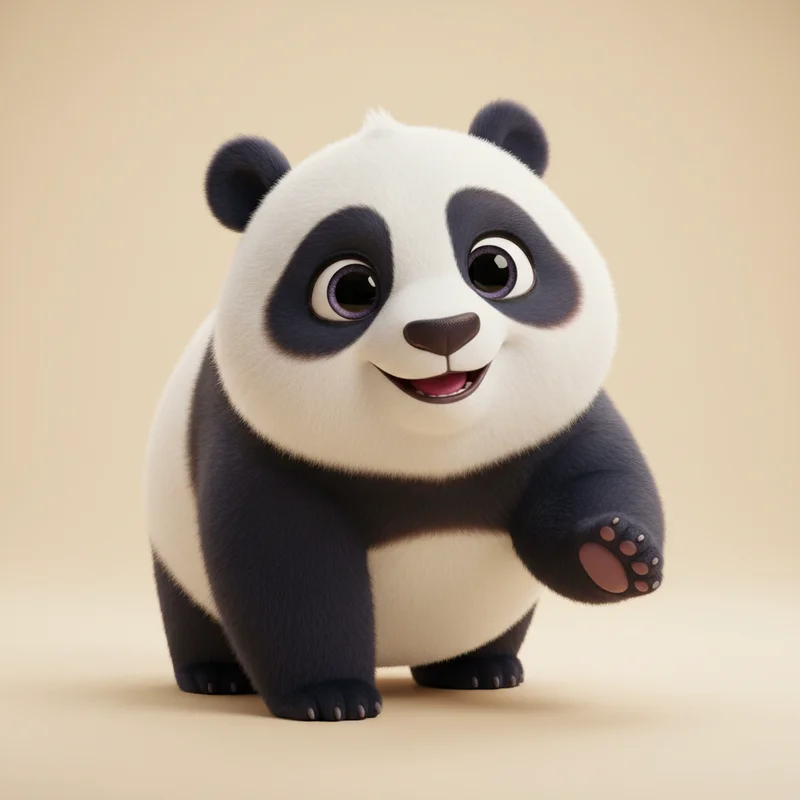
Panda

Panda

Beloved bamboo-eating bear from China, famous for black-and-white coloring and conservation symbolism.

VS
Crow

Crow

Highly intelligent corvid demonstrating tool use, facial recognition, and holding grudges against specific humans.

Battle Analysis

Charisma and appeal panda Wins
70%
30%
Panda Crow

Panda

The giant panda represents charisma weaponised for survival. Those distinctive eye patches, likely evolved to appear larger and more intimidating, instead trigger overwhelming protective instincts in human observers. Their apparent clumsiness—tumbling from platforms, rolling down hills, failing spectacularly at basic coordination—generates viral content that translates directly into conservation funding. Baby pandas, born weighing merely 100 grams and resembling pink, hairless beans, develop into creatures that have been scientifically documented to reduce human stress hormones upon visual exposure. The panda has, through no intentional effort, become the most marketable animal on Earth—proof that evolution occasionally rewards looking adorable over being competent.

Crow

VERDICT

Pandas generate millions in merchandise and donations through weaponised adorability; turtles inspire but do not monetise.
Evolutionary success turtle Wins
30%
70%
Panda Crow

Panda

The giant panda's evolutionary journey reads less like a triumph and more like a cautionary tale of specialisation. Having diverged from other bears approximately 19 million years ago, the species inexplicably abandoned the carnivorous diet that made ursids successful predators. Instead, pandas developed an obsessive relationship with bamboo—a plant so nutritionally deficient that the animal must consume up to 38 kilograms daily simply to maintain basic metabolic function. Their pseudo-thumb, a modified wrist bone, represents an elegant adaptation that nonetheless serves only to grip the very food source that dooms them to perpetual eating. The species' reproductive inefficiency—females fertile for merely 24-48 hours annually—suggests evolution may have been preparing to write them off entirely before human intervention changed the equation.

Crow

VERDICT

Turtles survived five mass extinctions independently; pandas required human fundraising to avoid one.
Cultural significance turtle Wins
30%
70%
Panda Crow

Panda

The giant panda has achieved cultural saturation unprecedented for a wild animal. Its likeness adorns the logo of the World Wildlife Fund, has served as Olympic mascot, and graces currency, stamps, and diplomatic agreements across the globe. Panda diplomacy, practised since the Tang Dynasty, now generates approximately one million dollars annually per breeding pair for the Chinese government. The species has become synonymous with conservation itself—the first animal many children learn to associate with environmental protection. This cultural weight, however, remains remarkably recent; the panda was virtually unknown outside China before the 20th century, its fame constructed deliberately through careful image management.

Crow

VERDICT

Turtles anchor creation myths across global cultures; pandas achieved fame through modern marketing.
Survival independence turtle Wins
30%
70%
Panda Crow

Panda

The giant panda exists today through an unprecedented global support system. Without the 67 protected reserves spanning 1.4 million hectares, without the captive breeding programmes maintaining genetic diversity, without the annual conservation investment exceeding £50 million, the species would almost certainly drift toward extinction. Wild pandas can survive independently, technically, but their narrow dietary requirements and fragmented habitat make them perpetually vulnerable to bamboo flowering cycles that can devastate food supplies across entire regions. The species has essentially been adopted by humanity—a ward of the international conservation community requiring constant supervision and intervention.

Crow

VERDICT

Turtles survived 230 million years autonomously; pandas require constant international financial support.
Defensive capabilities turtle Wins
30%
70%
Panda Crow

Panda

Despite their cuddly reputation, giant pandas retain the fundamental equipment of their bear lineage. Their bite force measures approximately 2,603 newtons, sufficient to crush the bamboo stalks that constitute their diet and certainly capable of inflicting serious injury upon misguided tourists seeking photographs. Adult males can weigh up to 160 kilograms of muscle that, whilst primarily employed for sedentary bamboo consumption, could theoretically be mobilised for combat. However, pandas display minimal territorial aggression and prefer retreat to confrontation. Their primary defensive strategy appears to be looking sufficiently endearing that predators feel guilty about attacking them—an approach with limited efficacy against leopards and golden jackals.

Crow

VERDICT

The shell provides passive, permanent protection; pandas must rely on size and hope.
👑

The Winner Is

Crow

46 - 54

This examination of two fundamentally different survival strategies reveals uncomfortable truths about evolutionary fitness in the Anthropocene. The giant panda has survived through appeal to human emotion—a strategy brilliantly effective in the current era but entirely dependent upon continued human interest and financial commitment. The turtle has survived through architectural excellence and patience—a strategy that proved effective for 230 million years before humans arrived to complicate matters. Whilst the panda commands greater cultural attention and conservation resources, the turtle represents a more robust evolutionary approach: one that does not require external validation or international funding agreements to persist. The turtle wins not because it is more beloved, but because its survival strategy is self-sustaining. The shell does not require renewal; the patience does not expire.

Panda
46%
Crow
54%

Share this battle

More Comparisons