Where Everything Fights Everything

Panda vs Wolf

😜 Just for fun — a tongue-in-cheek, gloriously unscientific showdown.

Panda

Panda

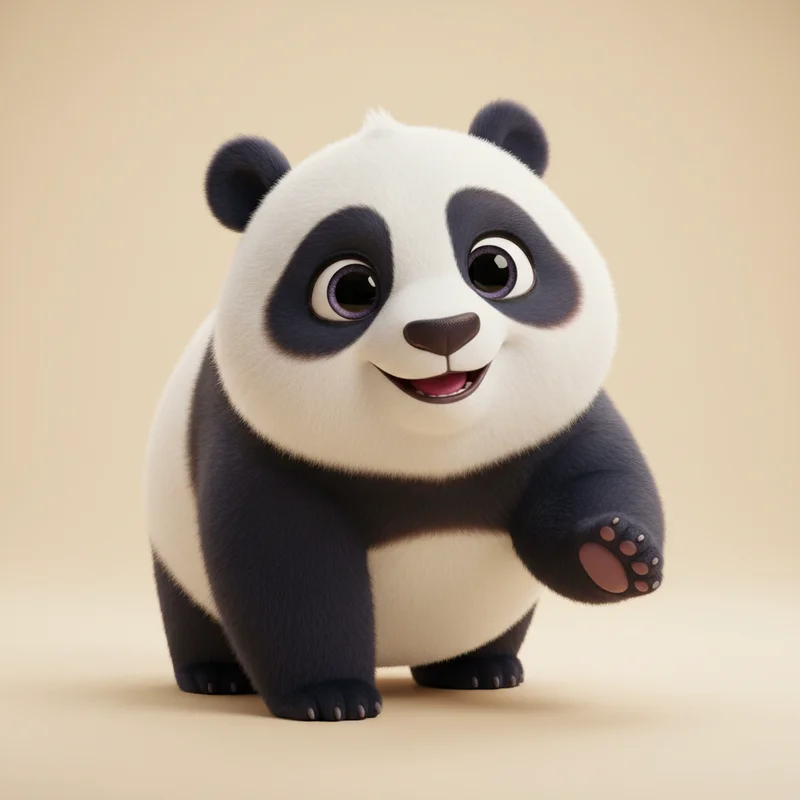
Beloved bamboo-eating bear from China, famous for black-and-white coloring and conservation symbolism.

VS
Wolf

Wolf

Pack-hunting canid ancestor of domestic dogs, famous for howling and complex social hierarchies.

The Matchup

The giant panda and the grey wolf represent two radically different approaches to mammalian success. One has conquered the world through sheer adorability, becoming the de facto mascot for global conservation efforts. The other has haunted human nightmares for millennia whilst simultaneously earning grudging respect as nature's most efficient pack hunter. Today, we subject both to rigorous scientific scrutiny, examining which creature truly deserves the title of nature's superior design.

Battle Analysis

Global influence Panda Wins
🏆 Panda takes this round

Panda

The giant panda has achieved something remarkable: it has become a diplomatic currency. China's panda diplomacy programme has seen these bears deployed to 27 countries as symbols of international goodwill. The panda's face adorns the logo of the World Wildlife Fund, making it the most recognisable conservation symbol on Earth. Annual panda-related tourism generates an estimated $2.7 billion for Chinese provinces.

Wolf

The wolf has shaped human culture more profoundly than perhaps any non-domesticated animal. From Romulus and Remus to Little Red Riding Hood, the wolf occupies a central position in global mythology. The reintroduction of wolves to Yellowstone in 1995 triggered a trophic cascade that literally changed the course of rivers. Few species can claim to have altered geography through their mere presence.

VERDICT

Both creatures wield extraordinary influence, but the panda's transformation into a geopolitical asset worth billions represents an unprecedented achievement in animal soft power. The panda secures this round through sheer marketability.

Survival strategy Wolf Wins
🏆 Wolf takes this round

Panda

The giant panda has committed what evolutionary biologists diplomatically term a 'nutritional miscalculation'. Despite possessing the digestive system of a carnivore, the panda insists on consuming bamboo - a foodstuff so nutritionally impoverished that the animal must eat for 14 hours daily simply to avoid starvation. The panda's survival strategy appears to be: become so endearing that other species feel compelled to ensure your continued existence.

Wolf

The wolf employs coordinated pack hunting, a strategy so sophisticated it inspired early human societies to develop similar cooperative techniques. Wolves can pursue prey for distances exceeding 30 kilometres, communicate through complex vocalisations, and adapt their hunting strategies to target everything from elk to bison. Their survival strategy is brutally effective: be better at killing things than anything else in your ecosystem.

VERDICT

Whilst the panda's strategy of 'evolutionary surrender offset by aggressive cuteness' has proven surprisingly effective in the Anthropocene, the wolf's approach remains the gold standard for mammalian survival. The wolf takes this category with clinical efficiency.

Conservation status Panda Wins
🏆 Panda takes this round

Panda

Against all odds, the giant panda represents a conservation success story. Downgraded from 'Endangered' to 'Vulnerable' in 2016, the wild population now exceeds 1,800 individuals. China has established 67 panda reserves protecting over 1.4 million hectares of habitat. The panda has essentially crowdfunded its own survival through the global economy of cuteness.

Wolf

The wolf's conservation status presents a complex picture. Whilst populations have recovered in parts of Europe and North America, wolves remain absent from much of their historical range. In the UK, they have been extinct since the 1700s. Reintroduction programmes face significant opposition from farming communities. The wolf's survival depends less on public sympathy and more on contentious policy decisions.

VERDICT

The panda has achieved something the wolf has not: unanimous global support for its continued existence. Whilst wolf conservation remains mired in political controversy, panda protection enjoys international consensus. The panda's strategy of being impossible to dislike yields dividends.

Physical capability Wolf Wins
🏆 Wolf takes this round

Panda

The giant panda possesses surprisingly formidable equipment. Their bite force measures approximately 2,603 Newtons - sufficient to crush bamboo and, theoretically, human limbs with equal ease. Adult pandas can weigh up to 160 kilograms of what is primarily cuddly-looking muscle. However, they choose to deploy these capabilities exclusively against vegetation, like a tank that only fires at shrubbery.

Wolf

Wolves possess a bite force of approximately 400 pounds per square inch, capable of crushing bone. Their top speed reaches 65 kilometres per hour, and they can maintain a trot of 8 kilometres per hour for extended periods. The wolf's physique is a masterpiece of predatory engineering, optimised over millions of years for the singular purpose of catching and dismantling other animals.

VERDICT

Raw statistics reveal that both animals possess impressive capabilities, but only one actively uses them. The panda's physical prowess remains largely theoretical, whilst the wolf's is demonstrated daily through successful predation. A convincing victory for the apex predator.

Reproductive efficiency Wolf Wins
🏆 Wolf takes this round

Panda

The giant panda's approach to reproduction can only be described as catastrophically inefficient. Females are fertile for merely 24-48 hours annually. Males frequently display complete bewilderment regarding the mechanics of mating. Cubs are born the size of butter sticks, weighing approximately 100 grams - a ratio of maternal to infant body mass that defies biological logic. Conservation programmes have resorted to panda pornography to encourage breeding, with mixed results.

Wolf

Wolf reproduction operates with military precision. The alpha pair produces litters of 4-6 pups annually, with the entire pack participating in pup-rearing. Survival rates in healthy populations exceed 60%. The wolf's reproductive strategy ensures genetic diversity whilst maintaining pack cohesion - a model of biological efficiency that puts most mammalian systems to shame.

VERDICT

The panda's reproductive difficulties have become legendary, requiring an entire global infrastructure of scientists, veterinarians, and apparently adult entertainment to maintain population numbers. The wolf reproduces as nature intended: effectively. This round goes to the prolific predator.

👑

The Winner Is

Wolf

Takes 3 of 5 rounds

The wolf emerges victorious with a score of 58 to 42, demonstrating that evolutionary fundamentals still matter in the modern world. The grey wolf represents millions of years of refined predatory excellence - a creature that has earned its place at the top of multiple food chains through intelligence, cooperation, and lethal efficiency. However, the panda's performance reveals an alternative path to success: when you cannot compete through conventional means, become so beloved that the dominant species on the planet dedicates enormous resources to your survival. Both strategies, it must be acknowledged, have proven effective.

Share this battle

More Comparisons