Topic Battle

Where Everything Fights Everything

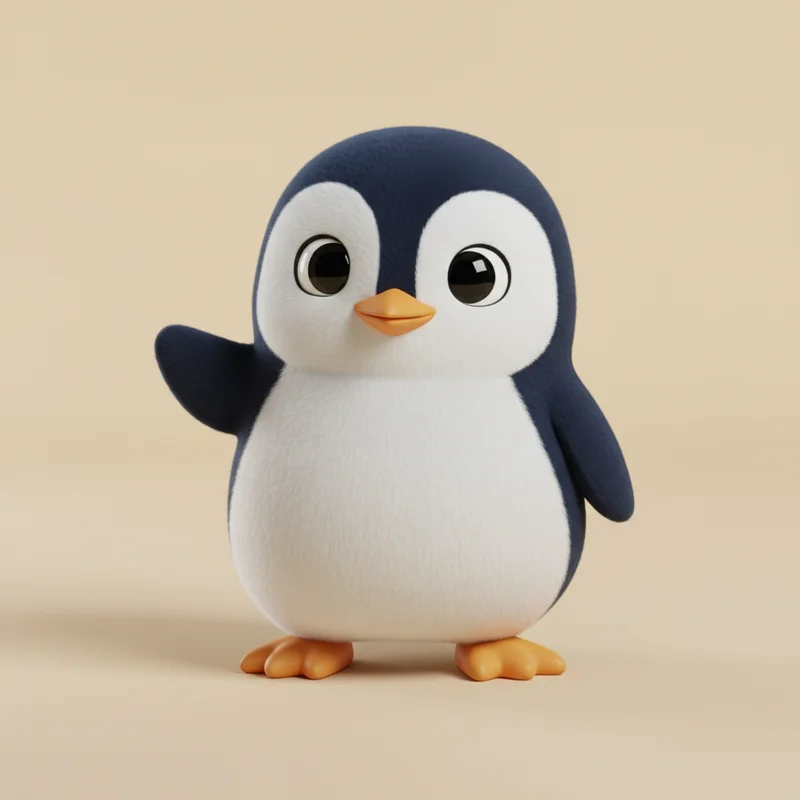
Penguin

Penguin

Flightless seabird thriving in Antarctic conditions, famous for adorable waddles and dedicated parenting.

VS
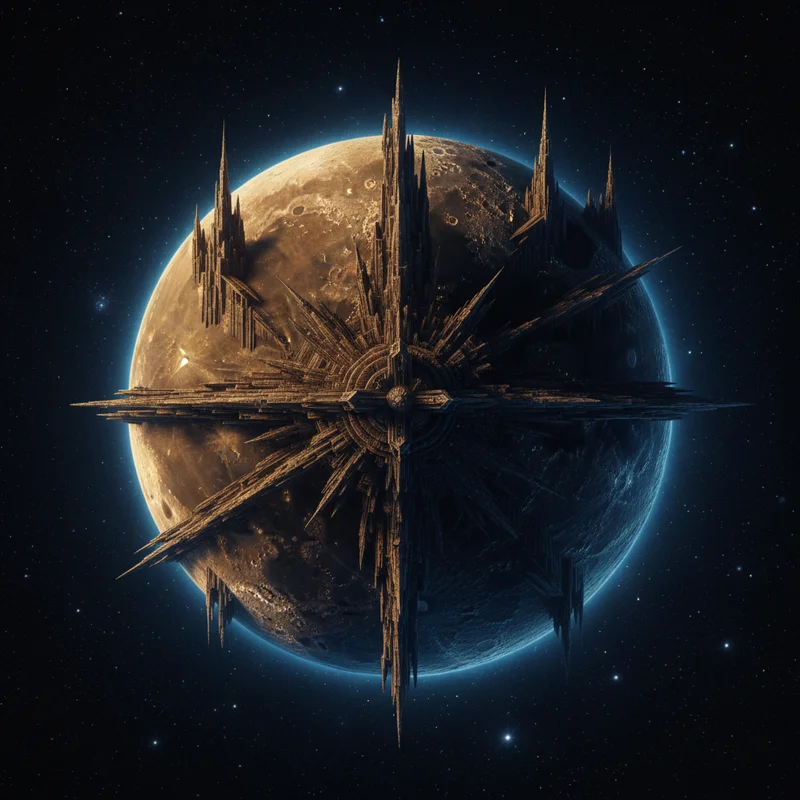
The Moon

The Moon

Earth's natural satellite and space race destination.

Battle Analysis

Longevity The Moon Wins
30%
70%
Penguin The Moon

Penguin

Individual penguins typically survive between fifteen and twenty-five years, with exceptional specimens reaching thirty years in favourable conditions. As a taxonomic order, Sphenisciformes have persisted for approximately sixty million years, surviving multiple extinction events and dramatic climatic shifts. This represents an impressive tenure upon Earth, demonstrating the fundamental robustness of the penguin design. Yet in cosmic terms, sixty million years constitutes a mere fraction of a single percentage point of universal history.

The Moon

The Moon formed approximately 4.5 billion years ago, likely from debris ejected following a collision between proto-Earth and a Mars-sized object. It has orbited our planet since before the emergence of any life form, before the formation of Earth's current continental configuration, before the existence of an oxygen-rich atmosphere. The Moon watched the first single-celled organisms emerge and shall likely persist long after the last human has drawn breath. Its longevity exceeds that of any biological entity by several orders of magnitude.

VERDICT

4.5 billion years of continuous existence versus 60 million years of evolutionary history.
Adaptability Penguin Wins
70%
30%
Penguin The Moon

Penguin

The penguin demonstrates extraordinary adaptability, having evolved to thrive in conditions that would kill most vertebrates within minutes. Emperor penguins endure temperatures of minus sixty degrees Celsius and winds exceeding two hundred kilometres per hour. Various species have adapted to environments ranging from Antarctic ice to tropical Galapagos shores. They have modified their wings into flippers capable of propelling them through water at speeds approaching thirty-six kilometres per hour. This remarkable evolutionary flexibility showcases the penguin's capacity to overcome seemingly insurmountable environmental challenges.

The Moon

The Moon possesses no capacity for adaptation whatsoever. It is a static, lifeless body that has remained fundamentally unchanged for billions of years. The same craters that formed during the Late Heavy Bombardment remain visible today. The Moon cannot respond to environmental pressures, cannot evolve, cannot modify its behaviour or structure. It exists in a state of perfect, eternal unchangeability. One might argue this represents the ultimate adaptation to cosmic conditions, yet by any reasonable biological definition, the Moon demonstrates precisely zero adaptive capacity.

VERDICT

Demonstrable evolutionary adaptation across diverse hostile environments versus complete biological inertness.
Global recognition The Moon Wins
30%
70%
Penguin The Moon

Penguin

The penguin enjoys remarkable recognition across human societies, appearing in documentary films, animated features, and corporate branding with impressive frequency. From the Linux operating system to beloved children's literature, the penguin has infiltrated global consciousness with quiet determination. Surveys consistently demonstrate that humans across all continents can identify a penguin with near-universal accuracy. The creature's distinctive tuxedo-like plumage and characteristic waddle have rendered it one of the most recognisable animals on Earth, despite inhabiting regions most humans shall never visit.

The Moon

The Moon represents perhaps the single most universally recognised object in human experience. Every civilisation throughout recorded history has observed, named, and venerated this celestial body. It appears in the mythologies, calendars, and artistic traditions of every culture that has ever existed. The Moon requires no introduction, no explanation, no context. A human infant recognises the Moon before mastering speech. Its image appears on flags, in religious texts, and within the collective unconscious of our entire species. No entity in cosmic or terrestrial history commands such absolute, unqualified recognition.

VERDICT

Universal recognition across all human civilisation throughout recorded history establishes incontestable superiority.
Entertainment value Penguin Wins
70%
30%
Penguin The Moon

Penguin

Penguins provide exceptional entertainment value through their inherently amusing locomotive style, their elaborate courtship rituals, and their seemingly inexplicable determination to exist in impossible conditions. Documentary films featuring penguins consistently achieve remarkable viewership figures. The animated film 'Happy Feet' grossed over 380 million dollars globally. Penguin enclosures rank among the most popular attractions at zoological gardens worldwide. The creature's combination of dignified bearing and ungainly movement creates an irresistible comedic appeal that transcends cultural boundaries.

The Moon

The Moon offers a more contemplative form of entertainment, inspiring poetry, romantic encounters, and philosophical reflection across millennia. Lunar eclipses draw millions of observers worldwide. The Apollo missions represent some of the most-watched television broadcasts in human history. Yet in terms of active, engaging entertainment, the Moon remains a passive participant. One cannot observe the Moon engaging in amusing behaviours or forming endearing social bonds. Its entertainment value, whilst profound, tends toward the sublime rather than the immediately engaging.

VERDICT

Active behavioural entertainment and documented comedic appeal versus passive astronomical observation.
Environmental impact The Moon Wins
30%
70%
Penguin The Moon

Penguin

Penguins play a crucial role in Antarctic and sub-Antarctic ecosystems, transferring significant quantities of nutrients from ocean to land through their guano. A single colony can deposit thousands of tonnes of nitrogen-rich material annually, supporting complex food webs and vegetation patterns. Their predation patterns influence fish and krill populations, whilst their carcasses provide sustenance for scavengers. The penguin functions as a vital link in the delicate chain of polar ecology, though their influence remains geographically constrained to specific coastal regions.

The Moon

The Moon's environmental impact upon Earth is nothing short of existential. Its gravitational influence generates tidal forces that have shaped coastal ecosystems for billions of years, created intertidal zones that may have facilitated the emergence of terrestrial life, and stabilised Earth's axial tilt to produce reliable seasons. Without the Moon, Earth's rotation would be chaotic, days would last mere hours, and complex life might never have evolved. The Moon does not merely influence the environment; it has fundamentally determined the conditions under which all life exists.

VERDICT

Gravitational influence enabling the existence of complex terrestrial life represents unmatched environmental significance.
👑

The Winner Is

The Moon

42 - 58
Upon rigorous examination, the Moon emerges as the superior entity in this most unusual of comparisons, though not without acknowledging the penguin's remarkable achievements in its considerably more limited sphere of influence. The Moon's fundamental role in enabling terrestrial life, its absolute universality in human recognition, and its incomprehensible longevity establish a baseline of significance that no biological organism could reasonably challenge. However, the penguin demonstrates clear superiority in those categories requiring active participation in existence: adaptability and entertainment value. The final score of 58-42 reflects the Moon's cosmic importance whilst honouring the penguin's exceptional mastery of its Antarctic domain. Both entities have achieved a form of immortality in human consciousness.
Penguin
42%
The Moon
58%

Share this battle

More Comparisons