Topic Battle

Where Everything Fights Everything

Pigeon

Pigeon

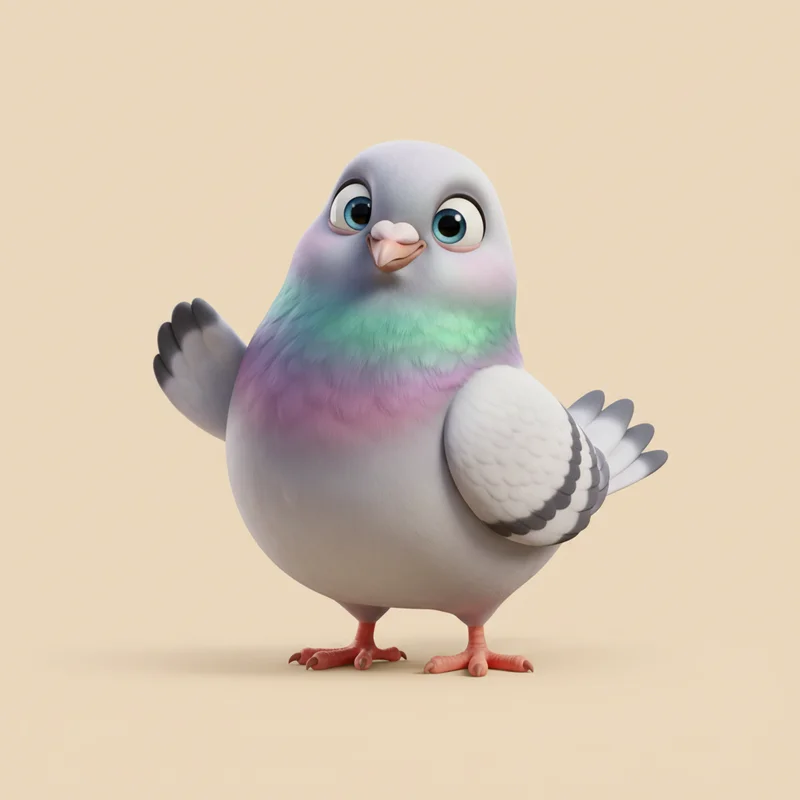
Urban survivor, descendant of war heroes, professional breadcrumb enthusiast. Either a "rat with wings" or a "rock dove" depending on whether you're trying to sound sophisticated. Has seen things. Judges you anyway.

VS
Cat

Cat

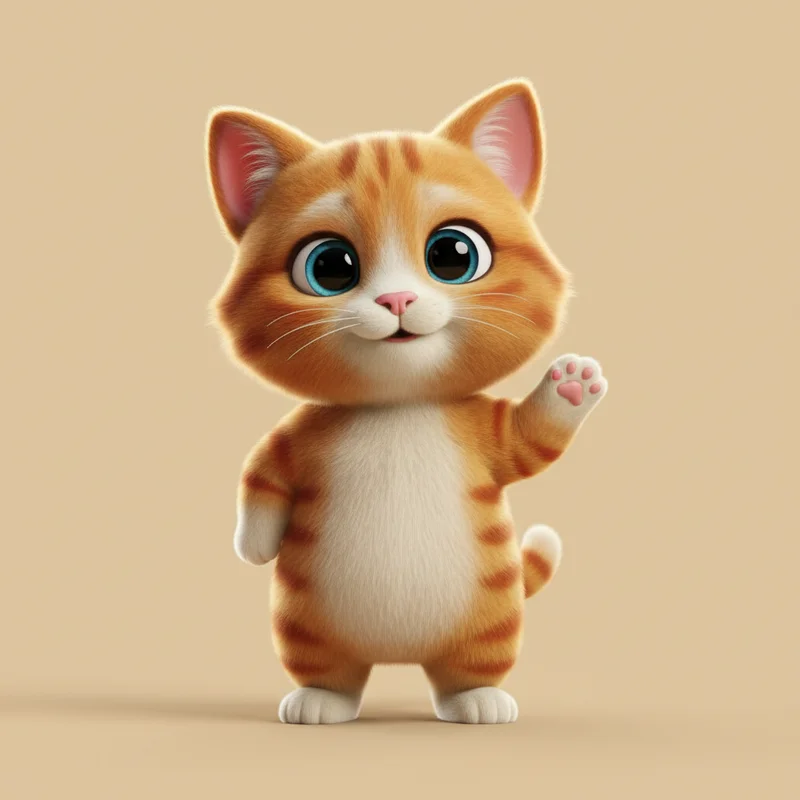
Domestic feline companion known for independence, agility, and internet fame. Masters of napping and keyboard interruption.

Battle Analysis

Survival instincts Pigeon Wins
70%
30%
Pigeon Cat

Pigeon

Pigeon survival strategies combine vigilance, speed, and collective intelligence in a remarkably effective package. Their 340-degree field of vision makes surprise attacks nearly impossible, whilst flight speeds of up to 77 miles per hour provide reliable escape velocity from most terrestrial threats. Flocking behaviour distributes predation risk across the group, ensuring that no individual pigeon carries an undue burden of danger. Their reproductive rate—up to eight broods per year—further hedges against population collapse. The species has survived ice ages, volcanic winters, and the advent of the motor vehicle with equal equanimity.

Cat

The domestic cat retains the survival instincts of its wild ancestors, including exceptional reflexes, retractable claws, and night vision that puts military technology to shame. Their ability to land on their feet from considerable heights speaks to a proprioceptive system of extraordinary sophistication. However, these impressive capabilities are increasingly theoretical rather than practical. The average indoor cat faces no genuine survival challenges whatsoever, its most dangerous encounter being the vacuum cleaner. Feral cats, whilst more battle-tested, still suffer from territorial disputes and vehicular incidents at alarming rates.

VERDICT

In practical terms, pigeon survival instincts are constantly exercised and refined through daily urban existence. Cat instincts, whilst formidable in principle, often lie dormant beneath layers of comfortable domestication.

Urban adaptability Pigeon Wins
70%
30%
Pigeon Cat

Pigeon

The rock dove's transition from Mediterranean cliff-dweller to metropolitan resident represents one of nature's most remarkable examples of adaptive radiation. Modern pigeons have colonised every continent except Antarctica, establishing populations in cities from Tokyo to Toronto with remarkable efficiency. Their ability to nest in the most unpromising of locations—ledges, gutters, abandoned buildings, and the occasional air conditioning unit—demonstrates a flexibility that borders on the supernatural. Studies indicate that urban pigeon populations have grown by 400% since 1950, whilst their rural counterparts have declined proportionally. They have, quite simply, become the definitive urban organism.

Cat

The domestic cat's urban adaptation, whilst impressive, carries a significant caveat: it largely depends upon human intervention. Indoor cats rely entirely on their bipedal benefactors for sustenance, shelter, and the occasional chin scratch. Feral cat colonies, whilst more independent, face significantly higher mortality rates and rarely achieve the population densities of their avian competitors. The average urban cat spends 16-20 hours per day sleeping, a survival strategy that, whilst enviable, hardly speaks to adaptive brilliance. Their territorial nature also limits expansion, with each cat requiring substantial personal space that pigeons simply do not demand.

VERDICT

When measuring pure urban adaptability, the pigeon's capacity to thrive in virtually any metropolitan environment—without human assistance—gives it a decisive edge. The cat, for all its grace, remains fundamentally dependent on the can opener.

Environmental impact Pigeon Wins
70%
30%
Pigeon Cat

Pigeon

The pigeon's environmental footprint is remarkably modest. As granivores and opportunistic omnivores, they occupy a low position on the food chain, consuming seeds, grains, and the occasional discarded chip. Their droppings, whilst aesthetically unfortunate, provide nitrogen-rich fertiliser that supports urban plant life. Pigeons serve as prey species for urban raptors, contributing to ecological balance in cities. Their carbon footprint is negligible, their resource consumption minimal. From an environmental perspective, the pigeon is a model citizen.

Cat

The domestic cat's environmental impact is, regrettably, catastrophic. A 2013 study estimated that cats in the United States alone kill between 1.3 and 4 billion birds annually, along with 6.3 to 22.3 billion mammals. They have contributed to the extinction of at least 63 species worldwide. Their manufactured food requires significant agricultural resources, and cat litter production carries its own environmental costs. The ecological damage wrought by Felis catus represents one of the most significant impacts of any domesticated animal on global biodiversity.

VERDICT

The contrast could not be starker. The pigeon supports urban ecosystems whilst the cat systematically dismantles them. From an environmental standpoint, this category is not merely won by the pigeon—it is won by a landslide.

Cultural significance Cat Wins
30%
70%
Pigeon Cat

Pigeon

The pigeon's cultural footprint extends from ancient Mesopotamia to modern urban art. In religious traditions spanning Christianity, Islam, and Hinduism, the dove represents peace, divine messenger, and spiritual purity. Picasso's dove became the international symbol of the peace movement. In practical terms, pigeon racing remains a multi-million pound industry, with champion birds fetching prices exceeding luxury automobiles. Their historical role in communications—from Reuters' original news service to military intelligence—shaped the modern information age. The humble pigeon, one might argue, helped build civilisation.

Cat

Feline cultural significance is both ancient and enduring. The Egyptians worshipped them as gods, a fact that cats have never forgotten. Internet culture has elevated the cat to unprecedented prominence, with cat videos generating billions of views annually. The literary cat—from Cheshire to Crookshanks—occupies a permanent place in global imagination. Cats inspire artists, comfort the lonely, and provide therapeutic benefits that have been clinically documented. Their cultural penetration is, quite simply, total.

VERDICT

The cat's dominance of internet culture, combined with millennia of worship and literary celebration, gives it an insurmountable lead in cultural significance. The pigeon, for all its historical importance, cannot compete with the sheer ubiquity of feline imagery.

Intelligence and problem solving Pigeon Wins
70%
30%
Pigeon Cat

Pigeon

The pigeon's cognitive abilities have been chronically underestimated by a prejudiced public. Research conducted at the University of Iowa demonstrated that pigeons can distinguish between paintings by Monet and Picasso, a feat that confounds many art history students. They possess remarkable spatial memory, capable of remembering hundreds of different images for years. During both World Wars, carrier pigeons saved countless lives by delivering messages across enemy lines, with 32 pigeons receiving the Dickin Medal for animal gallantry. Their navigational abilities remain partially unexplained by science, suggesting cognitive mechanisms we have yet to fully understand.

Cat

Feline intelligence operates on an entirely different paradigm—one that prioritises energy conservation over demonstrable achievement. Cats can learn complex tasks but frequently choose not to perform them, a trait that scientists diplomatically describe as 'selective responsiveness.' Their problem-solving abilities, whilst genuine, tend toward the practical: opening doors, manipulating humans into providing food, and identifying the precise centre of any keyboard. The cat's intelligence, whilst formidable, is fundamentally self-serving, rarely extending to activities that do not directly benefit the cat in question.

VERDICT

The pigeon's documented cognitive achievements—including pattern recognition, long-term memory, and navigation—represent measurable, reproducible intelligence. The cat's cleverness, whilst undeniable, remains stubbornly unquantifiable, hidden behind a veil of feline indifference.

👑

The Winner Is

Pigeon

52 - 48

Our comprehensive analysis reveals a truth that will discomfort cat enthusiasts and vindicate pigeon admirers in equal measure. Across five critical domains of existence, Columba livia has demonstrated superiority in four: urban adaptability, intelligence, survival instincts, and environmental impact. The cat's victory in cultural significance, whilst decisive, cannot offset its losses elsewhere. The pigeon emerges from this investigation not as the reviled pest of popular imagination, but as a masterwork of evolutionary engineering—a species that has conquered the urban environment more thoroughly than any mammal, including humans. The cat, meanwhile, reveals itself as a creature of contradictions: simultaneously worshipped and ecologically destructive, intelligent yet unmotivated, equipped for survival yet increasingly dependent on human benevolence. With a final score of 52 to 48, the pigeon claims victory—not through flashy dominance, but through the quiet accumulation of advantages that define true adaptive success.

Pigeon
52%
Cat
48%

Share this battle

More Comparisons