Topic Battle

Where Everything Fights Everything

Pigeon

Pigeon

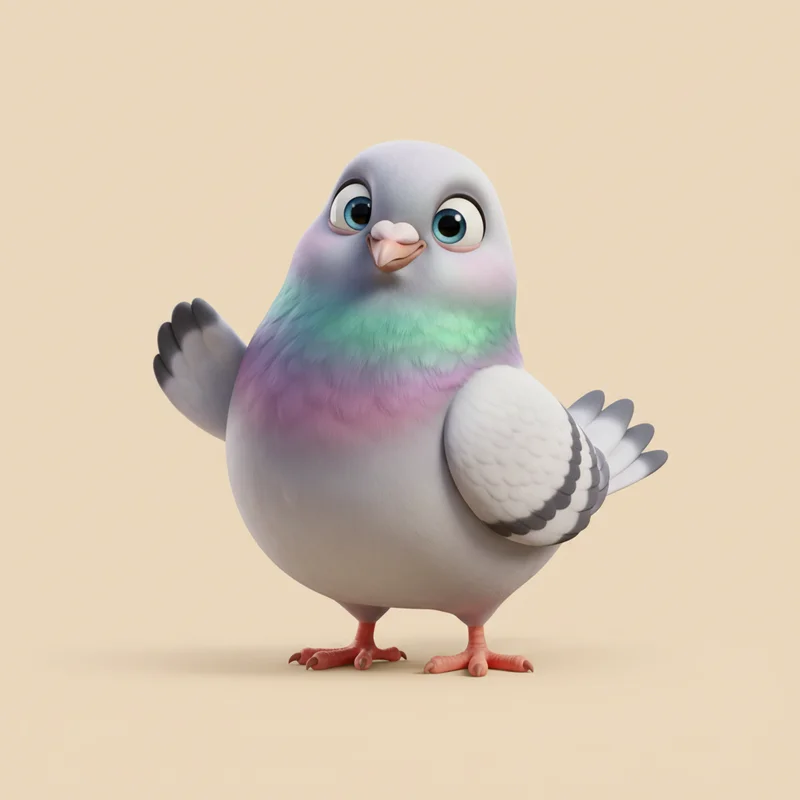
Urban survivor, descendant of war heroes, professional breadcrumb enthusiast. Either a "rat with wings" or a "rock dove" depending on whether you're trying to sound sophisticated. Has seen things. Judges you anyway.

VS
Dog

Dog

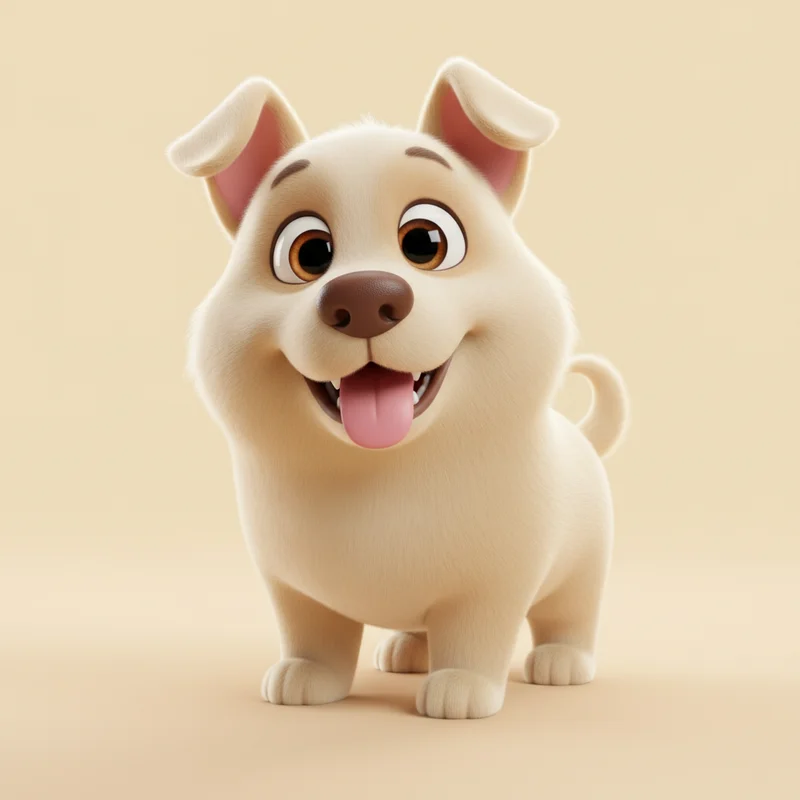
Loyal canine companion celebrated for unconditional love, tail wagging, and being humanity's best friend for millennia.

Battle Analysis

Loyalty dog Wins
30%
70%
Pigeon Dog

Pigeon

The pigeon's loyalty operates through an entirely different mechanism than the emotional attachment mammals understand. What appears to be devotion is, in truth, an extraordinary navigational instinct that compels the bird to return to its home loft across distances exceeding one thousand kilometres. This is loyalty of a sort—the bird will endure predators, storms, and exhaustion to complete its journey home—but it is loyalty to place rather than person.

Racing pigeons have been documented returning to their lofts after being released in locations they have never previously visited, navigating by means science still cannot fully explain. The pigeon Cher Ami, wounded in both breast and leg, dragged herself twenty-five miles to deliver a message that saved 194 American soldiers during the Meuse-Argonne offensive. This is loyalty unto death, even if its motivation remains instinctual rather than emotional.

Yet the pigeon's loyalty has clear limits. It does not seek human company for its own sake. Remove the home loft, and the pigeon has no particular reason to return to any specific human. Its fidelity is geographical, not personal.

Dog

The domestic dog's loyalty has become so legendary that it serves as the default metaphor for devotion across human languages. This is not mere anthropomorphism; neuroimaging studies confirm that dogs experience genuine attachment to their owners, with brain scans revealing oxytocin release during human-dog interactions identical to that observed in human bonding.

The historical record overflows with accounts of canine fidelity that strain credulity. Hachiko waited at Shibuya Station for nine years following his owner's death. Greyfriars Bobby guarded his master's grave for fourteen years in Edinburgh. These are not isolated incidents but representative examples of a capacity for attachment that appears hardwired into the canine psyche.

The dog's loyalty is personal, not positional. A dog relocated to a new home will bond with its new family; a dog whose owner passes will mourn. This is emotional attachment in its most recognisable form, the same loyalty humans prize in one another.

VERDICT

Whilst the pigeon demonstrates remarkable fidelity to its home location, the dog's personal attachment to specific humans represents a categorically different form of loyalty. Loyalty victory: Dog.

Independence pigeon Wins
70%
30%
Pigeon Dog

Pigeon

The pigeon's independence is absolute and unapologetic. The bird requires nothing from humans to survive—no feeding, no shelter, no veterinary care. It has simply identified human settlements as ideal habitat and moved in accordingly. This is not domestication in the traditional sense but something closer to commensalism: the pigeon benefits from human presence whilst providing nothing in return.

A pigeon's daily existence proceeds entirely without human input. It forages autonomously, securing food from sources ranging from spillage to direct charitable donation. It selects its own nesting sites, typically choosing locations specifically designed to be inaccessible to building maintenance staff. It raises its offspring without assistance, producing crop milk—a nutritious secretion from its throat—that requires no external food source.

This independence extends to reproduction. Feral pigeon populations are entirely self-sustaining, requiring no human breeding programmes or genetic management. The species has achieved the remarkable feat of benefiting from human civilisation whilst remaining entirely outside human control.

Dog

The domestic dog's independence is, charitably described, limited. Whilst feral dog populations exist and can sustain themselves, the vast majority of dogs depend upon humans for their basic survival. They require regular feeding, shelter from extreme weather, protection from traffic, and medical intervention for injuries and illnesses. Remove human support, and most pet dogs would perish within weeks.

This dependence is not accidental but the result of fifteen thousand years of selective breeding that has systematically reduced canine self-sufficiency. Modern dog breeds often cannot reproduce without human assistance, cannot regulate their own food intake, and cannot survive temperatures their wolf ancestors would have found comfortable.

Yet this dependence creates a feedback loop that reinforces the human-dog bond. The dog needs its human in ways the pigeon never will, and this need generates the mutual attachment that defines the relationship. Independence and intimacy, it appears, exist in tension.

VERDICT

The pigeon's complete autonomy—thriving in human environments without requiring any human support whatsoever—represents independence the domesticated dog cannot approach. Independence victory: Pigeon.

Practical utility dog Wins
30%
70%
Pigeon Dog

Pigeon

The pigeon's practical contributions to human civilisation are easily overlooked but historically significant. For three millennia, pigeon post served as the fastest method of communication available, carrying messages across distances that would take human couriers days to traverse. Julius Caesar employed pigeons during his Gallic campaigns; the Rothschild banking dynasty used them to gain market-moving intelligence before competitors.

During both World Wars, military pigeons delivered messages through conditions that would destroy electronic communications. Over 100,000 pigeons served in World War I alone, with casualty rates that would have been considered unacceptable for human soldiers. Their contribution to intelligence gathering and battlefield communication saved untold thousands of lives.

In the modern era, the pigeon's practical utility has diminished considerably. Racing remains popular as sport, and scientists continue to study their navigation abilities, but the communication function has been entirely superseded by electronic alternatives. The pigeon has been, in essence, made redundant by technology.

Dog

The domestic dog serves humanity in capacities so numerous they resist comprehensive cataloguing. As working animals, dogs herd livestock, guard property, detect explosives, locate missing persons, assist the disabled, and provide emotional support to trauma survivors. Police forces, militaries, and emergency services worldwide consider dogs essential equipment rather than optional additions.

The dog's sensory capabilities exceed human capacity by orders of magnitude. A trained detection dog can identify explosives at concentrations of parts per trillion, cancer cells in human breath samples, and the onset of epileptic seizures before they occur. These are not parlour tricks but life-saving capabilities deployed daily across the globe.

Unlike the pigeon, whose practical functions have been rendered obsolete, the dog remains actively irreplaceable in numerous domains. No technology currently exists that can replicate a search-and-rescue dog's ability to locate survivors in earthquake rubble, or a therapy dog's capacity to reduce anxiety in hospital patients.

VERDICT

Whilst the pigeon served humanity admirably for millennia, its practical functions have been superseded by technology. The dog remains actively irreplaceable across numerous life-saving applications. Practical utility victory: Dog.

Urban adaptability pigeon Wins
70%
30%
Pigeon Dog

Pigeon

The pigeon has achieved something no other bird species has managed: the complete colonisation of human urban environments. Every city on Earth with a population exceeding fifty thousand hosts a resident pigeon population, from the frost-bitten streets of Norilsk to the tropical sprawl of Mumbai. These birds require no human assistance to thrive; they simply move in wherever humans build.

The pigeon's urban success stems from a combination of factors that align perfectly with metropolitan life. They are cliff-dwelling birds by evolutionary origin, making skyscrapers and bridges ideal nesting sites. They are dietary generalists, consuming everything from grain to discarded pizza with equal enthusiasm. They breed year-round in temperate climates, producing up to eight broods annually. And they are largely untroubled by human proximity, having lost whatever fear of humans their wild ancestors possessed.

Municipal authorities have spent centuries attempting to control pigeon populations, deploying everything from contraceptive feed to trained falcons. None of these efforts has succeeded. The pigeon simply belongs to the urban environment now, as inevitable as traffic and rent increases.

Dog

The domestic dog adapts to urban environments through an entirely different strategy: human mediation. Where the pigeon conquers cities independently, the dog requires human infrastructure—apartments with pet policies, parks with designated areas, veterinary clinics, and pet supply shops. This is adaptation through partnership rather than autonomy.

Urban dogs face challenges their country cousins never encounter. They must learn to navigate crowded pavements, ignore the provocations of squirrels in public parks, and conduct their biological necessities on schedules dictated by working owners. Yet millions of dogs manage these adaptations successfully, their populations in major cities rivalling those of medium-sized towns.

However, the dog's urban presence comes with significant infrastructure requirements. Dogs need dedicated green spaces for exercise, regular veterinary care, and considerable owner investment. Remove the supporting human systems, and urban dog populations would collapse within a generation. The pigeon needs only buildings and rubbish bins.

VERDICT

The pigeon's autonomous colonisation of every human city on Earth, requiring no infrastructure or human support, represents urban adaptability that the infrastructure-dependent dog cannot match. Urban adaptability victory: Pigeon.

Emotional intelligence dog Wins
30%
70%
Pigeon Dog

Pigeon

The pigeon's cognitive capabilities, whilst more sophisticated than commonly assumed, do not extend to the emotional realm in ways humans readily recognise. Research has demonstrated that pigeons can distinguish between paintings by Picasso and Monet, learn abstract rules, and even pass the mirror self-recognition test under specific conditions. These are genuine cognitive achievements.

However, pigeons do not read human emotional states. A pigeon will approach a crying human with exactly the same enthusiasm it approaches a laughing one, provided both offer equal likelihood of food. The bird's relationship with humanity is fundamentally transactional: humans provide food and nesting sites; pigeons provide nothing but their continued presence.

This is not a criticism but simply a description. The pigeon evolved as a social bird that lives in flocks, but its social intelligence is calibrated for pigeon society, not human society. It responds to the moods and signals of other pigeons with considerable sophistication but remains largely oblivious to human emotional nuance.

Dog

The domestic dog demonstrates emotional intelligence that verges on the uncanny. Dogs read human facial expressions, distinguish between genuine and fake smiles, and adjust their behaviour based on perceived human emotional states. They respond to human crying with apparent concern, to human anger with appeasement behaviours, and to human joy with shared enthusiasm.

This capacity is not anthropomorphic projection but documented neurological reality. Brain imaging studies reveal that dogs process human faces in dedicated neural regions similar to those humans use for face processing. They are, quite literally, evolved to understand us.

The practical implications are profound. Therapy dogs are deployed in hospitals, schools, and disaster zones specifically because their emotional attunement provides genuine therapeutic benefit. Guide dogs sense their owners' stress and respond protectively. The dog has become humanity's emotional support animal in a way no other species has achieved—because no other species has been selected for this trait across fifteen millennia.

VERDICT

The dog's documented neural capacity for understanding human emotional states, refined across fifteen thousand years of co-evolution, represents emotional intelligence the pigeon simply does not possess. Emotional intelligence victory: Dog.

👑

The Winner Is

Dog

44 - 56

This investigation has revealed a contest of surprising complexity between two of humanity's longest-standing animal companions. The pigeon and the dog have each developed radically different strategies for coexistence with human civilisation, and each strategy has proven remarkably successful on its own terms.

The pigeon excels in categories that reflect its fundamental autonomy. It has colonised every human city without requiring permission, infrastructure, or support. It requires nothing from us and offers nothing in return except its ubiquitous presence. This is a partnership of proximity rather than intimacy, successful precisely because it demands nothing.

The dog, by contrast, has achieved something the pigeon cannot: genuine emotional partnership. Through millennia of selective breeding and co-evolution, dogs have developed the capacity to understand and respond to human emotional states in ways that no other species approaches. This creates a bond of mutual dependence that, whilst requiring significant human investment, generates returns the pigeon cannot offer.

In the final analysis, the dog's victory with a score of 56 to 44 reflects not a dismissal of the pigeon's remarkable achievements, but rather an acknowledgment that emotional connection ultimately outweighs independence in human valuation. We admire the pigeon's self-sufficiency even as we prefer the dog's devotion.

Pigeon
44%
Dog
56%

Share this battle

More Comparisons