Topic Battle

Where Everything Fights Everything

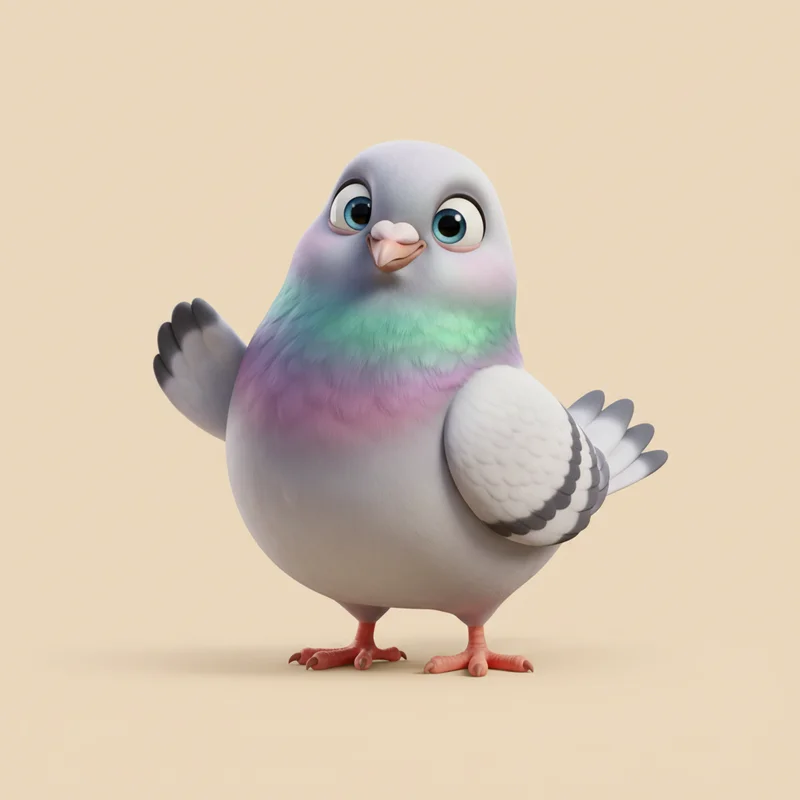
Pigeon

Pigeon

Urban survivor, descendant of war heroes, professional breadcrumb enthusiast. Either a "rat with wings" or a "rock dove" depending on whether you're trying to sound sophisticated. Has seen things. Judges you anyway.

VS
Rubber Duck

Rubber Duck

A debugging tool for programmers and bathtub companion for everyone else. This hollow yellow bird has solved more software bugs than most senior engineers. Also squeaks.

The Matchup

The study of urban fauna has traditionally focused on organisms that arrived through ecological accident or deliberate introduction. Yet a comprehensive survey of human environments reveals two entities of particular note: Columba livia domestica, the common pigeon, and the polyvinyl chloride bath toy, colloquially known as the rubber duck.

The pigeon represents what biologists term a synanthropic species, one that has evolved in direct relationship with human habitation. Originally domesticated in Mesopotamia approximately 5,000 years ago, pigeons served as message carriers, religious symbols, and food sources before achieving their current status as ubiquitous urban residents. Conservative population estimates place their global numbers at 400 million individuals, with concentrations in every major city on Earth.

The rubber duck emerged from rather different origins. Patented in the late nineteenth century as a solid rubber chew toy, the hollow floating variant achieved commercial dominance following advances in PVC manufacturing during the 1940s. Current annual production figures remain difficult to verify, though industry analysts estimate global output exceeding 50 million units annually. The rubber duck has achieved what marketing professionals describe as universal brand recognition, identifiable across virtually all human cultures regardless of actual bathing traditions.

This examination employs five criteria selected for their relevance to long-term survival success: Global Reach, Durability, Portability, Social Impact, and Entertainment Value. Each metric illuminates different aspects of the competition between feathered organism and moulded polymer.

Battle Analysis

Durability Rubber Duck Wins
30%
70%
Pigeon Rubber Duck

Pigeon

Individual pigeon lifespan in urban environments averages 3-5 years, though documented specimens have exceeded 15 years under favorable conditions. This individual mortality rate might suggest durability weakness, yet the pigeon's true durability manifests at the population level.

Pigeon populations demonstrate extraordinary resilience to control measures. Municipal attempts at population reduction through culling, contraceptive feeding, predator introduction, and habitat modification have achieved, at best, temporary localized reductions. The species' reproductive capacity, approximately 12 offspring per breeding pair annually, ensures rapid recovery from any population stress.

Furthermore, pigeons have demonstrated remarkable adaptation to environmental toxins, novel pathogens, and climate variations. Urban populations have evolved tolerance to air pollution levels that would compromise less adaptable species. The pigeon, as a biological system, approaches effective immortality through continuous generational renewal.

Rubber Duck

The physical durability of polyvinyl chloride construction grants individual rubber ducks exceptional longevity. Under standard indoor conditions, material degradation timelines extend to 50-100 years before significant structural compromise occurs. The rubber duck purchased for a child's bath may outlast not only the child but the child's children.

This durability received dramatic demonstration in January 1992, when the container ship Ever Laurel lost cargo including 28,800 rubber ducks in the North Pacific. These ducks subsequently dispersed across the world's oceans, with recoveries documented on beaches spanning Alaska, Hawaii, Australia, South America, Scotland, and Maine over the following three decades. Oceanographer Curtis Ebbesmeyer employed the dispersal pattern to model global ocean current systems.

The rubber duck's material integrity proved sufficient to survive continuous saltwater immersion, UV radiation exposure, temperature extremes, and mechanical stress from years of ocean drift. No biological organism could maintain structural integrity under equivalent conditions.

VERDICT

At the individual specimen level, the rubber duck achieves unambiguous durability superiority. A pigeon expires within years; a rubber duck persists for decades. Ocean-crossing endurance tests have demonstrated the polymer's capacity to survive conditions lethal to any organic tissue.

The pigeon's population-level immortality represents a different durability paradigm, one dependent on continuous reproduction rather than individual persistence. This biological approach has obvious advantages but requires ongoing resource consumption and reproductive activity. The rubber duck simply endures, requiring nothing. In the measure of raw material longevity, inert polymer defeats living tissue.

Portability Rubber Duck Wins
30%
70%
Pigeon Rubber Duck

Pigeon

Pigeon transport presents significant logistical challenges. Historical pigeon carrying required specialized wicker containers with adequate ventilation, provisions for food and water, and careful handling to prevent stress-induced mortality. Racing pigeon enthusiasts maintain elaborate transport protocols for competitive events.

The pigeon's own flight capacity might suggest inherent portability, yet this capability operates exclusively under pigeon volition. Human attempts to direct pigeon movement require extensive training regimes exploiting the species' homing instinct. A pigeon cannot be casually relocated; it will simply return to its established territory.

Furthermore, live pigeon transport across international boundaries triggers agricultural quarantine regulations in virtually all jurisdictions. Health certification, veterinary inspection, and import permits transform pigeon portability into an administrative undertaking of considerable complexity.

Rubber Duck

The rubber duck represents what industrial designers term optimal transport geometry. Standard specimens measure approximately 7-10 centimeters in their longest dimension, with mass typically under 50 grams. This scale permits convenient storage in pockets, handbags, luggage, or desk drawers without significant space consumption.

No special handling requirements apply. Temperature extremes within normal travel parameters cause no damage. Mechanical shock from typical transport jostling produces no harm. The rubber duck may be shipped by any postal service, carried on any aircraft, transported across any border without documentation, inspection, or regulatory concern.

The rubber duck community has embraced this portability through practices such as travel duck photography, where enthusiasts document their rubber ducks at landmarks worldwide. This phenomenon confirms the practical reality: rubber ducks go wherever their owners go, without friction, preparation, or bureaucratic obstruction.

VERDICT

The comparison reduces to a straightforward assessment: animate versus inanimate transport characteristics. Living organisms require sustenance, environmental controls, and regulatory compliance. Inert objects require only physical containment.

The rubber duck achieves essentially frictionless portability. It fits in standard luggage, survives any reasonable transport condition, and crosses borders without comment. The pigeon requires specialized containers, refuses to stay where placed, and triggers regulatory frameworks wherever transported. For practical portability applications, the rubber duck's complete transport indifference establishes definitive superiority.

Global reach Pigeon Wins
70%
30%
Pigeon Rubber Duck

Pigeon

The pigeon has achieved what ecologists describe as cosmopolitan distribution, a term reserved for species found on every continent where humans maintain permanent settlements. From the Arctic research stations of Svalbard to the southernmost cities of Patagonia, wherever humans have constructed buildings with ledges, pigeons have followed.

This distribution was not accidental. Historical records document deliberate pigeon introductions across North America, South America, Australia, and Southern Africa during the colonial period. European settlers, apparently unable to contemplate existence without cooing from rooftops, transported breeding pairs across oceans. The birds subsequently established feral populations with characteristic efficiency.

Urban density studies reveal remarkable consistency in pigeon populations relative to human density. Major metropolitan areas maintain approximately one pigeon per 6-10 human residents, a ratio that remains stable across cultural and economic contexts. Whether in Tokyo, Mumbai, Paris, or Sao Paulo, the pigeon maintains its proportional presence with documentary precision.

Rubber Duck

The rubber duck has penetrated global markets through commercial distribution networks rather than ecological adaptation. Market research indicates retail availability in over 150 countries, though actual household penetration rates vary considerably by region.

In North America and Western Europe, rubber duck ownership approaches near-universality, with survey data suggesting over 85% of households with children under ten possess at least one specimen. Asian markets demonstrate strong growth trajectories, particularly in Japan and South Korea, where character-branded variants command premium prices.

However, the rubber duck's distribution remains constrained by economic and infrastructure limitations. Regions lacking reliable retail supply chains or disposable income for non-essential bath accessories show correspondingly lower penetration. Unlike the pigeon, which colonizes new territories autonomously, the rubber duck requires active human commercial activity for distribution maintenance.

VERDICT

The pigeon's autonomous colonization capacity establishes fundamental superiority in global reach metrics. Once introduced to any suitable environment, pigeons maintain and expand their populations without ongoing human intervention. They navigate urban ecosystems independently, locate food sources, establish breeding sites, and adapt to local conditions.

The rubber duck, by contrast, achieves distribution only through sustained commercial infrastructure. Manufacturing must continue, supply chains must function, retailers must stock shelves, and consumers must purchase. Any disruption to these systems immediately halts rubber duck proliferation. The pigeon acknowledges no such dependencies. In the measure of true global reach, the self-sustaining colonizer defeats the supply-chain-dependent commodity.

Social impact Pigeon Wins
70%
30%
Pigeon Rubber Duck

Pigeon

The pigeon occupies a uniquely contested position in human social consciousness. To some, pigeons represent charming urban wildlife, descendants of noble messenger birds, worthy of protection and feeding. To others, they constitute winged vermin, disease vectors deserving eradication.

Historical social impact includes documented military service. During both World Wars, carrier pigeons delivered critical communications when other channels failed. Cher Ami, a pigeon serving American forces in 1918, received the Croix de Guerre for delivering a message that saved 194 soldiers despite sustaining severe injuries. Thirty-two pigeons received the Dickin Medal, the animal equivalent of the Victoria Cross.

Contemporary social impact proves more ambivalent. Pigeons facilitate substantial economic activity through racing, breeding, and related industries worth billions globally. Simultaneously, they generate significant cleaning and maintenance costs for building owners and municipalities. The pigeon's social impact might be described as net controversial.

Rubber Duck

The rubber duck has achieved cultural penetration rarely matched by manufactured objects. Its image functions as universal shorthand for childhood innocence, bath time, and playful domesticity. Advertising, entertainment media, and visual communication employ the rubber duck as instantly recognizable iconography.

Beyond symbolic value, the rubber duck has generated tangible social phenomena. Rubber duck racing events, where thousands of numbered ducks float downstream for charitable fundraising, occur in hundreds of communities worldwide. The Great British Duck Race deploys over 165,000 ducks annually on the Thames, raising millions for charitable causes.

In software engineering, rubber duck debugging has achieved methodology status, documented in professional literature and practiced at major technology corporations. The rubber duck has transcended toy status to become a recognized cognitive tool in one of the world's most economically significant industries.

VERDICT

The rubber duck generates primarily positive social associations: childhood warmth, charitable participation, professional problem-solving. This consistency represents valuable brand positioning but limited social complexity.

The pigeon's social impact spans military heroism, competitive sport, urban controversy, and ecological debate. It has delivered messages that altered military outcomes, generated industries worth billions, provoked municipal policy discussions, and inspired both affection and revulsion in roughly equal measure. This breadth of social engagement, encompassing love, hatred, commerce, sport, and civic discourse, represents social impact of fundamentally greater scope than the rubber duck's pleasant but narrow cultural niche.

Entertainment value Pigeon Wins
70%
30%
Pigeon Rubber Duck

Pigeon

Pigeon observation provides entertainment value that ornithologists describe as surprisingly underrated. Mating displays involve elaborate cooing, puffed chests, and circular strutting that filmmakers have repeatedly employed for comedic effect. Feeding behavior, particularly competitive dynamics around food sources, demonstrates social hierarchies of genuine complexity.

Pigeon racing constitutes a global entertainment industry. Championship birds command prices exceeding one million dollars, with the Belgian market for racing pigeons representing a particularly concentrated luxury segment. Race events attract substantial betting activity, regulated in some jurisdictions and informal in others.

Urban pigeons also provide unscripted entertainment through their interactions with human infrastructure. Videos of pigeons riding subway cars, stealing food from outdoor diners, or navigating revolving doors accumulate millions of views across social media platforms. The pigeon requires no programming to generate engaging content.

Rubber Duck

The rubber duck's entertainment value derives primarily from contextual deployment rather than inherent activity. A rubber duck provides no autonomous entertainment; it neither moves nor vocalizes without external input. Its entertainment contribution depends entirely on human imagination and staging.

That said, the rubber duck has proven remarkably productive as entertainment substrate. Rubber duck photography communities document creative compositions spanning absurdist humor, travel documentation, and artistic expression. Giant inflatable rubber duck installations by artist Florentijn Hofman have toured internationally, drawing crowds in the hundreds of thousands.

Bath time entertainment, the rubber duck's original function, continues generating value for the under-five demographic. The squeaking mechanism, floating characteristics, and friendly appearance combine to provide sensory engagement appropriate to early childhood development stages.

VERDICT

Entertainment value assessment must consider both active content generation and passive entertainment substrate functions. The rubber duck provides the latter, the pigeon provides both.

A pigeon generates entertainment content autonomously and continuously. It performs behaviors, interacts with environments, and creates observable dynamics without human intervention. The rubber duck's entertainment requires human creativity for activation. Furthermore, the pigeon entertainment industry generates documented economic value in the billions, while rubber duck entertainment, though charming, operates at considerably smaller economic scale. The pigeon's capacity for self-generating entertainment establishes victory in this category.

👑

The Winner Is

Pigeon

58 - 42

This documentary examination concludes with a 58-42 verdict in favour of the common pigeon, Columba livia domestica. The margin reflects genuine competitive strength from both subjects whilst acknowledging the pigeon's fundamental advantages in biological adaptability.

The rubber duck achieves clear superiority in Durability and Portability, categories where inert materials naturally outperform living organisms. A rubber duck survives ocean crossings that would drown any pigeon. It travels without complaint across any boundary. These advantages are real and significant.

However, the pigeon prevails in Global Reach, Social Impact, and Entertainment Value, categories requiring the autonomous agency that only living systems possess. The pigeon colonizes new territories without commercial infrastructure. It generates social discourse spanning admiration, controversy, and billion-dollar industries. It entertains through self-directed behavior rather than requiring human staging.

The fundamental distinction emerges clearly: the rubber duck achieves what it achieves through human action upon inert material. The pigeon achieves what it achieves through its own biological agency. In a comparison of entities competing for environmental presence, the organism capable of self-directed survival, reproduction, and adaptation must ultimately prevail over the manufactured object dependent on external forces for every aspect of its existence.

Pigeon
58%
Rubber Duck
42%

Share this battle

More Comparisons