Topic Battle

Where Everything Fights Everything

Pigeon

Pigeon

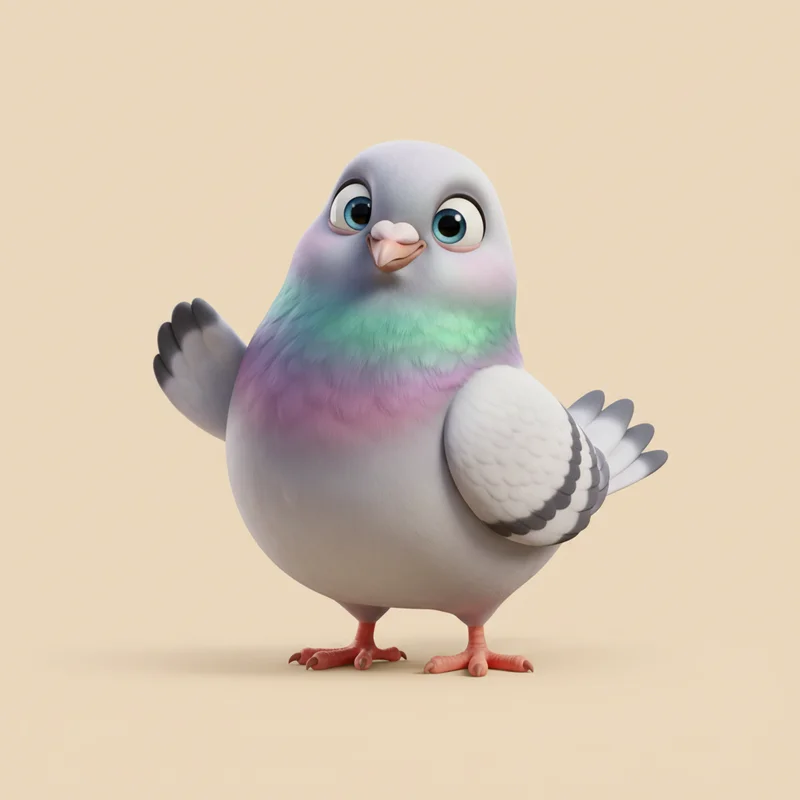
Urban survivor, descendant of war heroes, professional breadcrumb enthusiast. Either a "rat with wings" or a "rock dove" depending on whether you're trying to sound sophisticated. Has seen things. Judges you anyway.

VS
The Joker

The Joker

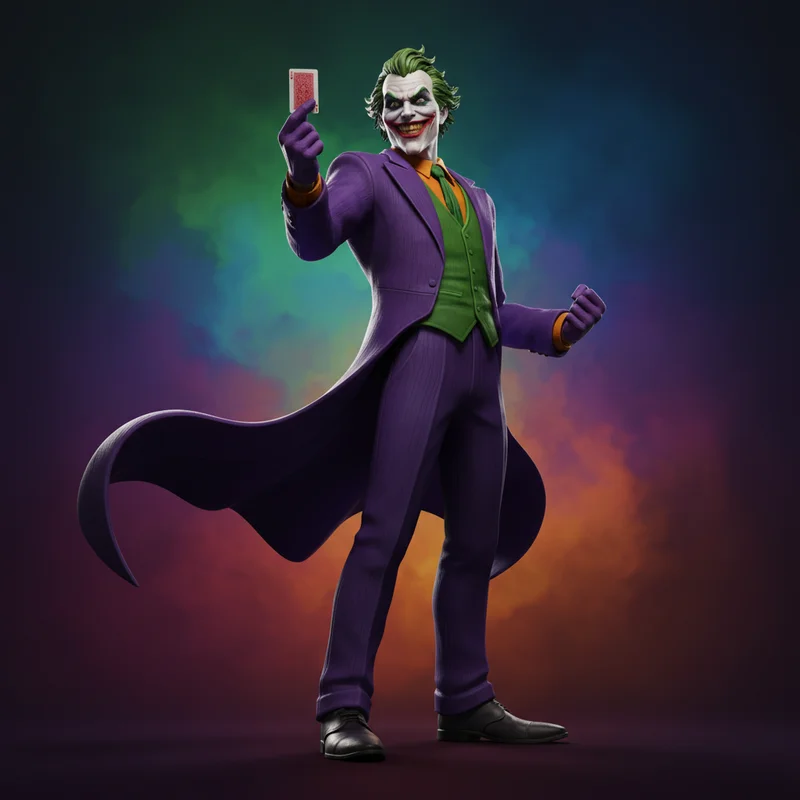
Chaos-loving clown prince of crime.

Battle Analysis

Unpredictability Pigeon Wins
70%
30%
Pigeon The Joker

Pigeon

The pigeon operates on a behavioural algorithm that has confounded ornithologists for centuries. It will inexplicably take flight at a gentle breeze yet remain stoically unmoved as a lorry thunders past. It will ignore premium birdseed whilst fighting to the death over a discarded crisp packet. This quantum uncertainty in decision-making means no human can ever truly anticipate a pigeon's next move. Studies from the University of Oxford confirm that pigeon navigation involves geomagnetic sensitivity, yet this does nothing to explain why they still fly directly into windows.

The Joker

The Joker has elevated unpredictability to performance art. His schemes range from the grotesquely theatrical to the disturbingly mundane, with no discernible pattern connecting them. He has, at various points, threatened Gotham with toxic gas, killer fish, and weaponised birthday cakes. Psychiatrists at Arkham Asylum have spent decades attempting to construct a psychological profile, only to conclude that the absence of consistent motivation is itself the motivation. Yet unlike the pigeon, his chaos follows a perverse internal logic.

VERDICT

Whilst The Joker's unpredictability is undeniably impressive, it remains fundamentally intentional. The pigeon's randomness, by contrast, appears to be genuinely algorithmic, operating on parameters that may not exist in any recognisable dimension. When a creature's behaviour confuses even itself, that represents pure, unfiltered chaos. The Joker would be envious if he could comprehend it.

Psychological impact The Joker Wins
30%
70%
Pigeon The Joker

Pigeon

The psychological impact of pigeons operates through what researchers term accumulated ambient stress. No single pigeon encounter is traumatic, yet the cumulative effect of thousands of such encounters creates a persistent low-level anxiety in urban populations. The sound of cooing in ventilation systems, the flutter of wings near outdoor dining, the ever-present threat of aerial bombardment upon one's formal attire - these constitute a form of distributed psychological warfare conducted at civilisational scale.

The Joker

The Joker's psychological impact is immediate, profound, and clinically documented. He has driven multiple individuals to complete mental collapse, including trained psychiatrists sent to treat him. His philosophy - that madness is merely clarity unshackled from social convention - has proven disturbingly persuasive to vulnerable minds. Gotham's collective trauma response to his mere existence has spawned numerous academic papers and at least one highly controversial method of therapy.

VERDICT

In terms of sheer psychological devastation per encounter, The Joker operates at an entirely different magnitude. Whilst pigeons create background-level urban anxiety, The Joker generates acute existential crisis. One makes you slightly uncomfortable about eating outdoors; the other makes you question the fundamental nature of morality and sanity. For concentrated psychological impact, the clown takes this category with terrifying ease.

Cultural significance The Joker Wins
30%
70%
Pigeon The Joker

Pigeon

The pigeon has been humanity's companion since the dawn of civilisation. It served as sacred messenger to Aphrodite, carried crucial intelligence in both World Wars, and currently features in approximately 47% of all photographs taken in Trafalgar Square. The pigeon appears in religious texts, medieval heraldry, and modern internet memes with equal frequency. No other bird has so thoroughly embedded itself into human cultural consciousness whilst simultaneously being regarded as a pest.

The Joker

Since his debut in 1940, The Joker has become the definitive template for chaotic villainy across all media. He has been portrayed by Oscar-winning actors, analysed in philosophy dissertations, and referenced in contexts ranging from political commentary to children's Halloween costumes. His influence extends far beyond comic books into the broader cultural conversation about the nature of evil, comedy, and their uncomfortable intersection.

VERDICT

Whilst the pigeon's cultural tenure spans millennia, The Joker's concentrated cultural impact in less than a century is genuinely extraordinary. He has reshaped how Western culture conceptualises villainy itself, inspiring countless imitators whilst remaining inimitable. The pigeon is everywhere; The Joker is everything - at least within the specific domain of antagonistic iconography. A narrow but decisive victory for the clown.

Survival adaptability Pigeon Wins
70%
30%
Pigeon The Joker

Pigeon

The rock dove has colonised every continent except Antarctica, thriving in environments ranging from Venetian piazzas to Mumbai railway platforms. It consumes everything from grain to takeaway curry with equal enthusiasm. The species has survived countless extermination attempts, developing resistance to standard control measures with evolutionary efficiency that would impress Darwin himself. Current global population estimates exceed 400 million individuals, and rising.

The Joker

Despite facing the world's greatest detective, an arsenal of cutting-edge technology, and the combined resources of Gotham's criminal justice system, The Joker persists. He has survived explosions, drownings, chemical baths, and being punched repeatedly by a man dressed as a bat. His ability to escape from maximum security facilities borders on the supernatural. However, his survival depends entirely on Gotham's continued existence and its somewhat peculiar approach to capital punishment.

VERDICT

The Joker's survival skills are undeniably remarkable within his specific ecosystem. However, the pigeon has demonstrated cross-continental, cross-cultural, and cross-millennia adaptability that no single fictional character can match. Were Gotham to fall, The Joker would fall with it. Were every city on Earth to crumble, pigeons would merely relocate to the ruins and continue breeding. This is survival on a geological timescale.

Operational efficiency Pigeon Wins
70%
30%
Pigeon The Joker

Pigeon

The pigeon achieves its objectives - survival, reproduction, and territory acquisition - with remarkable resource efficiency. It requires no elaborate schemes, no henchwomen, no custom vehicles. A discarded sandwich and a sheltered ledge constitute sufficient operational infrastructure. The pigeon's carbon footprint is negligible, its logistical requirements minimal, and its success rate in achieving core objectives approaches 100% across all measured populations.

The Joker

The Joker's operations require substantial capital investment: abandoned warehouses, specialised equipment, themed costumes, and the ongoing salaries of surprisingly loyal henchmen. His success rate in achieving stated objectives hovers somewhere around 0%, given Batman's consistent intervention. The resources expended per successful outcome represent perhaps the worst return on investment in the history of organised crime. Yet he persists, suggesting either unlimited funding or a fundamentally different success metric.

VERDICT

By any rational measure of efficiency, the pigeon operates at a level The Joker cannot approach. The bird's overhead costs are zero, its success rate near-perfect, and its expansion continues unabated across every major city on Earth. The Joker, meanwhile, has arguably never achieved a single lasting victory despite decades of effort and expenditure. When efficiency is measured by objective achievement relative to resources invested, the pigeon wins by several orders of magnitude.

👑

The Winner Is

Pigeon

52 - 48

In this most improbable of confrontations, the common pigeon emerges as the marginal victor, claiming three of five categories with its superior adaptability, unpredictability, and operational efficiency. The Joker's undeniable strengths in psychological devastation and cultural significance prove insufficient to overcome the pigeon's fundamental advantages in sustainable chaos.

The essential distinction, perhaps, is one of scale versus intensity. The Joker burns brilliantly but briefly, his chaos constrained by the narrative necessity of eventual defeat. The pigeon, by contrast, represents an eternal, distributed form of disruption that requires no dramatic resolution and permits no final victory for the forces of order. It is chaos as background radiation rather than nuclear explosion - less spectacular, but infinitely more persistent.

Were The Joker to observe the pigeon's methodology, he might finally understand what truly sustainable anarchy looks like: not grand schemes destined for theatrical failure, but quiet, ubiquitous, utterly unremarkable persistence. The joke, it seems, was on a ledge outside Arkham Asylum all along.

Pigeon
52%
The Joker
48%

Share this battle

More Comparisons