Topic Battle

Where Everything Fights Everything

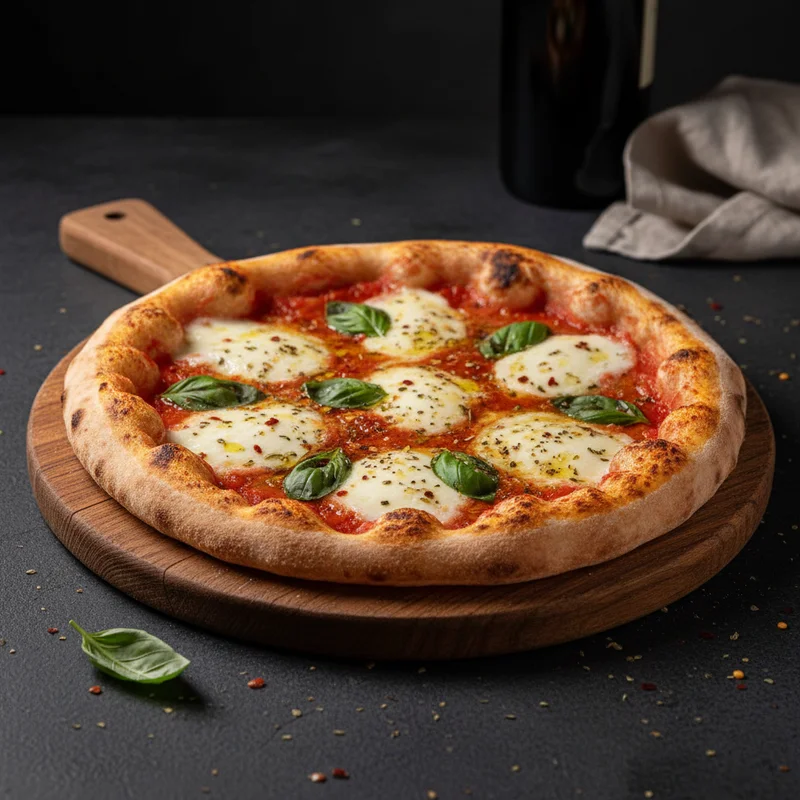
Pizza

Pizza

A flat disc of bread that convinced the world that putting everything on top of something is a legitimate cuisine. Somehow both a $1 slice and a $40 artisanal experience, depending on how seriously you take yourself.

VS
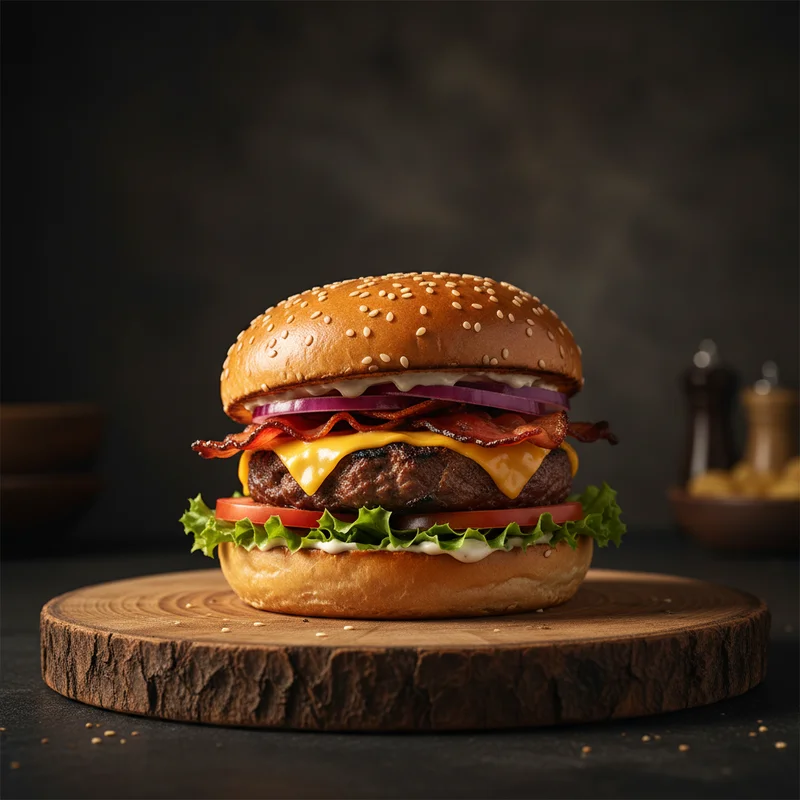
Burger

Burger

Ground beef patty in a bun, America's contribution to global cuisine.

Battle Analysis

Adaptability pizza Wins
70%
30%
Pizza Burger

Pizza

The pizza demonstrates extraordinary morphological flexibility. Its flat surface functions as a canvas upon which infinite variations may be painted. From the controversial Hawaiian iteration featuring pineapple to the Japanese mayonnaise and corn specimens, pizza absorbs local ingredients with remarkable tolerance. The crust itself varies from the gossamer-thin Roman style to the substantial Chicago deep-dish, a variation so extreme it arguably constitutes a separate species entirely. Vegetarian, vegan, gluten-free—the pizza accommodates all dietary restrictions with minimal structural compromise. This adaptability extends to consumption context: pizza functions equally at children's parties and corporate boardrooms, a versatility few foods achieve.

Burger

The burger's adaptability, whilst genuine, operates within more constrained parameters. The fundamental architecture—protein patty between bread hemispheres—permits variation but resists radical reimagining. Attempts to transcend these boundaries, such as the sushi burger or ramen burger, often read as novelty rather than evolution. The burger excels in protein substitution, readily accepting beef, chicken, fish, or plant-based alternatives without existential crisis. However, its vertical construction creates practical limitations; beyond a certain height, the burger becomes an engineering challenge rather than a food item. The infamous 'Instagram burger'—stacked impossibly high—represents adaptability's dark extreme, where form overwhelms function entirely.

VERDICT

Pizza's flat canvas architecture permits infinite variation whilst maintaining structural integrity and ease of consumption.
Accessibility pizza Wins
70%
30%
Pizza Burger

Pizza

Pizza achieves remarkable economic accessibility across the socioeconomic spectrum. A slice of New York pizza, available for approximately $3, provides sufficient calories to sustain a human through several hours of activity. Simultaneously, the Renato Viola 'Louis XIII' pizza commands $12,000 per serving, demonstrating the food's capacity to span the complete economic range. Home preparation requires minimal equipment: flour, water, yeast, and heat. The frozen pizza industry, worth $18 billion globally, ensures pizza availability even in the most remote locations with basic refrigeration. Delivery infrastructure has evolved specifically around pizza's transportable flat form, creating an ecosystem of accessibility unmatched in food service.

Burger

The burger's accessibility, whilst substantial, encounters certain structural barriers. Proper burger preparation requires ground meat—a product demanding refrigeration infrastructure and reliable supply chains. In regions where beef consumption faces religious or cultural restrictions, the burger's accessibility diminishes considerably. The fast-food burger, available for mere pounds at countless outlets, certainly democratises access, yet the gap between this industrial product and an artisanal burger proves vast. Home preparation, whilst possible, requires either mincing equipment or pre-ground meat, adding complexity the pizza avoids. The burger's vertical construction also presents accessibility challenges for those with limited jaw mobility or dental concerns.

VERDICT

Lower barriers to home preparation and broader cultural acceptance give pizza superior global accessibility.
Global recognition pizza Wins
70%
30%
Pizza Burger

Pizza

The pizza has achieved what few food items dare dream: universal recognition. From Tokyo to Toronto, from São Paulo to Stockholm, the sight of a circular, cheese-laden disc requires no translation. UNESCO inscribed the art of Neapolitan pizza-making on its Intangible Cultural Heritage list in 2017, a distinction shared with phenomena such as falconry and traditional Chinese medicine. The pizza transcends mere sustenance; it has become a visual shorthand for celebration, appearing in films, television, and art with remarkable consistency. One need only observe the phenomenon of pizza emoji usage—ranking among the top ten food symbols globally—to understand its penetrative reach into human consciousness.

Burger

The burger commands formidable recognition, though its identity proves more fractured across cultural boundaries. While the McDonald's golden arches represent the most recognised brand symbol on Earth—visible from space, some claim—the burger itself lacks the visual unity of its rival. A burger in Berlin differs substantially from one in Bangkok. This variation, whilst demonstrating adaptability, dilutes brand coherence. The burger remains inextricably linked to American cultural export, for better or worse carrying the baggage of that association. In nations with complex relationships to American influence, the burger occasionally suffers guilt by association, a burden the more cosmopolitan pizza largely escapes.

VERDICT

UNESCO heritage status and universal visual recognition give pizza an unassailable lead in global cultural penetration.
Environmental impact pizza Wins
70%
30%
Pizza Burger

Pizza

The environmental calculus of pizza presents a complex equation. A standard cheese pizza generates approximately 5.5 kg of CO2 equivalent, with cheese production—specifically the methane-producing dairy industry—contributing the largest share. However, pizza's flat architecture permits efficient transport; a single delivery vehicle can carry numerous pizzas stacked without crushing. The rise of plant-based pizza options reduces environmental impact substantially, and the pizza's compatibility with vegetable toppings offers a pathway to sustainability that maintains the essential pizza experience. Italy's Slow Food movement has championed locally-sourced pizza ingredients, demonstrating the form's capacity for environmental consciousness.

Burger

The burger confronts a more severe environmental indictment. Beef production generates approximately 27 kg of CO2 equivalent per kilogram of meat, making the traditional beef burger among the most environmentally costly foods per calorie. Water usage proves similarly stark: a single beef burger requires approximately 2,500 litres of water when all inputs are calculated. The rise of plant-based alternatives like Beyond Meat and Impossible Foods represents the industry's acknowledgment of this burden, yet traditional beef burgers continue dominating sales. The burger's environmental future depends entirely on the success of alternative proteins—a technological gamble the pizza need not make so urgently.

VERDICT

Lower baseline emissions and greater compatibility with sustainable ingredients give pizza the environmental advantage.
Historical significance burger Wins
30%
70%
Pizza Burger

Pizza

The pizza's historical narrative stretches into Mediterranean antiquity, where flatbreads with toppings sustained Roman legions and Greek philosophers alike. However, the modern pizza—tomato-topped and cheese-laden—emerged only after the Columbian Exchange delivered tomatoes from the Americas to Europe. The pizza's role in Italian unification cannot be overstated; the Margherita pizza, with its deliberate red, white, and green colour scheme, represented nationalist symbolism made edible. Italian immigration to America transformed pizza from regional curiosity to global phenomenon, with the first American pizzeria opening in New York in 1905. Pizza's historical significance lies in its embodiment of cultural fusion and migration.

Burger

The burger's origins remain contentious and disputed—a historical murkiness that somehow suits its character. Claims from Hamburg, Germany; New Haven, Connecticut; and Athens, Texas all demand recognition. What remains certain is the burger's emergence during the Industrial Revolution, when rapid urbanisation created demand for quick, portable protein. The burger became the food of American expansion, served at 1904 St. Louis World's Fair to millions. Its subsequent global spread paralleled American cultural hegemony in the twentieth century. The burger's historical significance lies not in ancient lineage but in its representation of modernity, efficiency, and mass production—values that defined an era.

VERDICT

The burger's embodiment of industrial modernity and American century expansion grants it unique historical resonance.
👑

The Winner Is

Pizza

54 - 46

Our rigorous examination reveals pizza's marginal but meaningful superiority across the measured criteria. The flat disc, born of Mediterranean pragmatism and perfected through centuries of cultural evolution, demonstrates advantages in global recognition, adaptability, accessibility, and environmental sustainability. These are not trivial distinctions; they represent the fundamental characteristics that determine a food's capacity to serve humanity across diverse contexts and into an uncertain future.

The burger, however, earns profound respect for its historical significance—its embodiment of an entire era of human industrial and cultural development. To dismiss the burger would be to dismiss the twentieth century itself, with all its ambitions, contradictions, and achievements. The burger represents a specific moment in human history captured in edible form, and such significance commands recognition even in defeat.

What emerges from this analysis is not a condemnation of either specimen, but rather an appreciation for how two such different approaches to combining bread, protein, and accompaniments could each achieve such remarkable success. The pizza spreads horizontally; the burger stacks vertically. The pizza invites sharing; the burger demands individual consumption. These differences reflect fundamentally different philosophies of eating, and humanity is richer for having both options available.

Pizza
54%
Burger
46%

Share this battle

More Comparisons