
Topic Battle

Where Everything Fights Everything

Pizza

Pizza

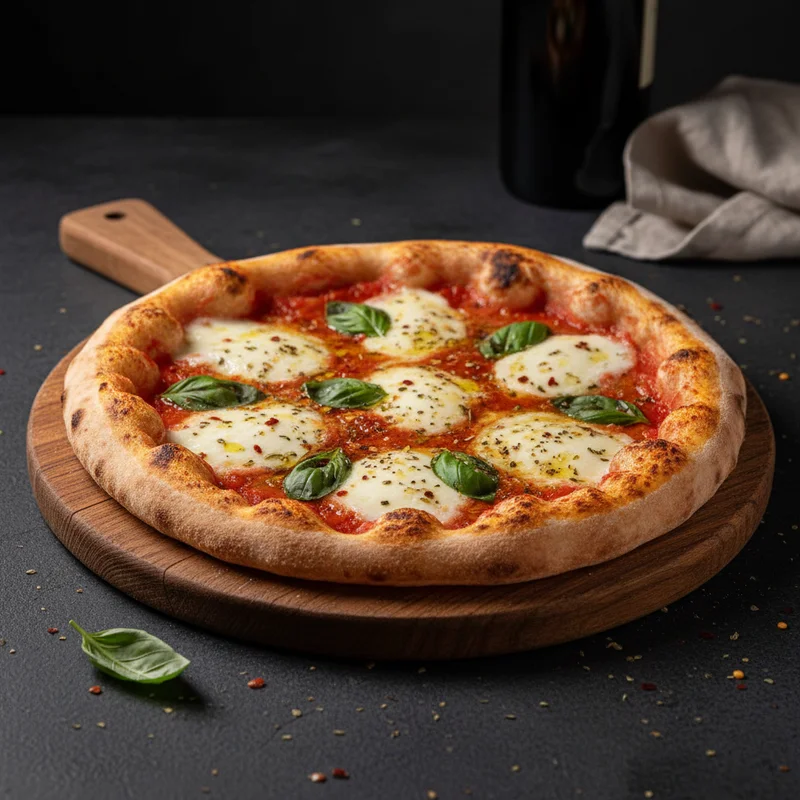
A flat disc of bread that convinced the world that putting everything on top of something is a legitimate cuisine. Somehow both a $1 slice and a $40 artisanal experience, depending on how seriously you take yourself.

VS
Mario

Mario

Nintendo's mustachioed plumber and gaming icon.

Battle Analysis

Adaptability pizza Wins
70%
30%
Pizza Mario

Pizza

The pizza demonstrates extraordinary adaptability across cultural contexts, dietary requirements, and consumption scenarios. Vegetarian, vegan, gluten-free, and halal variations exist in abundance. Pizza has been adapted for frozen retail, fresh delivery, fast food, and fine dining contexts. The basic concept accommodates virtually any topping combination, from traditional pepperoni to unconventional options such as pineapple, chocolate, or cricket protein.

This adaptability extends to preparation methods. Pizza can be produced in wood-fired ovens, conventional ovens, microwave devices, or outdoor grills. It can be consumed hot or cold, fresh or reheated. The format itself adapts to portion requirements, from personal-sized to family-sharing dimensions. No other food demonstrates such comprehensive adaptability across the spectrum of human dietary needs and preferences.

Mario

Mario has demonstrated remarkable adaptability across gaming genres and media formats. The character has successfully transitioned from platforming to racing (Mario Kart), role-playing (Super Mario RPG), sports simulation (Mario Golf, Tennis, Strikers), puzzle games (Dr. Mario), and party games (Mario Party). Each adaptation maintains the character's essential appeal whilst exploring entirely different gameplay mechanics.

The character's adaptability extends beyond gaming into merchandise, theme parks, and cinema. Super Nintendo World attractions in Japan and the United States offer physical manifestations of Mario's digital environments. However, Mario's adaptability ultimately operates within the constraints of entertainment media, unable to transition into utility domains such as nutrition, transportation, or shelter.

VERDICT

Pizza adapts across cultural, dietary, and practical dimensions whilst Mario's adaptability remains confined to entertainment media.
Daily utility pizza Wins
70%
30%
Pizza Mario

Pizza

The pizza serves a fundamental biological imperative: the provision of calories, protein, carbohydrates, and micronutrients necessary for human survival. A single slice can deliver approximately 250 to 400 calories, making it an efficient energy source for the labouring body. The food's versatility allows it to function as breakfast, lunch, dinner, or late-night sustenance. In the United States alone, pizza accounts for 27 billion dollars in annual consumption.

Beyond mere nutrition, pizza facilitates social cohesion. The sharing of a pizza has become a ritualised form of communal dining, appearing at birthday parties, office meetings, and casual gatherings worldwide. Its divisible nature promotes equitable distribution whilst its hand-held consumption eliminates the need for formal dining arrangements. The pizza has become, in essence, the great social equaliser of modern cuisine.

Mario

Mario's utility manifests in the realm of psychological recreation rather than physical sustenance. Studies indicate that video game engagement can reduce stress, improve cognitive function, and provide meaningful social connection through multiplayer experiences. The Mario franchise specifically has been praised for its accessibility to players of all skill levels, offering what researchers term positive stress through achievable challenges.

However, Mario cannot sustain a human being through a workday nor provide warmth on a cold evening. The character's utility, whilst genuine in the domain of entertainment and mental wellness, remains firmly non-essential in the hierarchy of human needs. One cannot feed a family with virtual coins, nor can the jumping of digital platforms satisfy genuine hunger.

VERDICT

Pizza addresses fundamental survival needs whilst Mario provides purely recreational value that, however beneficial, remains non-essential.
Global recognition pizza Wins
70%
30%
Pizza Mario

Pizza

The pizza has achieved what few food items can claim: universal recognition across virtually every inhabited region of the planet. From the bustling streets of Tokyo to the remote villages of Peru, the concept of pizza requires no translation. Market research indicates that approximately 5 billion pizzas are consumed annually worldwide, with the industry valued at over 150 billion dollars. The mere silhouette of a pizza slice serves as a universal symbol, appearing on signage from Mumbai to Montreal without need for accompanying text.

This recognition extends beyond mere familiarity into the realm of cultural integration. Each nation has developed its own interpretation, from the mayonnaise-topped varieties of Japan to the banana and curry iterations of Sweden. The pizza has become not merely recognised but adopted as a native food by cultures worldwide.

Mario

Mario stands as the most recognised video game character in human history, surpassing even Mickey Mouse in certain demographic studies. Nintendo's internal research suggests that Mario enjoys a recognition rate exceeding 95 percent among individuals aged 8 to 40 in developed nations. The character has appeared in over 200 video games, selling more than 800 million units combined. His red cap and blue overalls constitute one of the most distinctive visual signatures in entertainment.

However, Mario's recognition necessarily depends upon access to electronic media and gaming culture. In regions where video game penetration remains limited, or among older demographics unfamiliar with digital entertainment, recognition rates diminish considerably. The plumber's fame, whilst vast, exists within certain technological boundaries that pizza effortlessly transcends.

VERDICT

Pizza transcends technological and generational barriers that limit Mario's universal recognition among all demographics.
Entertainment value mario Wins
30%
70%
Pizza Mario

Pizza

The entertainment derived from pizza exists primarily in the anticipatory and consumptive phases rather than in sustained engagement. The experience of ordering, awaiting delivery, and consuming pizza provides genuine pleasure, with studies indicating that anticipation of food triggers dopamine release comparable to other reward-based activities. The social dimension of pizza consumption adds entertainment value through shared experience and conversation.

Yet pizza's entertainment capacity is fundamentally time-limited. A pizza provides perhaps thirty minutes of active engagement before consumption is complete. The entertainment then concludes until the next pizza is procured. There exists no narrative arc, no progression system, no challenge to overcome beyond the physical act of eating itself.

Mario

Mario represents decades of refined entertainment engineering. The character has starred in games offering hundreds of hours of engagement, from the sprawling adventures of Super Mario Odyssey to the endless replayability of Mario Kart competitions. Nintendo's design philosophy, perfected through Mario titles, prioritises what the industry terms game feel: the satisfaction derived from precise controls responding to player input with pixel-perfect accuracy.

The Mario franchise has generated over 40 billion dollars in revenue precisely because it delivers entertainment value efficiently and repeatedly. Players return to Mario games across decades, finding new challenges and experiences. The 2023 Super Mario Bros. Movie became the second-highest-grossing animated film in history, demonstrating Mario's entertainment value extends beyond interactive media into passive viewing experiences.

VERDICT

Mario provides sustained, repeatable entertainment across decades whilst pizza offers only brief consumptive pleasure.
Historical significance pizza Wins
70%
30%
Pizza Mario

Pizza

The pizza's lineage traces back through millennia of Mediterranean culinary tradition. Ancient civilisations including the Greeks, Egyptians, and Romans prepared flatbreads with various toppings, establishing the conceptual foundation. The modern pizza as understood today crystallised in Naples during the 18th century, with the Pizza Margherita legendarily created in 1889 to honour Queen Margherita of Italy. The tricolour of tomato, mozzarella, and basil represented the newly unified Italian flag.

The pizza subsequently played a pivotal role in immigrant communities, particularly in the United States, where it evolved from ethnic curiosity to national staple. The first American pizzeria opened in New York City in 1905, and by the mid-20th century, pizza had become synonymous with American casual dining culture. This transformation represents one of the most successful cultural adaptations in culinary history.

Mario

Mario's historical significance, whilst compressed into a shorter timeframe, has nonetheless proven transformative for an entire industry. Debuting in 1981's Donkey Kong as the character initially named Jumpman, Mario became the face of Nintendo's unprecedented rescue of the video game industry following the crash of 1983. Super Mario Bros. in 1985 established the template for the side-scrolling platform genre and demonstrated that video games could achieve artistic and commercial excellence simultaneously.

The character has since become instrumental in launching multiple console generations and gaming innovations. From the revolutionary 3D exploration of Super Mario 64 to the motion controls of the Wii era, Mario has served as the testing ground for gaming's most significant technological advances. His historical role in legitimising video games as a mainstream entertainment medium cannot be overstated.

VERDICT

Pizza's centuries-long evolution and role in cultural migration outweighs Mario's transformative but comparatively brief forty-year history.
👑

The Winner Is

Pizza

54 - 46

The evidence presented across five critical dimensions reveals a consistent pattern: whilst Mario excels within the bounded domain of entertainment, pizza transcends categorical limitations to serve humanity across virtually every aspect of daily existence. The pizza feeds bodies, facilitates social bonds, adapts to dietary restrictions, and has done so across centuries of human history. Mario, for all his considerable achievements, operates within the optional sphere of recreational activity.

This verdict should not be misconstrued as diminishing Mario's cultural significance. The plumber has demonstrably shaped an entire industry, brought joy to billions, and achieved recognition rates that approach pizza's own remarkable ubiquity. In the domain of entertainment value, Mario stands victorious. Yet entertainment, however enriching, cannot substitute for sustenance.

When the final accounting is rendered, pizza emerges as the superior Italian export by virtue of its capacity to sustain human life itself. One cannot survive on digital adventures alone, but one can indeed subsist on pizza. This fundamental asymmetry determines the outcome of this most unusual comparison.

Pizza
54%
Mario
46%

Share this battle

More Comparisons