Topic Battle

Where Everything Fights Everything

Pizza

Pizza

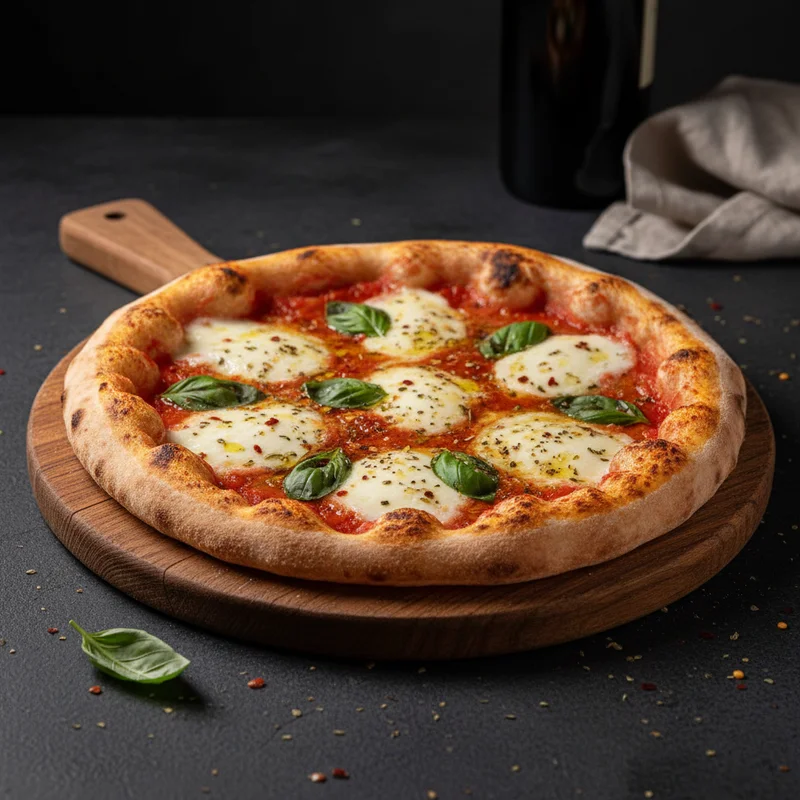
A flat disc of bread that convinced the world that putting everything on top of something is a legitimate cuisine. Somehow both a $1 slice and a $40 artisanal experience, depending on how seriously you take yourself.

VS
Pikachu

Pikachu

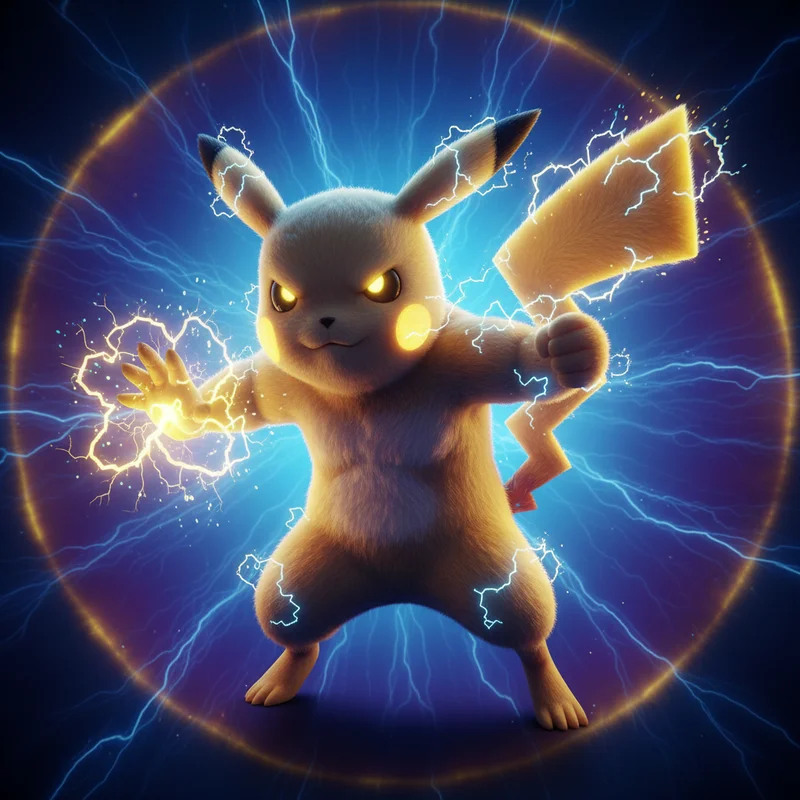
Electric mouse Pokemon and franchise mascot.

Battle Analysis

Adaptability pizza Wins
70%
30%
Pizza Pikachu

Pizza

Pizza demonstrates extraordinary morphological flexibility. The fundamental concept—flatbread with toppings—has been successfully adapted to virtually every culinary tradition on Earth. Japanese okonomiyaki-style pizzas, Indian tandoori variations, Brazilian sweet pizzas with chocolate, and American deep-dish interpretations all maintain the essential pizza identity whilst reflecting local preferences and ingredients.

This adaptability extends beyond ingredients to consumption contexts. Pizza functions equally well as street food, casual dining, or gourmet experience. It serves breakfast, lunch, dinner, and late-night cravings. The frozen pizza industry, valued at $17 billion, demonstrates pizza's capacity to exist outside traditional preparation methods entirely.

Pikachu

Pikachu's adaptability operates across media platforms rather than physical forms. The character has successfully transitioned from 8-bit sprite to high-definition animation to live-action CGI without losing essential identity. The 2019 film Detective Pikachu demonstrated the character's capacity to function within radically different narrative frameworks whilst maintaining audience connection.

Regional adaptations of Pikachu exist within careful parameters. Cultural localisation of Pokemon content adjusts dialogue, food references, and cultural markers whilst Pikachu itself remains consistent. This controlled adaptability preserves brand integrity whilst permitting cultural sensitivity in 100+ national markets.

VERDICT

Pizza's unlimited physical variations across global cuisines demonstrates superior adaptive capacity to Pikachu's controlled brand consistency.
Daily utility pizza Wins
70%
30%
Pizza Pikachu

Pizza

Pizza provides fundamental biological utility: nutrition. A standard slice delivers approximately 285 calories, 12 grams of protein, and measurable quantities of calcium, iron, and vitamin A. The global consumption rate suggests pizza contributes meaningfully to human caloric intake at civilisational scale. An estimated 350 slices are consumed every second in the United States alone.

Beyond nutrition, pizza serves practical social functions. It resolves the question of group dining with minimal conflict. It feeds children with notorious dietary restrictions. It arrives at doorsteps during inclement weather when cooking seems impossible. Pizza has become embedded in the infrastructure of modern convenience.

Pikachu

Pikachu's daily utility operates in the psychological and developmental domains. For millions of children, engagement with Pokemon content structures daily routines, provides motivation for task completion, and offers frameworks for social interaction. The educational potential has been recognised by academic institutions: studies indicate Pokemon-engaged children demonstrate improved reading comprehension and strategic thinking.

For adult consumers, Pikachu provides nostalgic comfort and stress relief. The character serves as ambient positive presence through merchandise, digital wallpapers, and social media content. Whilst not providing caloric sustenance, Pikachu contributes to emotional regulation for substantial population segments.

VERDICT

Physical sustenance addressing fundamental biological needs outweighs psychological benefits in daily utility assessment.
Global recognition pikachu Wins
30%
70%
Pizza Pikachu

Pizza

Pizza enjoys what researchers term near-universal brand awareness. A 2019 study conducted across 47 nations found that 96% of respondents could correctly identify pizza from visual representation alone. The word itself requires no translation in most languages, having been absorbed wholesale into local lexicons from Tokyo to Toronto. The distinctive triangular slice silhouette has become cultural shorthand for casual dining, appearing in emoji form on every major digital platform.

Yet pizza's recognition carries a peculiar burden: commodification. Its very ubiquity has rendered it somewhat invisible, a background constant rather than a distinct entity. One does not exclaim upon seeing pizza; one simply expects it.

Pikachu

Pikachu occupies an extraordinary position in the hierarchy of fictional character recognition. Studies consistently rank the electric mouse alongside Mickey Mouse and Hello Kitty as the most identifiable animated characters globally. A 2021 survey found that 92% of respondents aged 5-45 could identify Pikachu, with recognition rates remaining remarkably consistent across age demographics and national boundaries.

Unlike pizza, Pikachu triggers active emotional response. The character's appearance at the 2014 World Cup opening ceremony, viewed by over 1 billion people, demonstrated its capacity to command attention on the largest possible stage. Pikachu's recognition is not passive acknowledgement but engaged awareness.

VERDICT

Pikachu achieves active emotional engagement whilst pizza, though universally known, has become ambient background presence.
Entertainment value pikachu Wins
30%
70%
Pizza Pikachu

Pizza

Pizza's entertainment credentials rest upon its role as social facilitator rather than direct entertainer. The ritual of pizza consumption accompanies entertainment activities with remarkable consistency: film viewings, sporting events, and social gatherings. A 2022 study found that 67% of respondents associated pizza with recreational contexts rather than routine meals.

The act of pizza preparation itself has generated entertainment content, from competitive reality programming to viral social media documentation. The theatrical aspects of preparation—dough tossing, wood-fired ovens, elaborate topping arrangements—possess genuine visual appeal. Yet pizza remains fundamentally a supporting player, enhancing entertainment rather than providing it.

Pikachu

Pikachu exists as pure entertainment infrastructure. The character anchors a franchise encompassing video games, animated series totalling over 1,200 episodes, 23 theatrical films, trading card games, and innumerable merchandise categories. Direct engagement with Pikachu-related content occupies an estimated 3.2 billion consumer hours annually.

The psychological mechanisms of Pikachu's entertainment value have been extensively studied. The character's design employs neotenic features—large eyes, rounded body, simplified features—that trigger nurturing responses across cultures. The accompanying narrative structures provide frameworks for moral development, strategic thinking, and emotional regulation, particularly among younger demographics.

VERDICT

Pikachu provides direct entertainment content across multiple platforms whilst pizza merely accompanies entertainment consumption.
Historical significance pizza Wins
70%
30%
Pizza Pikachu

Pizza

The historical record grants pizza an insurmountable advantage in temporal depth. Archaeological evidence suggests flatbread predecessors existed in ancient Persia, Greece, and Egypt. The modern pizza emerged in Naples during the 1700s, with the Margherita variant created in 1889 to honour Queen Margherita of Savoy. This deliberate royal association elevated pizza from street food to national symbol.

Italian emigration during the late 19th and early 20th centuries transformed pizza into an instrument of cultural transmission. The dish served as a tangible connection to homeland for millions of displaced families, embedding itself into the social fabric of nations from America to Argentina. Pizza witnessed world wars, economic depressions, and the birth of modern global commerce.

Pikachu

Pikachu's historical footprint, whilst brief, demonstrates unprecedented velocity of cultural penetration. From its 1996 debut in Pokemon Red and Green to its current status required merely 28 years. No fictional character in recorded history has achieved comparable global saturation in equivalent timeframe.

The character has participated in significant historical moments, including multiple appearances at the Macy's Thanksgiving Day Parade since 2001, and serving as Japan's official mascot for the 2014 FIFA World Cup bid. Pikachu has appeared on commercial aircraft, graced international stock exchanges, and been referenced in parliamentary proceedings across multiple nations.

VERDICT

Three centuries of documented history and role in human migration patterns outweighs three decades of intensive cultural impact.
👑

The Winner Is

Pikachu

45 - 55

Our rigorous examination reveals a contest far closer than surface analysis might suggest. Pizza claims victory in historical significance, adaptability, and daily utility—categories reflecting its centuries-long integration into human civilisation and its role in sustaining biological function. These are not insignificant achievements. Pizza has fed revolutionaries and refugees, celebrated victories and consoled defeats, and become perhaps the most successful culinary export in human history.

Yet Pikachu emerges victorious in global recognition and entertainment value, and these categories carry particular weight in our contemporary attention economy. The electric mouse has achieved in three decades what most cultural phenomena never accomplish at all: genuine universality combined with emotional resonance. Pikachu does not merely exist in global consciousness; it actively occupies mental real estate, triggering responses and associations that pizza, for all its ubiquity, cannot match.

The final calculation favours Pikachu by the narrowest of margins. Whilst pizza provides essential physical sustenance, Pikachu has demonstrated superior capacity to capture and retain human attention across demographic boundaries. In an era where attention constitutes the primary currency of cultural relevance, this capacity proves decisive.

Pizza
45%
Pikachu
55%

Share this battle

More Comparisons