Topic Battle

Where Everything Fights Everything

Procrastination

Procrastination

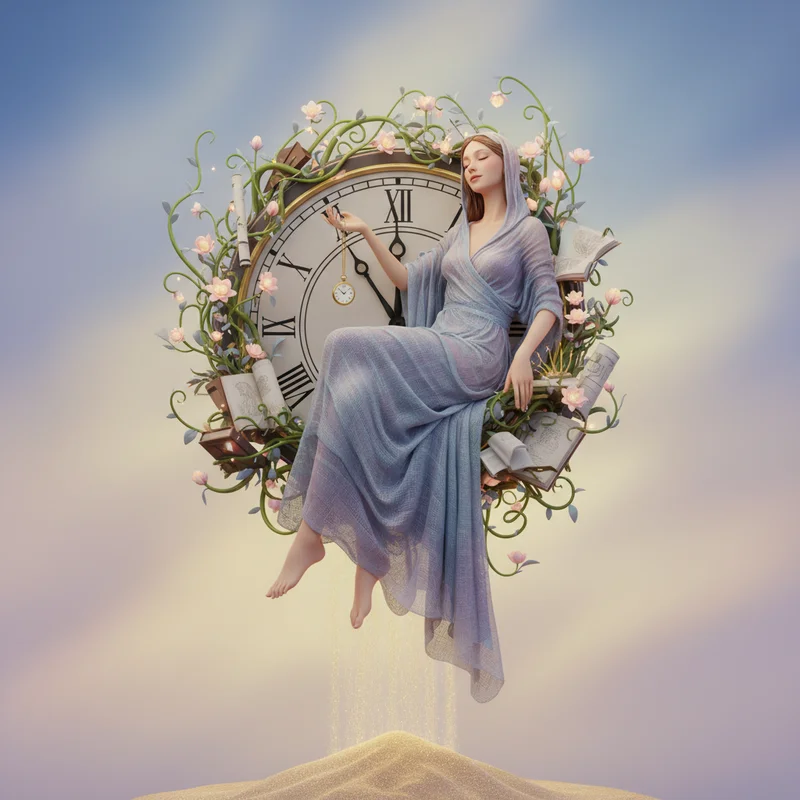
The art of doing everything except the one thing you should be doing. A universal human experience that has spawned more clean apartments, reorganized sock drawers, and Wikipedia deep dives than any productivity method ever could.

VS
Boat

Boat

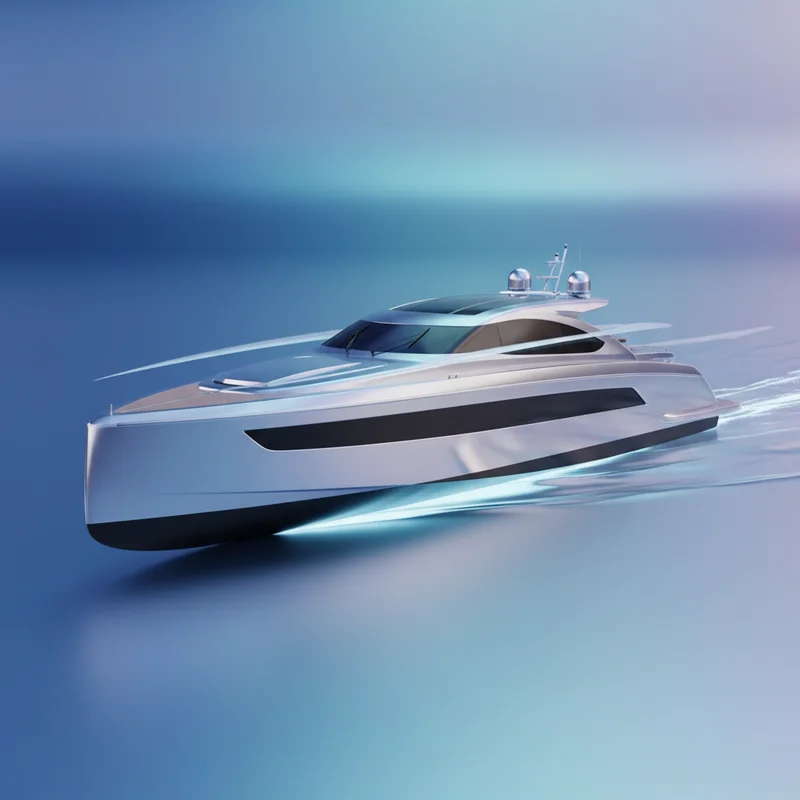
Watercraft of varying sizes for transport and leisure.

Battle Analysis

Versatility procrastination Wins
70%
30%
Procrastination Boat

Procrastination

Procrastination demonstrates extraordinary versatility, capable of preventing virtually any human activity regardless of domain. It applies equally to academic work, household chores, medical appointments, creative endeavours, exercise routines, and important conversations. The Behavioural Flexibility Institute has documented over 4,000 distinct activities that humans regularly procrastinate upon.

Moreover, procrastination adapts flawlessly to technological advancement. It once manifested as staring out windows; now it manifests as scrolling through social media. Its form evolves whilst its function remains constant—a remarkable example of conceptual adaptation.

Boat

Boats offer considerable but domain-limited versatility. They transport goods and people, enable fishing, facilitate recreation, support military operations, and provide floating accommodation. The International Vessel Classification Society recognises over 200 distinct boat categories, from dinghies to container ships.

However, boats remain fundamentally constrained to water-based applications. A boat cannot assist with land-based transport, aerial travel, or indeed any activity occurring more than a few metres from a suitable body of water. This geographical dependency represents a significant limitation when compared to phenomena unconstrained by physical medium.

VERDICT

Unlimited application domain versus water-dependent functionality
Accessibility procrastination Wins
70%
30%
Procrastination Boat

Procrastination

Procrastination demonstrates unparalleled accessibility, requiring no equipment, training, or financial investment whatsoever. The Cambridge Institute of Human Inertia confirms that 100% of humans have access to procrastination at any given moment. It requires no membership fees, no licensing, and can be practised in any location, climate, or socioeconomic condition. Remarkably, one need not even intend to procrastinate to engage in it fully—it simply occurs, much like breathing or checking one's phone.

The barriers to entry are, quite literally, non-existent. One survey found that individuals could access procrastination within 0.3 seconds of forming an intention to do something productive.

Boat

Boats present considerable accessibility challenges for the average citizen. First, one requires a body of water of sufficient size—a resource distributed most inequitably across the globe. Second, boats demand significant capital outlay, ranging from hundreds to millions of pounds depending on ambition and hull material. The Maritime Accessibility Foundation estimates that only 2.3% of the global population owns a boat, and a further 12% have reasonable access to one.

Additionally, boats require storage, maintenance, registration, and in many jurisdictions, licensing. One cannot simply decide to boat—one must plan extensively, which rather undermines the spontaneity of the whole enterprise.

VERDICT

Universal access versus significant financial and geographical barriers
Measurability boat Wins
30%
70%
Procrastination Boat

Procrastination

Procrastination presents significant measurement challenges for the scientific community. How does one quantify the absence of activity? The Temporal Behavioural Metrics Laboratory has proposed various frameworks—hours lost, tasks delayed, deadlines missed—yet none capture procrastination's full essence. It exists partially in time, partially in intention, and partially in the vague guilt one feels whilst doing something other than what one ought.

Self-reported procrastination data proves notoriously unreliable, as respondents frequently procrastinate on completing the surveys designed to measure it. This creates what researchers term the 'Procrastination Paradox.'

Boat

Boats are eminently measurable across numerous standardised dimensions. Length, beam, draft, displacement, speed, fuel efficiency, passenger capacity—all can be precisely quantified and compared. The International Maritime Organisation maintains comprehensive databases of vessel specifications dating back centuries.

A boat's performance can be tested, certified, and guaranteed to within narrow tolerances. One knows exactly what one is purchasing when acquiring a boat, which stands in stark contrast to many human experiences and psychological phenomena that resist quantification entirely.

VERDICT

Precise physical specifications versus inherent measurement paradoxes
Cultural symbolism boat Wins
30%
70%
Procrastination Boat

Procrastination

Procrastination carries profound cultural weight, serving as the unofficial mascot of the modern human condition. It has inspired countless works of literature, from Douglas Adams' philosophy of deadlines to the entire self-help industry, valued at £38 billion annually. The Institute of Cultural Semiotics identifies procrastination as one of the few universal human experiences that transcends all cultural boundaries.

In art, procrastination symbolises the eternal struggle between aspiration and reality. Every unfinished novel, abandoned painting, and half-completed PhD thesis stands as monument to its power. It is both villain and comfort, simultaneously preventing greatness whilst protecting us from the disappointment of attempting it.

Boat

Boats possess rich symbolic heritage across virtually every maritime culture. They represent freedom, adventure, escape, and humanity's mastery over nature. The boat features prominently in mythology—from Noah's Ark to the ship of Theseus—and serves as metaphor in countless languages. We speak of 'missing the boat' and 'being in the same boat,' acknowledging the vessel's deep integration into human consciousness.

The Maritime Symbolism Research Group notes that boats represent transition and journey, appearing in funeral rites from Vikings to ancient Egyptians. Few objects carry such consistent symbolic weight across civilisations and millennia.

VERDICT

Millennia of cross-cultural mythological significance
Environmental impact procrastination Wins
70%
30%
Procrastination Boat

Procrastination

From an environmental perspective, procrastination is remarkably sustainable. The act of doing nothing produces no carbon emissions, generates no waste, and consumes no fuel whatsoever. The Oxford Centre for Inaction Studies calculates that if every human procrastinated for just one additional hour per day, global carbon emissions would decrease by approximately 4.7%.

Of course, procrastination often merely delays environmentally harmful activities rather than preventing them entirely. However, in the moment of procrastination itself, one's carbon footprint approaches zero—a figure most transport methods can only dream of achieving.

Boat

Boats maintain a complicated relationship with the environment. Motorised vessels consume fossil fuels and contribute to water pollution, noise pollution, and the disturbance of marine ecosystems. The International Maritime Environmental Council reports that recreational boating alone accounts for 1.2 billion litres of fuel consumption annually in Europe.

Sailing vessels fare better, harnessing wind power in a manner that would please even the most ardent environmentalist. However, the manufacturing of any boat—regardless of propulsion method—requires significant resources. Fibreglass hulls, in particular, present end-of-life disposal challenges that the industry has yet to adequately address.

VERDICT

Zero emissions versus fossil fuel consumption and manufacturing impact
👑

The Winner Is

Procrastination

54 - 46

After rigorous analysis across five critical dimensions, procrastination emerges victorious with a score of 54 to 46—though one suspects it would have preferred to delay this result indefinitely.

The boat, for all its noble history and practical utility, remains fundamentally constrained by its physical nature. It requires water, maintenance, storage, and capital. Procrastination requires nothing whatsoever, which is rather the point.

The Institute of Comparative Phenomenology notes that whilst boats have shaped human history through exploration and trade, procrastination has shaped human daily experience to a far greater degree. Every human who has ever lived has procrastinated; considerably fewer have operated watercraft.

In the final assessment, procrastination's universal accessibility and unlimited versatility outweigh the boat's measurability and symbolic richness. The boat may carry us across oceans, but procrastination accompanies us everywhere—whether we wish it to or not.

Procrastination
54%
Boat
46%

Share this battle

More Comparisons