
Topic Battle

Where Everything Fights Everything

Procrastination

Procrastination

The art of doing everything except the one thing you should be doing. A universal human experience that has spawned more clean apartments, reorganized sock drawers, and Wikipedia deep dives than any productivity method ever could.

VS
Mount Everest

Mount Everest

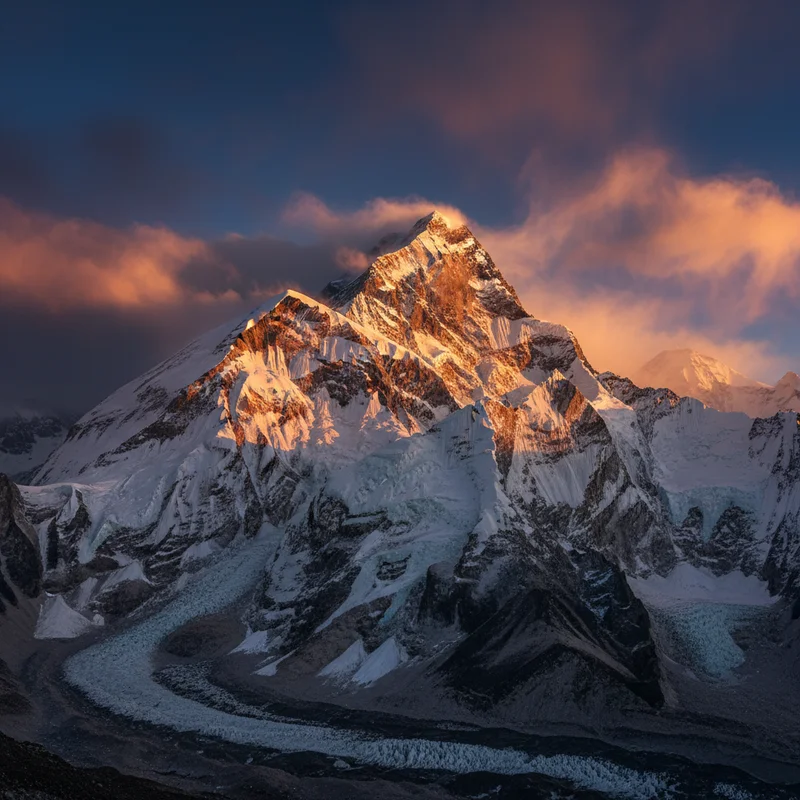
Tallest mountain above sea level, now with traffic jams.

Battle Analysis

Durability procrastination Wins
70%
30%
Procrastination Mount Everest

Procrastination

As a psychological phenomenon, procrastination demonstrates extraordinary resilience against attempts at eradication. Despite millennia of human awareness, including documented complaints in ancient Egyptian hieroglyphics, the tendency persists across civilisations. Modern interventions including cognitive behavioural therapy, productivity applications numbering in the tens of thousands, and an entire self-help industry generating $11 billion annually have failed to eliminate the condition.

Procrastination regenerates continuously within the human psyche. A successfully completed task provides no immunity against its return for subsequent obligations. The phenomenon has survived every productivity system from Eisenhower matrices to Pomodoro techniques, emerging undiminished from each encounter.

Mount Everest

Mount Everest possesses geological permanence that operates on timescales difficult for human cognition to process. The mountain formed approximately 60 million years ago through the collision of the Indian and Eurasian tectonic plates and continues growing by roughly 4 millimetres annually. It has survived ice ages, extinction events, and the entirety of human civilisation without measurable degradation to its fundamental obstacle capacity.

However, the mountain lacks adaptive capability. Climate change has demonstrably altered its snow conditions, and commercial expedition infrastructure has reduced its effective difficulty for well-funded climbers. The mountain presents a fixed challenge that human ingenuity progressively diminishes.

VERDICT

Procrastination demonstrates adaptive durability, evolving to exploit new technologies and circumstances, whilst Everest's fixed nature allows progressive human adaptation.
Versatility procrastination Wins
70%
30%
Procrastination Mount Everest

Procrastination

The versatility of procrastination as an obstacle to human ambition defies comprehensive cataloguing. The phenomenon applies with equal effectiveness to tax returns, doctoral dissertations, relationship conversations, medical appointments, and household repairs. No category of human obligation has demonstrated immunity. The delay mechanism adapts its justification to context, deploying perfectionism for creative tasks, anxiety for social obligations, and simple distraction for mundane requirements.

Procrastination furthermore scales elegantly across timeframes. It defeats tasks requiring five minutes with the same methodology employed against five-year projects, adjusting only the sophistication of its rationalisations.

Mount Everest

Mount Everest presents a singular challenge optimised for one specific domain: high-altitude mountaineering. The mountain offers no obstacles to those seeking to complete paperwork, maintain relationships, or pursue career advancement at sea level. Its application remains rigidly confined to the subset of humanity attempting to physically ascend its slopes.

Variations in route selection, from the South Col to the Northeast Ridge, provide modest diversity, yet the fundamental obstacle remains invariant: altitude, cold, and oxygen deprivation. Everest cannot impede anyone not actively climbing it.

VERDICT

Procrastination applies universally across all human endeavours, whilst Everest presents a single-domain obstacle affecting exclusively those who deliberately seek its slopes.
Global reach procrastination Wins
70%
30%
Procrastination Mount Everest

Procrastination

Procrastination maintains truly global distribution with presence in every nation, culture, and demographic category yet studied. Research conducted across 52 countries confirms the phenomenon transcends linguistic and cultural boundaries, manifesting with remarkable consistency regardless of local attitudes toward productivity. An estimated 3.8 billion working-age humans experience procrastination in measurable degrees.

The phenomenon requires no transportation infrastructure for propagation. It operates through the universal human capacity for temporal discounting, wherein immediate comfort consistently outweighs abstract future benefits. This biological substrate ensures procrastination's permanent global footprint.

Mount Everest

Mount Everest occupies precisely one location on Earth's surface, specifically coordinates 27.9881 degrees North, 86.9250 degrees East, straddling the border of Nepal and the Tibet Autonomous Region. The mountain's global reach extends only through mediated representation: photographs, documentaries, and the occasional tragedy reported in international news.

Despite significant cultural penetration as a symbol of human achievement, Everest maintains no physical presence outside its Himalayan coordinates. Its influence, whilst considerable in aspirational terms, remains geographically concentrated in a manner procrastination cannot comprehend.

VERDICT

Procrastination maintains simultaneous active presence in all 195 nations, whilst Everest remains confined to a single 777-square-metre summit.
Accessibility procrastination Wins
70%
30%
Procrastination Mount Everest

Procrastination

Procrastination demonstrates unparalleled accessibility as an obstacle to human progress. It requires no travel, no permits, and no physical conditioning to encounter. The phenomenon manifests spontaneously in approximately 87% of university students and affects individuals across all socioeconomic strata with remarkable democratic equality. One need not purchase equipment, arrange logistics, or acquire visas. Procrastination arrives uninvited at the precise moment productivity is most essential.

The barrier to entry, if such terminology applies, approaches theoretical zero. A functioning human brain and a task requiring completion represent the sole prerequisites. The affliction shows no geographic preference, flourishing equally in Tokyo, Toronto, and Timbuktu.

Mount Everest

Mount Everest presents considerable accessibility barriers to those wishing to be defeated by it. The mountain requires aspirants to travel to Nepal or Tibet, obtain permits costing between $11,000 and $70,000 depending on expedition type, and dedicate approximately two months to the climbing window. Physical conditioning spanning years typically precedes any attempt. The mountain will not come to the would-be climber; the climber must journey to it.

Fewer than 6,000 individuals have successfully submitted to Everest's challenges through summiting, with the mountain remaining entirely inaccessible to the vast majority of humanity due to cost, fitness requirements, and geographical constraints.

VERDICT

Procrastination offers immediate, cost-free accessibility to all humans with functioning executive function, whilst Everest requires substantial investment merely to attempt engagement.
Fatality rate mount_everest Wins
30%
70%
Procrastination Mount Everest

Procrastination

Procrastination's mortality impact, whilst significant, operates through indirect pathways that complicate statistical attribution. Delayed medical consultations, postponed safety improvements, and deferred health interventions contribute to premature mortality in ways that escape direct measurement. The phenomenon's chronic nature produces cumulative life-shortening effects through stress, career underperformance, and relationship deterioration.

No death certificate lists procrastination as cause of death, rendering precise fatality calculations impossible. The psychological burden, however, correlates strongly with cardiovascular disease, compromised immune function, and reduced life expectancy in longitudinal studies.

Mount Everest

Mount Everest maintains meticulous mortality records: 310 confirmed deaths through 2023, representing approximately 1% of all summit attempts. The 2023 season alone recorded 18 fatalities. Causes include avalanche, falls, exposure, and altitude sickness, each documented with forensic precision. Bodies remain visible along standard routes, providing stark statistical testimony.

The mountain's fatality rate, whilst declining through improved equipment and forecasting, remains unambiguously lethal. Everest kills directly, immediately, and measurably, leaving no ambiguity regarding causation.

VERDICT

Mount Everest produces documented, immediate fatalities, whilst procrastination's mortality impact, though likely substantial, remains epidemiologically unmeasurable.
👑

The Winner Is

Procrastination

55 - 45

The comparative analysis reveals procrastination as the more comprehensive obstacle to human achievement, securing victory across four of five evaluated criteria. Its universal accessibility, adaptive durability, global distribution, and cross-domain versatility combine to produce an impediment of extraordinary scope. Whilst Mount Everest has defeated thousands of aspiring summiteers, procrastination has defeated billions of aspiring humans across every conceivable domain of endeavour.

Mount Everest's solitary category victory in fatality rate, whilst impressive in its directness, reflects a fundamental limitation: the mountain can only threaten those who deliberately seek confrontation. Procrastination requires no journey, demands no preparation, and accepts no postponement of its arrival. The irony is not lost on this analysis that procrastination likely delayed more Everest expeditions than the mountain ever turned back.

The final score of 55-45 acknowledges Everest's genuine lethality whilst recognising that procrastination's capacity to prevent human flourishing operates at civilisational scale, affecting virtually every person who has ever lived.

Procrastination
55%
Mount Everest
45%

Share this battle

More Comparisons