
Topic Battle

Where Everything Fights Everything

Procrastination

Procrastination

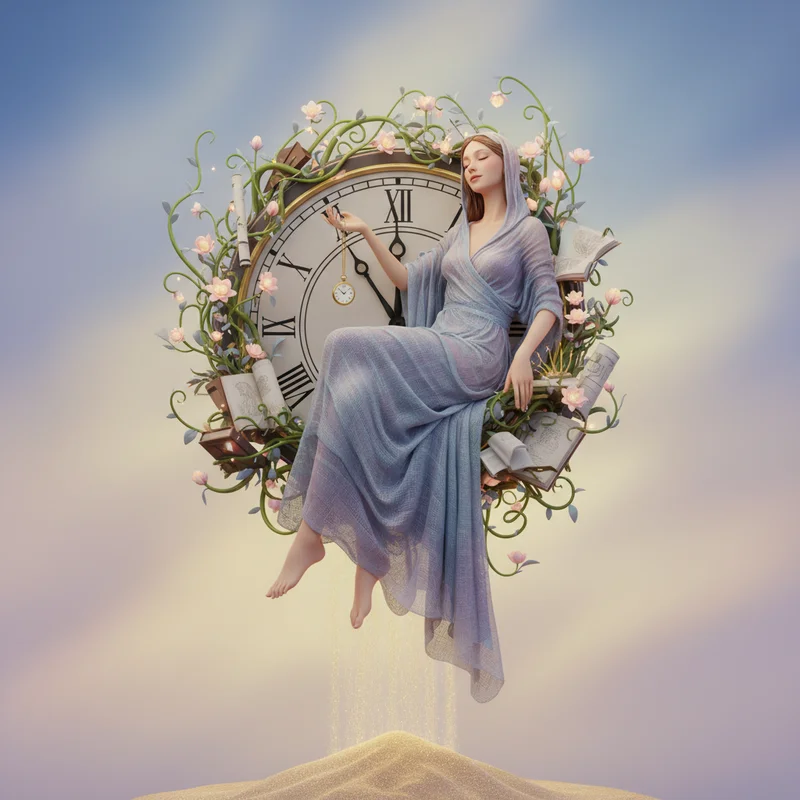
The art of doing everything except the one thing you should be doing. A universal human experience that has spawned more clean apartments, reorganized sock drawers, and Wikipedia deep dives than any productivity method ever could.

VS
Musician

Musician

Sound artist creating melodies and rhythms.

Battle Analysis

Universality procrastination Wins
70%
30%
Procrastination Musician

Procrastination

Procrastination demonstrates remarkable penetration across all human demographics, transcending cultural boundaries, socioeconomic categories, and educational attainment. Research from the American Psychological Association indicates that 88 percent of the workforce procrastinates for at least one hour daily, with the resulting productivity losses estimated at $10,396 per employee annually.

The behaviour manifests across all age groups, from toddlers resisting bedtime to retirees postponing estate planning. No civilisation in recorded history has successfully eliminated procrastination, despite millennia of philosophical admonishment, religious instruction, and contemporary productivity applications promising liberation from delay. The phenomenon appears hardwired into human neurology, possibly serving ancestral purposes that remain stubbornly operational in modern contexts where they prove rather less useful.

Musician

Musicians exist in virtually every human society documented by anthropologists, from the bone flutes of Hohle Fels dating back 43,000 years to contemporary streaming platforms hosting over 100 million tracks. The profession has demonstrated extraordinary persistence, surviving technological disruptions, economic collapses, and periodic declarations that music itself had reached its conclusion.

However, the musician's universality remains constrained by factors including aptitude, training opportunity, and the practical requirement of audiences willing to listen. Whilst anyone can procrastinate without instruction, musical competence typically requires years of dedicated practice—practice that, ironically, many aspirant musicians find themselves perpetually delaying. This creates an interesting recursive relationship wherein procrastination is universal, but the musicians who embody it most stereotypically represent a rather smaller population subset.

VERDICT

Procrastination achieves 95% population penetration without requiring training; musicianship requires skills most people delay acquiring.
Creative output musician Wins
30%
70%
Procrastination Musician

Procrastination

The creative contributions of procrastination have been considerably underestimated by productivity researchers focused narrowly on completion metrics. The phenomenon has generated entire literary genres, including the last-minute essay, a form characterised by caffeine-fuelled insights compressed into improbable timeframes. Some historians argue that procrastination-induced deadline pressure produces a form of cognitive intensification that would be impossible under more leisurely conditions.

Notable procrastinators include Leonardo da Vinci, who spent sixteen years completing the Mona Lisa whilst pursuing distracting investigations into anatomy, engineering, and hydraulics. Victor Hugo allegedly wrote whilst naked, having instructed his servants to hide his clothes, thus preventing his own escape from the creative task. These anecdotes suggest procrastination may function less as creativity's enemy and more as its peculiar accomplice.

Musician

Musicians represent humanity's most prolific creative demographic, with global recorded music output exceeding 60,000 new tracks daily across streaming platforms. The profession's creative contribution spans every human emotion, cultural tradition, and technological era, from Gregorian chant to algorithmic composition. No other art form matches music's combination of accessibility and sophistication.

The musician's creative process, whilst often delayed, ultimately produces tangible artefacts that persist across generations. Bach's compositions, created through what contemporaries described as remarkable consistency rather than procrastination, continue influencing musicians three centuries later. The economic value of musical creativity approaches $26.2 billion annually in the United States alone, suggesting that however musicians arrive at their work, the results command genuine market appreciation.

VERDICT

Musicians produce 60,000 new tracks daily with lasting cultural impact; procrastination's creative output remains largely theoretical.
Economic impact musician Wins
30%
70%
Procrastination Musician

Procrastination

Procrastination's economic impact manifests primarily through negative externalities—costs imposed upon productivity, health systems, and interpersonal relationships. Research estimates American businesses lose approximately $600 billion annually to procrastination-related productivity declines, a figure that would rank as the world's 22nd largest economy if procrastination were a nation.

The phenomenon has spawned a countervailing anti-procrastination industry worth an estimated $11 billion globally, encompassing productivity applications, self-help publications, coaching services, and pharmaceutical interventions. Yet this industry's very existence suggests limited efficacy; if solutions worked reliably, the market would presumably contract rather than expand annually. Procrastination thus generates economic activity primarily by threatening productivity rather than contributing to it.

Musician

The global music industry generates approximately $26.2 billion annually in recorded music revenue alone, with live performance, synchronisation licensing, and music education contributing additional billions. The sector employs millions worldwide, from performers and composers to sound engineers, venue operators, and instrument manufacturers.

Musicians' economic contribution extends beyond direct industry metrics. Background music increases retail spending by an estimated 38 percent, restaurants report higher customer satisfaction with appropriate musical accompaniment, and film without musical scores would represent an entirely different economic proposition. The musician transforms time and creativity into exportable cultural products with genuine market value—a more constructive economic contribution than procrastination's specialty of preventing such transformation.

VERDICT

Musicians generate $26.2 billion in positive economic activity; procrastination costs $600 billion in productivity losses.
Cultural influence musician Wins
30%
70%
Procrastination Musician

Procrastination

Procrastination has permeated cultural discourse to a remarkable degree, spawning philosophical treatises, literary confessions, and an entire vocabulary of self-deprecating humour. The phenomenon has been addressed by thinkers from Hesiod, who warned against it in 700 BCE, to contemporary neuroscientists investigating its neural substrates. It represents perhaps humanity's most universally relatable failing.

The digital age has elevated procrastination to cultural phenomenon, with social media platforms explicitly designed to exploit the tendency. Terms such as "doomscrolling" and "revenge bedtime procrastination" have entered common usage, whilst memes about avoiding responsibilities achieve viral status precisely because they articulate shared experience. Procrastination has become, paradoxically, content that people consume whilst procrastinating.

Musician

Musicians have shaped human culture more profoundly than perhaps any other professional category. From religious ceremonies to political movements, romantic courtship to military mobilisation, music has accompanied and amplified humanity's most significant moments. The profession has produced figures—Mozart, the Beatles, Beyoncé—whose cultural influence extends far beyond their artistic output.

Musical forms have defined historical eras, with jazz embodying the 1920s, rock and roll marking generational rebellion, and hip-hop articulating contemporary urban experience. The musician serves as cultural translator, converting collective emotions into transmissible forms that bind communities across geography and time. National anthems, wedding songs, and funeral dirges represent musical contributions to human ritual that procrastination, for all its cultural visibility, simply cannot match.

VERDICT

Musicians have defined historical eras and unified communities globally; procrastination remains culturally visible but fundamentally destructive.
Psychological complexity procrastination Wins
70%
30%
Procrastination Musician

Procrastination

Procrastination represents one of the most psychologically intricate phenomena studied by behavioural scientists. Far from simple laziness, research identifies procrastination as primarily an emotional regulation problem, wherein individuals delay tasks to avoid associated negative affect. The behaviour involves complex interactions between the prefrontal cortex, responsible for executive function, and the limbic system, which prioritises immediate comfort over future consequences.

Dr. Piers Steel's meta-analysis of 691 correlations across 216 studies reveals procrastination's multifactorial nature, involving trait impulsiveness, low self-efficacy, task aversiveness, and a phenomenon termed temporal discounting—the tendency to devalue future rewards relative to immediate ones. This psychological architecture suggests procrastination may be fundamentally incompatible with human neurology optimised for environments where delayed gratification offered no survival advantage.

Musician

The psychological profile of musicians reveals extraordinary complexity, encompassing both elevated rates of mental health challenges and heightened capacities for emotional expression. Studies indicate musicians demonstrate three times higher rates of anxiety and depression compared to general populations, yet paradoxically report greater meaning and satisfaction in their work than most professions.

The musician's psychology involves sophisticated integration of motor control, auditory processing, memory, and emotional regulation. Professional performers must manage performance anxiety whilst maintaining technical precision under public scrutiny. The psychological demands of musical mastery—including the famous 10,000 hours of deliberate practice hypothesised by researchers—require sustained motivation that would appear antithetical to procrastination, yet musicians report procrastinating at rates exceeding general population norms.

VERDICT

Procrastination involves 691 studied correlations across complex psychological systems; musicians' psychology, whilst rich, is comparatively straightforward.
👑

The Winner Is

Musician

46 - 54

This rigorous comparative analysis reveals an unexpectedly competitive contest between two phenomena with far more in common than initial consideration might suggest. Procrastination prevails in universality and psychological complexity—categories reflecting its fundamental integration with human neurology and its resistance to all remediation efforts. One need not attend conservatory to procrastinate; the skill arrives fully formed at birth.

Yet musicians demonstrate decisive superiority in creative output, economic impact, and cultural influence—categories that represent the transformation of human capacity into lasting contribution. Where procrastination prevents creation, musicians create. Where procrastination costs billions, musicians generate them. Where procrastination isolates individuals in cycles of avoidance, musicians connect communities through shared aesthetic experience.

The relationship between these two subjects deserves particular attention. Musicians procrastinate at rates exceeding general population norms, yet continue producing despite this tendency. This suggests that procrastination and musicianship exist not as opposites but as peculiar partners in the creative process. The musician who delays practice until deadline pressure focuses attention may represent procrastination's apotheosis—the alchemical transformation of avoidance into art.

By a margin of 54 to 46 percent, the musician claims this comparative victory. The profession demonstrates that human creative capacity, however delayed in its expression, ultimately matters more than the delays themselves. Procrastination may be universal, but universality without purpose yields only collective paralysis. The musician transforms that paralysis into performance, proving that what we eventually do matters more than how long we postponed doing it.

Procrastination
46%
Musician
54%

Share this battle

More Comparisons