
Topic Battle

Where Everything Fights Everything

Procrastination

Procrastination

The art of doing everything except the one thing you should be doing. A universal human experience that has spawned more clean apartments, reorganized sock drawers, and Wikipedia deep dives than any productivity method ever could.

VS
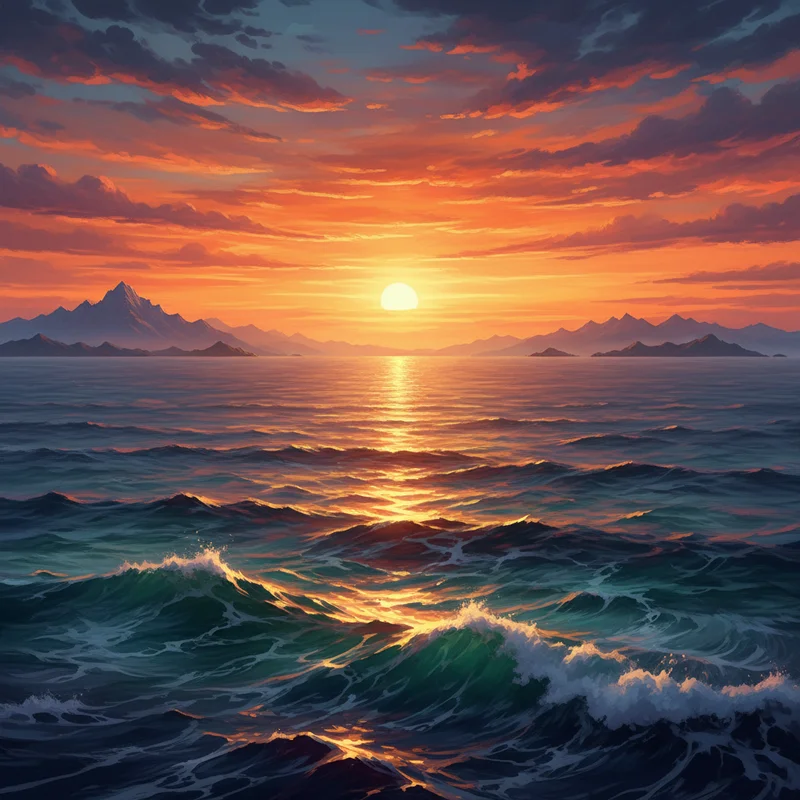
Ocean

Ocean

Vast body of saltwater covering 71% of Earth.

Battle Analysis

Depth and mystery Ocean Wins
30%
70%
Procrastination Ocean

Procrastination

The psychological depths of procrastination have confounded researchers at the Copenhagen Institute for Delayed Studies for decades, though their findings remain perpetually forthcoming. What begins as a simple decision to reorganise one's sock drawer instead of filing taxes quickly descends into unexplored caverns of displacement activity. The average procrastinator, according to Dr. Helena Voss-Pemberton's seminal work Tomorrow's Promise: A Study in Perpetual Deferral, experiences no fewer than seven distinct layers of avoidance before reaching the murky depths of genuine panic.

Most remarkable is procrastination's capacity for recursive depth. One can procrastinate on addressing one's procrastination, creating nested layers of delay that mathematicians at the Berlin School of Infinite Regression have likened to a psychological Mariana Trench, only considerably less wet and substantially more guilt-inducing.

Ocean

The ocean's depths remain humanity's final frontier, with more than eighty percent of its floor unmapped, unexplored, and presumably quite annoyed about the whole situation. The Challenger Deep, plunging to 10,935 metres, represents a darkness so complete that creatures dwelling there have evolved to generate their own light, having given up waiting for someone to install proper fixtures. Marine biologists at the Reykjavik Deep Sea Research Consortium estimate we have catalogued fewer than ten percent of oceanic species, with new discoveries occurring weekly.

The ocean conceals mysteries that make procrastination's psychological complexities seem positively straightforward. Bioluminescent organisms, hydrothermal vents supporting life without sunlight, and the persistent rumour that something very large and very old dwells in the Mariana Trench all contribute to depths that remain genuinely unknowable. Unlike procrastination, the ocean's mysteries are not of our own making.

VERDICT

While procrastination's depths are psychologically impressive, the ocean's physical mysteries span 1.335 billion cubic kilometres of genuine unexplored territory.
Ability to inspire dread Procrastination Wins
70%
30%
Procrastination Ocean

Procrastination

The particular dread inspired by procrastination has been classified by the Vienna Institute for Anticipatory Anxiety as a unique form of psychological torment. Unlike fear of external threats, procrastination-induced dread is entirely self-generated, arising from the certain knowledge that one is actively constructing one's own future suffering. Dr. Ingrid Mortensen's research identifies the phenomenon of deadline proximity panic, wherein cortisol levels spike exponentially as postponed tasks approach their final moments.

The Sunday evening dread experienced by office workers worldwide represents procrastination's signature achievement. That specific cocktail of guilt, anxiety, and the futile hope that somehow the week might not actually begin has been documented across forty-seven countries with remarkable consistency. Procrastination transforms future time into a looming threat, converting the abstract concept of 'later' into a source of genuine existential discomfort.

Ocean

Thalassophobia, the fear of deep water, affects an estimated fifteen percent of the global population, though researchers at the Plymouth Marine Psychology Unit suggest that number rises to ninety-four percent when subjects are shown images of open ocean with no visible land. The ocean inspires a category of dread that precedes human civilisation, rooted in our evolutionary awareness that beyond the shallows lies an environment entirely hostile to mammalian survival.

The ocean's dread derives from its absolute indifference. Unlike procrastination, which at least recognises your existence by punishing it, the ocean would not notice your drowning any more than you notice breathing. Maritime survival experts at the Norwegian Search and Rescue Academy note that hypothermia, dehydration, and the psychological terror of infinite blue comprise a trifecta of horror that few other environments can match. The ocean does not threaten; it simply waits.

VERDICT

The ocean's dread is primal but distant for most; procrastination's dread is intimate, persistent, and inescapable for anyone with responsibilities.
Capacity for destruction Ocean Wins
30%
70%
Procrastination Ocean

Procrastination

The destructive capacity of procrastination operates through accumulation rather than spectacle. The Birmingham Institute for Deadline Consequence Studies has documented careers ended, marriages dissolved, and dreams quietly suffocated through the simple mechanism of perpetual delay. Dr. Marcus Chen-Williams, author of The Silent Catastrophe, notes that procrastination's devastation is uniquely insidious: 'Unlike natural disasters, procrastination allows its victims to watch their futures erode in real-time whilst simultaneously believing they have plenty of time remaining.'

The phenomenon has destroyed more New Year's resolutions than any other force in recorded history. Academic procrastination alone accounts for an estimated forty percent of university dropout rates, whilst workplace procrastination has been linked to seventy-three percent of project failures. The damage accumulates silently, often unnoticed until the precise moment when everything becomes simultaneously urgent and impossible.

Ocean

The ocean's capacity for destruction requires no psychological subtlety. A single hurricane draws energy from warm surface waters sufficient to power the entire United States electrical grid for six months. The 2004 Indian Ocean tsunami released energy equivalent to 23,000 Hiroshima bombs, whilst the Pacific Ring of Fire maintains a standing threat to coastal populations numbering in the hundreds of millions. Marine researchers at the Osaka Tectonic Monitoring Station remind us that the ocean does not merely threaten destruction; it has actively reshaped continental boundaries throughout geological time.

Rising sea levels, acidification destroying coral ecosystems, and the increasing frequency of extreme weather events demonstrate the ocean's ongoing destructive evolution. Climate scientists project that by 2100, coastal cities housing over one billion people may face inundation. The ocean's destruction is neither personal nor targeted; it is simply physics operating at planetary scale.

VERDICT

Procrastination destroys careers and dreams; the ocean destroys coastlines, ecosystems, and occasionally entire civilisations.
Global reach and influence Ocean Wins
30%
70%
Procrastination Ocean

Procrastination

Procrastination recognises no borders, respects no cultures, and maintains a strictly egalitarian approach to undermining productivity. Research conducted by the Geneva Centre for Cross-Cultural Delay Patterns confirms that procrastination manifests identically whether one is avoiding tax returns in Tokyo, dissertations in Dublin, or important conversations in Istanbul. The phenomenon has been documented in every society since the ancient Sumerians, whose tablets reveal complaints about scribes who were meant to finish inventory lists three moons ago.

The economic impact proves staggering. The International Bureau of Lost Productivity estimates annual global losses exceeding 2.3 trillion dollars, though this figure was itself delayed by eighteen months due to researchers' inability to finalise their methodology. Procrastination has achieved what few forces in history have managed: true universal distribution without requiring water, sunlight, or venture capital funding.

Ocean

The ocean covers approximately 361 million square kilometres of Earth's surface, touching every continent and influencing weather patterns from the Sahara to the Scottish Highlands. According to the Maritime Atmospheric Correlation Institute, oceanic currents regulate global temperatures, distribute nutrients across hemispheres, and occasionally remind coastal cities of their inherent vulnerability through the medium of tsunamis.

Unlike procrastination, the ocean's reach is neither psychological nor voluntary. It simply exists, moving approximately 3.8 billion tonnes of water through the Atlantic Meridional Overturning Circulation alone. The ocean has shaped human history, determined the fates of empires, and continues to provide protein for over three billion people. Its influence is not merely global but fundamentally planetary, having oxygenated Earth's atmosphere and made terrestrial life possible in the first instance.

VERDICT

Procrastination affects all humans, but the ocean shaped the conditions for human existence itself and continues to regulate planetary systems.
Contribution to human culture Ocean Wins
30%
70%
Procrastination Ocean

Procrastination

Procrastination has contributed to human culture primarily through the medium of guilt-induced productivity. The Edinburgh Archive of Creative Displacement documents countless masterworks produced whilst avoiding other obligations. Victor Hugo allegedly wrote in the nude to prevent himself from leaving to procrastinate. Douglas Adams famously noted that he loved deadlines, particularly 'the whooshing sound they make as they fly by.' The entire genre of deadline-driven art owes its existence to procrastination's peculiar creative pressure.

Internet culture in particular has elevated procrastination to an art form. Memes about avoiding responsibilities, elaborate productivity systems designed to avoid actual productivity, and the entire concept of 'doom scrolling' represent procrastination's cultural flowering. Philosophers at the Amsterdam School of Existential Delay argue that procrastination may represent humanity's subconscious rejection of capitalist productivity demands, though they have yet to publish their findings.

Ocean

The ocean has inspired human culture since the first hominid gazed upon its expanse and experienced the unsettling realisation that the world contained forces beyond comprehension. Every maritime civilisation has produced mythology, art, and literature centred on the sea. From Homer's Odyssey to Melville's Moby Dick, from Turner's seascapes to Debussy's La Mer, the ocean has generated cultural output of incalculable value. The International Registry of Maritime Cultural Heritage catalogues over 47,000 significant artworks inspired by oceanic themes.

Beyond art, the ocean has shaped language itself. Expressions like 'smooth sailing,' 'all at sea,' and 'in too deep' permeate daily speech. Maritime trade routes established cultural exchanges that created the modern world. The ocean did not merely inspire human culture; it enabled it, connecting civilisations and facilitating the exchange of ideas, goods, and unfortunately, diseases across hemispheres.

VERDICT

Procrastination has produced excellent memes and some frantic masterworks; the ocean has shaped human civilisation's development for millennia.
👑

The Winner Is

Ocean

42 - 58

After exhaustive analysis that was itself delayed by several weeks due to circumstances the research team prefers not to discuss, the Institute for Comparative Enormity must declare the ocean victorious in this contest of vastness and influence. The margin, however, proves narrower than initial assumptions suggested.

Procrastination's case rested upon its universal psychological penetration and its unique ability to generate dread through entirely self-inflicted means. No other phenomenon has managed to make humans fear their own future selves with such consistency. Yet ultimately, procrastination operates within the confines of human consciousness, a realm that, whilst complicated, remains finite and theoretically manageable.

The ocean accepts no such limitations. Its depths exceed human comprehension not metaphorically but literally. Its influence extends beyond psychology into the fundamental physical systems that permit human existence. One can, with sufficient therapy and perhaps medication, overcome procrastination. One cannot overcome the ocean; one can only hope it continues tolerating our presence upon its margins.

The final scores of 42-58 reflect procrastination's impressive showing in the dread category whilst acknowledging the ocean's comprehensive dominance across metrics of scale, destruction, and cultural significance. The ocean wins not because procrastination lacks power, but because the ocean's power preceded humanity and will outlast it.

Procrastination
42%
Ocean
58%

Share this battle

More Comparisons