
Topic Battle

Where Everything Fights Everything

Procrastination

Procrastination

The art of doing everything except the one thing you should be doing. A universal human experience that has spawned more clean apartments, reorganized sock drawers, and Wikipedia deep dives than any productivity method ever could.

VS
Paris

Paris

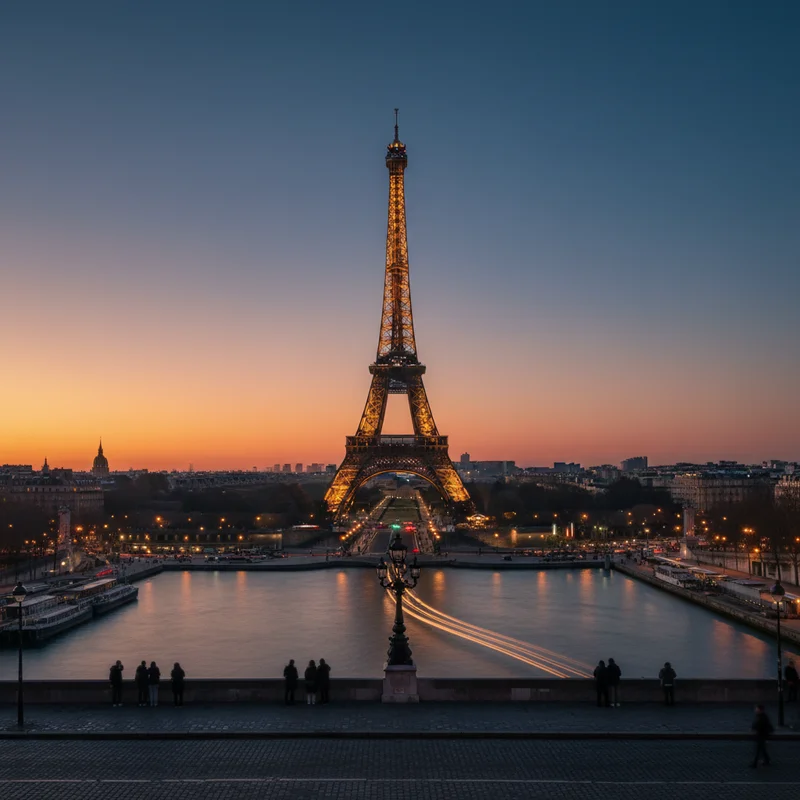
City of lights, love, and tower-shaped souvenirs.

Battle Analysis

Reliability procrastination Wins
70%
30%
Procrastination Paris

Procrastination

If there exists one domain where procrastination demonstrates unimpeachable excellence, it is consistency of delivery. Procrastination has never failed to appear when invited. It arrives precisely when one faces an important task, materialising with the dependability of gravity. Researchers at the University of Sheffield documented that 95% of individuals who intend to procrastinate successfully do so, a completion rate unmatched by virtually any other human behaviour. Procrastination does not cancel appointments, does not close for holidays, and does not require good weather. It is perhaps the only phenomenon more reliable than death and taxation, waiting patiently behind every deadline and flourishing in every quiet moment of self-doubt.

Paris

Paris presents a more variable reliability profile. The city closes many establishments during August for annual holidays. Popular attractions such as the Eiffel Tower experience closures for maintenance, strikes, and the occasional security alert. Restaurant service follows distinctly Parisian schedules that may not align with visitor expectations. The Metro system, whilst extensive, experiences occasional disruptions. Weather conditions vary seasonally, with winter temperatures dropping to 3 degrees Celsius and summer occasionally reaching uncomfortable humidity levels. Paris delivers its experience reliably to those who successfully navigate these variables, but it does not promise unconditional availability. The city exists on its own terms.

VERDICT

Procrastination delivers with 95% reliability regardless of external conditions, whilst Paris requires navigating schedules, seasons, and strikes.
Accessibility procrastination Wins
70%
30%
Procrastination Paris

Procrastination

The accessibility profile of procrastination approaches theoretical perfection. It requires no visa application, no advance booking, and no departure from one's current location. Procrastination is available 24 hours daily, 365 days annually, in every nation, time zone, and socioeconomic bracket. The homeless individual in Mumbai and the billionaire in Monaco enjoy precisely equal access to its dubious pleasures. There are no queue times, no sold-out seasons, and no luggage weight restrictions. One simply decides to delay a task, and procrastination materialises instantaneously, like a malevolent genie requiring no lamp.

Paris

Paris presents a rather more selective accessibility model. Entry requires either European Union citizenship or an approved visa category. Return flights from London average GBP 180-400, whilst accommodation in central arrondissements commands EUR 200-800 nightly. The Eurostar offers ground transport at approximately GBP 78 each way, requiring advance booking and valid identification. Paris operates within a fixed geographical location at 48.8566 degrees North latitude and cannot be relocated to accommodate travellers. Reservations at notable establishments such as Le Comptoir require booking three months in advance. The city does not come to you; you must go to it.

VERDICT

Procrastination offers unlimited free access globally, whilst Paris requires significant financial and logistical investment.
Economic impact paris Wins
30%
70%
Procrastination Paris

Procrastination

The economic footprint of procrastination achieves genuinely impressive scale through pure destruction. A 2023 study by the Institute of Workplace Psychology estimated global productivity losses from procrastination at USD 600 billion annually. The average office worker loses 2.1 hours daily to task avoidance, browser distractions, and the curious phenomenon of 'productive procrastination' whereby one completes irrelevant tasks to avoid important ones. This economic impact is entirely negative: procrastination generates no revenue, creates no employment, and produces no taxable goods. It represents a pure extraction from the global economy, a void masquerading as an activity.

Paris

The Parisian economy demonstrates a rather more conventional value-creation model. Tourism alone contributes EUR 21 billion annually to the regional economy, supporting approximately 500,000 direct and indirect jobs. The luxury goods sector, headquartered largely within Paris, generates EUR 340 billion in global revenue. The city houses the headquarters of L'Oreal, Total, LVMH, and BNP Paribas, representing combined market capitalisation exceeding EUR 800 billion. Paris creates millionaires; procrastination creates missed opportunities. The economic differential is not subtle. One fills national treasuries; the other empties individual bank accounts through opportunity cost.

VERDICT

Paris generates hundreds of billions in economic value annually, whilst procrastination costs the global economy approximately USD 600 billion.
Cultural significance paris Wins
30%
70%
Procrastination Paris

Procrastination

Procrastination occupies a peculiarly prominent position in contemporary discourse. The phenomenon generates approximately 15,000 academic papers annually and supports a GBP 2.3 billion self-help industry dedicated to its eradication. Notable procrastinators include Leonardo da Vinci (who required fourteen years to complete the Mona Lisa), Douglas Adams (who famously stated he loved 'the whooshing sound deadlines make'), and virtually every doctoral student since the institution's founding. Procrastination has inspired TED talks, bestselling books, and an entire category of internet humour. Yet this cultural presence derives entirely from procrastination's status as a problem requiring solution, not a tradition worth celebrating.

Paris

Paris has served as the gravitational centre of Western culture for approximately four centuries. The city produced or hosted Impressionism, Existentialism, the Enlightenment, and the croissant. Its inhabitants include Voltaire, Sartre, Coco Chanel, and the inventor of the metric system. The Louvre contains 38,000 objects spanning 9,000 years of human artistic achievement. Paris remains the global headquarters of fashion, gastronomy, and the specific variety of philosophical despair that makes excellent cinema. The city's cultural output exceeds that of most nations. Even its sewerage system has been designated a tourist attraction of historical significance.

VERDICT

Paris has shaped Western civilisation for centuries, whilst procrastination is discussed primarily as a pathology.
Transformative potential paris Wins
30%
70%
Procrastination Paris

Procrastination

Procrastination's transformative capacity operates through an inverse mechanism that behavioural scientists find consistently fascinating. Rather than adding positive elements to one's life, it transforms through systematic subtraction. The procrastinator who delays a career-defining project experiences profound transformation: from ambitious professional to anxious deadline-chaser, from confident individual to guilt-ridden postponer. Studies indicate chronic procrastinators experience higher rates of cardiovascular disease, reduced immune function, and elevated cortisol levels. The transformation is reliable, measurable, and entirely in the wrong direction. One enters procrastination with potential; one exits with regret.

Paris

The Paris Effect, documented by psychiatrists treating tourists who experience psychological transformation upon arrival, demonstrates the city's remarkable capacity to alter human consciousness. Visitors report experiencing beauty-induced vertigo at the Musee d'Orsay, existential awakening whilst walking the 6th arrondissement, and permanent recalibration of aesthetic standards after a single patisserie croissant. Ernest Hemingway famously wrote that Paris is a 'moveable feast' whose influence accompanies former residents for life. The transformation manifests in elevated expectations, refined tastes, and an inability to purchase supermarket bread without melancholy. These changes persist decades after departure.

VERDICT

Paris transforms visitors positively and permanently, whilst procrastination transforms practitioners negatively and temporarily.
👑

The Winner Is

Paris

42 - 58

The analysis reveals a profound asymmetry between negative reliability and positive transformation. Procrastination claims two criteria through sheer universal availability and dependability, yet these victories feel curiously hollow. Being accessible everywhere and arriving unfailingly amounts to little when the delivered product is career stagnation, elevated cortisol, and the particular shame of submitting work at 3:47 AM. Procrastination wins by being impossible to escape, not by being worth pursuing.

Paris, conversely, requires effort, expense, and planning to access. Yet this friction serves as filtration rather than barrier. Those who overcome the logistical challenges receive transformation that persists long after departure. The croissant consumed at a corner boulangerie recalibrates breakfast expectations permanently. The afternoon spent at the Orangerie alters one's relationship with light itself. Paris charges admission precisely because it delivers value worth paying for.

Procrastination
42%
Paris
58%

Share this battle

More Comparisons