
Topic Battle

Where Everything Fights Everything

Procrastination

Procrastination

The art of doing everything except the one thing you should be doing. A universal human experience that has spawned more clean apartments, reorganized sock drawers, and Wikipedia deep dives than any productivity method ever could.

VS
Tokyo

Tokyo

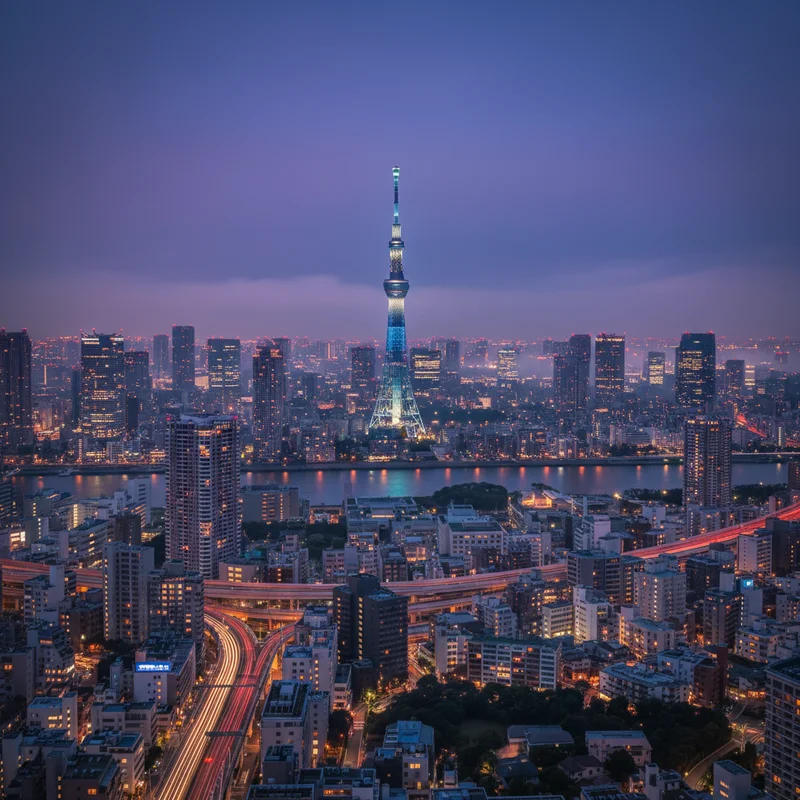
Neon-lit metropolis blending ancient and ultramodern.

Battle Analysis

Durability procrastination Wins
70%
30%
Procrastination Tokyo

Procrastination

Procrastination has demonstrated remarkable persistence across human history. Ancient Egyptian hieroglyphics contain records of delayed pyramid construction. The Roman poet Horace wrote extensively on the subject in 23 BCE. Despite thousands of self-help books, productivity applications, and management methodologies, procrastination remains entirely undiminished. Arguably, digital technology has intensified rather than ameliorated the condition.

The phenomenon has survived every attempt at eradication. Industrial-era time management, the efficiency movement of the 1920s, and contemporary productivity culture have all failed to reduce procrastination's prevalence. It appears hardwired into human cognition, resistant to all intervention.

Tokyo

Tokyo's physical durability faces significant environmental challenges. The city sits atop four tectonic plates, experiencing approximately 1,500 perceptible earthquakes annually. The Great Kanto Earthquake of 1923 and subsequent firebombing during World War II necessitated complete reconstruction. Each iteration has required substantial investment in resilience engineering.

Yet Tokyo consistently rebuilds, often improving upon previous iterations. Modern construction incorporates seismic isolation systems and redundant infrastructure. The city's adaptive durability, whilst requiring continuous maintenance, demonstrates sophisticated resilience against existential threats. Tokyo endures not through indestructibility but through systematic reconstruction.

VERDICT

Procrastination has persisted unchanged for millennia whilst Tokyo requires continuous reconstruction against natural forces.
Efficiency tokyo Wins
30%
70%
Procrastination Tokyo

Procrastination

By any conventional metric, procrastination represents catastrophic inefficiency. Studies published in Psychological Bulletin document correlations with reduced income, diminished health outcomes, and elevated stress levels. The average knowledge worker loses 2.1 hours daily to task avoidance, representing approximately 25% of productive capacity. Procrastination actively works against completion of objectives, deadlines, and personal development goals.

However, emerging research suggests procrastination may serve as an unconscious efficiency mechanism. By delaying low-priority tasks, procrastinators sometimes eliminate unnecessary work entirely when circumstances change. The phenomenon may represent intuitive resource conservation rather than pure dysfunction.

Tokyo

Tokyo operates as humanity's most sophisticated efficiency apparatus. The metropolitan railway system maintains an average delay of merely 18 seconds across its entire network. Convenience stores stock 3,000 items within 100 square metres. Restaurants achieve table turnover rates that would be considered physically impossible elsewhere. The city has transformed efficiency from aspiration to cultural mandate.

This relentless optimisation produces measurable results: Tokyo's GDP per capita ranks among the world's highest at approximately $52,000, despite extraordinarily high population density. The city demonstrates that efficiency, when systematically pursued across all domains, compounds into substantial economic advantage.

VERDICT

Tokyo's systematic efficiency produces measurable economic and operational advantages across all metrics.
Adaptability procrastination Wins
70%
30%
Procrastination Tokyo

Procrastination

Procrastination exhibits perfect environmental adaptability. It functions identically whether the avoided task involves physical labour, cognitive work, or emotional confrontation. The phenomenon adapts seamlessly to new technologies, finding expression through smartphone apps with equal facility as through television programmes or window-gazing. Each new distraction vector is immediately colonised.

Modern digital environments have proven particularly hospitable to procrastinatory behaviour. Social media platforms, streaming services, and infinite-scroll interfaces have been specifically engineered to enable task avoidance. Procrastination has not merely survived the digital transition; it has thrived, demonstrating remarkable capacity to exploit novel environmental conditions.

Tokyo

Tokyo demonstrates sophisticated institutional adaptability. The city has successfully navigated transitions from feudal capital to imperial seat to post-war reconstruction to technology hub. Each transformation required wholesale reinvention of infrastructure, economy, and social organisation. The current iteration already anticipates future challenges through robotics integration and smart city initiatives.

Yet this adaptability operates at substantial cost. Tokyo's transformations require coordinated governmental action, massive capital investment, and generational timescales. The city cannot pivot quickly; it must plan decades in advance. Individual buildings demonstrating insufficient seismic resilience require extensive renovation or replacement. Tokyo adapts powerfully but slowly.

VERDICT

Procrastination adapts instantaneously to new environments whilst Tokyo's transformations require decades and substantial resources.
Global reach procrastination Wins
70%
30%
Procrastination Tokyo

Procrastination

Procrastination operates as a truly universal phenomenon, transcending all cultural, economic, and geographic boundaries. Research indicates that 95% of adults engage in procrastination behaviour, with approximately 20% qualifying as chronic procrastinators. It requires no infrastructure, no investment, and no instruction. From subsistence farmers delaying harvest decisions to corporate executives postponing strategic pivots, procrastination maintains consistent global penetration across every demographic measurable.

The phenomenon manifests identically in Mumbai apartments, Norwegian fishing villages, and Brazilian favelas. Unlike virtually any other human behaviour, procrastination has achieved complete market saturation without marketing, distribution networks, or governmental support. It spreads through the simple mechanism of being inherently human.

Tokyo

Tokyo's global influence, whilst substantial, operates through fundamentally different distribution channels. The metropolitan area houses 37.4 million inhabitants, representing 0.47% of global population. Its cultural exports, from anime to technology innovation, reach billions through media consumption. Japanese efficiency methodologies, including kaizen and kanban, have reshaped manufacturing practices across six continents.

Yet Tokyo remains geographically constrained. Its famous punctuality cannot be exported wholesale; the Shinjuku Station's daily processing of 3.6 million passengers has no equivalent in cities lacking comparable infrastructure investment. Tokyo's influence radiates powerfully but diminishes with distance. One cannot experience Tokyo without proximity to Tokyo.

VERDICT

Procrastination achieves universal human penetration whilst Tokyo's direct influence remains geographically bounded.
Social impact tokyo Wins
30%
70%
Procrastination Tokyo

Procrastination

The social consequences of procrastination manifest as predominantly negative externalities. Missed deadlines affect colleagues, family members, and collaborative partners. Chronic procrastinators report higher rates of relationship conflict and reduced interpersonal trust. The ripple effects extend beyond individual productivity into team dynamics and organisational culture.

However, procrastination also creates certain social opportunities. The shared experience of deadline panic has been documented as a bonding mechanism among students and professionals. Mutual procrastination produces solidarity, with the phrase 'I haven't started either' serving as a universal comfort across cultures. The experience, whilst dysfunctional, creates community.

Tokyo

Tokyo's social architecture has fundamentally restructured human interaction patterns. The city pioneered concepts now considered universal: capsule hotels, cat cafes, and themed entertainment districts. Its influence on global urban planning, public transportation design, and retail experience cannot be overstated. Tokyo essentially prototyped the 21st-century city.

The metropolis demonstrates that density need not produce disorder. Despite housing more inhabitants per square kilometre than virtually any comparable city, Tokyo maintains remarkably low crime rates and high social cohesion. This achievement has influenced urban policy worldwide, suggesting that thoughtful design can counteract traditional assumptions about crowding and antisocial behaviour.

VERDICT

Tokyo's positive urban innovations have reshaped global city design whilst procrastination primarily produces social friction.
👑

The Winner Is

Tokyo

38 - 62

The analysis reveals a fascinating asymmetry between passive human tendency and active urban achievement. Procrastination dominates categories requiring no effort: global reach, durability, and adaptability. These victories reflect procrastination's nature as a default state rather than a constructed system. It wins by doing nothing particularly well except persisting.

Tokyo's victories in efficiency and social impact, however, carry disproportionate weight in human flourishing calculations. The metropolis demonstrates that organised effort produces tangible improvements in quality of life, economic opportunity, and social harmony. Tokyo's 37 million residents experience what systematic optimisation can achieve when applied at civilisational scale. Procrastination offers universal accessibility to stagnation; Tokyo offers geographically limited access to progress.

The final assessment of 62-38 in Tokyo's favour reflects this qualitative distinction. Whilst procrastination may be more prevalent and persistent, prevalence does not equate to value. Tokyo represents humanity's aspirational capacity; procrastination represents its comfortable limitations. Given the choice between universal mediocrity and localised excellence, the scales tip decisively toward the metropolis that never stops improving.

Procrastination
38%
Tokyo
62%

Share this battle

More Comparisons