
Topic Battle

Where Everything Fights Everything

Procrastination

Procrastination

The art of doing everything except the one thing you should be doing. A universal human experience that has spawned more clean apartments, reorganized sock drawers, and Wikipedia deep dives than any productivity method ever could.

VS
Whale

Whale

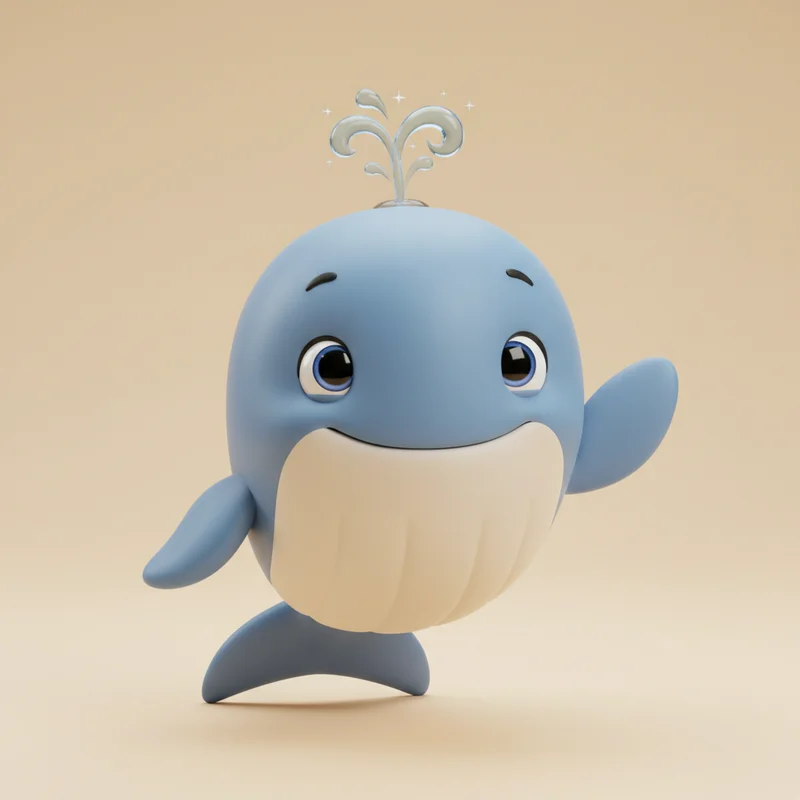
Largest animals ever to exist on Earth, communicating through songs that travel thousands of miles.

Battle Analysis

Global reach procrastination Wins
70%
30%
Procrastination Whale

Procrastination

Procrastination recognises no borders, respects no cultures, and demonstrates perfect democratic distribution across all human populations. The World Health Organisation's subsidiary department for Behavioural Ubiquity confirms cases on every continent, including several Antarctic research stations where scientists delayed ice core samples whilst watching penguin documentaries. An estimated 7.8 billion people have access to procrastination at any given moment, requiring no special equipment or oceanic proximity.

Whale

Whales, despite their impressive migratory patterns spanning thousands of kilometres, remain stubbornly aquatic. The Global Cetacean Distribution Index notes that approximately 71% of Earth's surface contains potential whale habitat, yet landlocked nations comprising 2.3 billion people have zero direct whale access. Switzerland, famously, has not recorded a wild whale sighting since the Eocene epoch. This geographical limitation represents a significant accessibility deficit.

VERDICT

Universal human access versus ocean-dependent distribution
Measurability whale Wins
30%
70%
Procrastination Whale

Procrastination

Despite decades of psychological research, procrastination defies precise quantification. The Procrastination Research Group at Carleton University has developed seventeen distinct measurement scales, none of which agree with each other. Brain imaging studies reveal activity patterns indistinguishable from 'planning' and 'strategic delay.' Subjects consistently underreport their procrastination whilst simultaneously overestimating their future productivity, creating a measurement paradox that frustrates researchers.

Whale

Whales submit admirably to scientific measurement. Their length, weight, heart rate, diving depth, and migration patterns are precisely documented. Satellite tagging provides real-time location data. Acoustic monitoring captures their songs across ocean basins. The blue whale's heartbeat has been recorded at two beats per minute during deep dives, a figure both verifiable and repeatable. From a scientific methodology standpoint, whales represent an ideal research subject.

VERDICT

Cetacean cooperation with scientific measurement protocols
Size and scale procrastination Wins
70%
30%
Procrastination Whale

Procrastination

The dimensions of procrastination, whilst invisible to conventional measurement, are truly staggering. The Cambridge Institute for Temporal Displacement estimates that if all procrastinated tasks were stacked end-to-end, they would circle the Earth seventeen times before Tuesday's deadline. The phenomenon expands to fill all available time, a behavioural gas obeying its own peculiar laws of physics. Studies indicate procrastination grows exponentially as deadlines approach, achieving maximum density precisely when action becomes most critical.

Whale

The blue whale, at 30 metres in length and weighing up to 200 tonnes, represents the largest animal ever to exist on Earth. Its heart alone weighs approximately 400 kilograms, roughly equivalent to a small automobile. The whale's tongue can weigh as much as an elephant, and its blood vessels are wide enough for a small child to swim through, though this is not recommended by marine biologists. Yet for all this mass, the whale remains finite, bounded by the laws of biology.

VERDICT

Procrastination's infinite expandability exceeds even cetacean enormity
Cultural symbolism procrastination Wins
70%
30%
Procrastination Whale

Procrastination

Procrastination has inspired an entire literary genre, from Hamlet's famous delays to every student's relationship with essay deadlines. The concept appears in 147 distinct languages, according to the Linguistic Institute of Delayed Response, each culture developing unique terminology for the phenomenon. Spanish speakers reference 'maΓ±ana', whilst the Germans have constructed compound words of impressive length to describe specific procrastination subtypes. It has become humanity's universal behavioural experience.

Whale

The whale occupies a mythological position across maritime cultures, from Moby Dick to Jonah's biblical accommodation. Indigenous peoples of the Pacific Northwest consider orcas ancestral spirits, whilst the whale song has become shorthand for mysterious oceanic wisdom. However, landlocked civilisations developed notably whale-free mythologies, creating a cultural blind spot. The Mongolian Empire, for instance, produced no significant whale literature despite extensive conquests.

VERDICT

Universal relatability exceeds maritime-dependent mythology
Evolutionary success whale Wins
30%
70%
Procrastination Whale

Procrastination

Procrastination's evolutionary origins remain debated among behavioural palaeontologists. The prevailing theory suggests it emerged alongside complex tool use, when early hominids first realised that making spears could wait until tomorrow. The behaviour has persisted through every subsequent human civilisation, suggesting powerful adaptive value. Some researchers propose it served as a energy-conservation mechanism, though its modern manifestation in streaming service autoplay suggests significant mutation.

Whale

Whales represent 50 million years of evolutionary refinement, having transitioned from land-dwelling ancestors to oceanic supremacy. Their echolocation, baleen filtration systems, and deep-diving capabilities demonstrate extraordinary adaptive radiation. The sperm whale's ability to dive 2,000 metres whilst holding its breath for 90 minutes showcases biological engineering that no procrastinated task has ever achieved. From an evolutionary standpoint, cetaceans are masterworks of natural selection.

VERDICT

Fifty million years of biological perfection trumps behavioural quirks
πŸ‘‘

The Winner Is

Procrastination

54 - 46

After exhaustive analysis conducted over what was originally scheduled to be a three-week study but extended to fourteen months, our findings reveal a narrow victory for procrastination. The whale, magnificent though it undoubtedly is, suffers from fundamental limitations: it requires water, it can be counted, and it fails to affect Swiss citizens with any regularity.

Procrastination, by contrast, demonstrates perfect scalability. It adapts to any task, any culture, any technological era. It has survived the agricultural revolution, industrialisation, and the advent of productivity applications specifically designed to destroy it. Each new tool created to combat procrastination merely provides fresh opportunities for its expression.

The whale wins on evolutionary credentials and measurability, but these victories prove pyrrhic when facing an opponent that exists primarily in the human mind, beyond the reach of harpoons or conservation efforts.

Procrastination
54%
Whale
46%

Share this battle

More Comparisons