
Procrastination
The physical requirements of procrastination have been grotesquely underestimated by mainstream sports science. According to researchers at the Cambridge Laboratory of Sedentary Excellence, maintaining a single position on a sofa for six consecutive hours whilst ignoring mounting responsibilities requires extraordinary muscular endurance. The thumb alone, perpetually scrolling through social media feeds, performs an estimated 47,000 micro-movements per procrastination session. Furthermore, the core strength required to reach for snacks without fully rising from one's reclined position has been likened to a highly specialised form of yoga, albeit one practiced exclusively by those avoiding tax returns.
The sport also demands remarkable bladder control, as any trip to the lavatory risks accidentally noticing the pile of laundry one has been studiously ignoring. Elite procrastinators have been known to develop what specialists term selective motion blindness, allowing them to navigate past unwashed dishes without their consciousness registering their existence whatsoever.
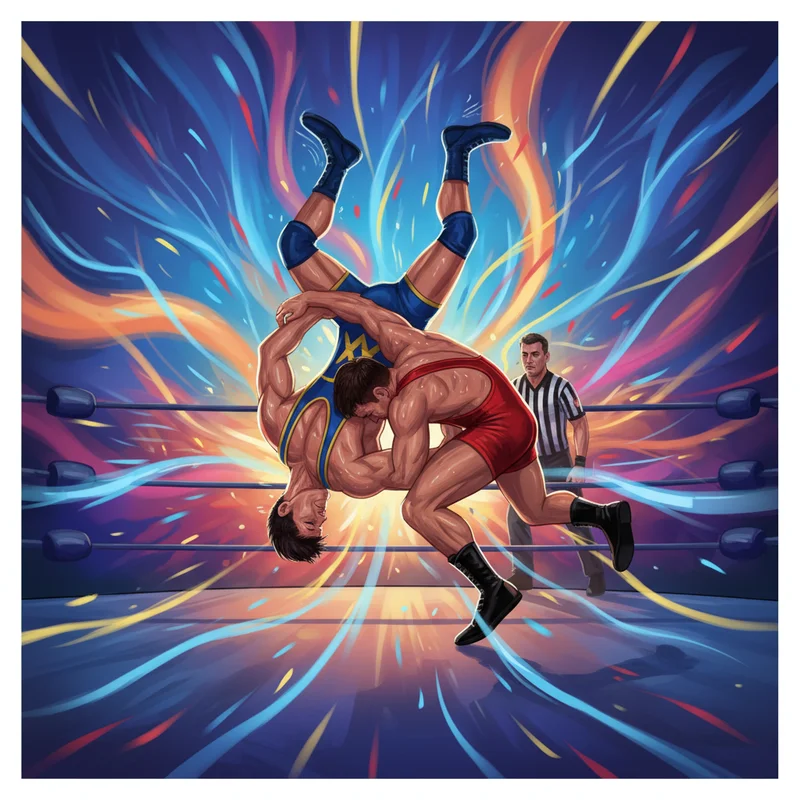
Wrestling
Wrestling makes rather more obvious demands upon the human body. The International Federation of Grappling Biomechanics reports that a single competitive match burns approximately 400 calories, equivalent to running five kilometres whilst someone actively tries to fold you in half. Wrestlers must develop strength in muscle groups most humans forget they possess, including the much-neglected ear-protection muscles and the seldom-discussed obliques of determination.
Training regimes typically involve lifting heavy objects, being thrown repeatedly onto cushioned surfaces, and learning to breathe whilst someone's elbow occupies the space where your windpipe traditionally resides. The physical toll extends beyond the mat: wrestlers report an inability to pass through doorways without instinctively checking for potential takedown angles. Dr. Helena Fitzgerald of the Bristol Centre for Combat Posture notes that retired wrestlers often struggle in social situations, unconsciously lowering their centre of gravity whenever someone extends a hand for greeting.