
Topic Battle

Where Everything Fights Everything

Rocket

Rocket

Spacecraft propulsion system reaching for the stars.

VS
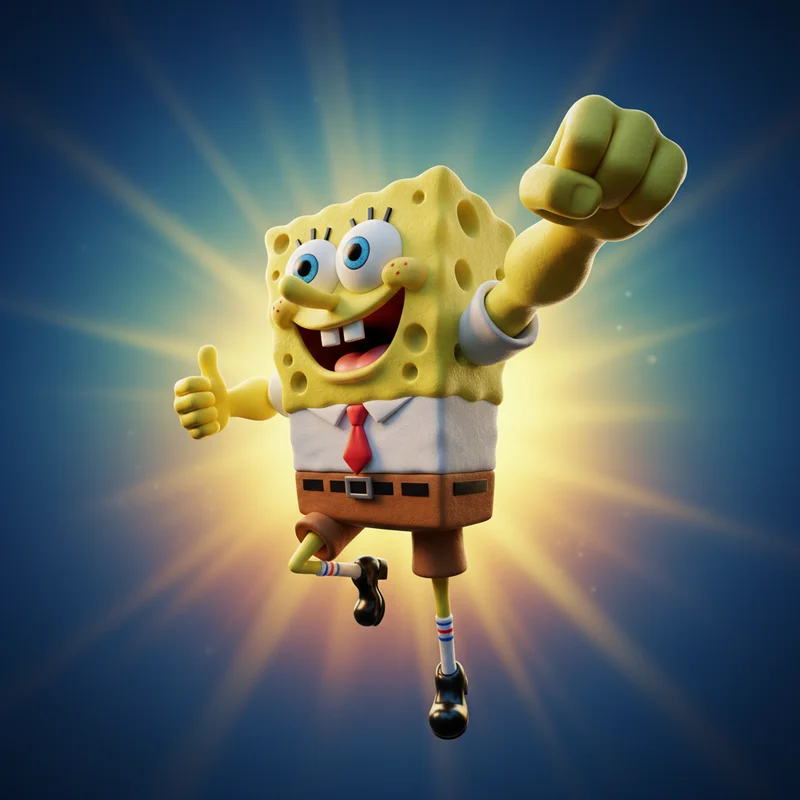
Spongebob

Spongebob

Absorbent yellow sea sponge living in a pineapple.

Battle Analysis

Energy efficiency spongebob Wins
30%
70%
Rocket Spongebob

Rocket

The rocket represents humanity's most magnificent exercise in controlled inefficiency. The Saturn V consumed 20 tonnes of fuel per second during launch. Approximately 90% of a rocket's mass consists of propellant, meaning the actual payload represents a tiny fraction of what leaves the launch pad. The rocket equation is beautiful but tyrannical.

Modern improvements through reusability have enhanced efficiency considerably. The Falcon 9 first stage returns to land on its own propellant reserves, though this itself requires carrying fuel to brake the descent. Rockets fight gravity, and gravity always extracts its tribute.

Spongebob

SpongeBob demonstrates remarkable metabolic efficiency. His primary sustenance appears to be the ambient seawater of Bikini Bottom, supplemented by occasional Krabby Patties. He maintains manic energy levels sufficient for an eight-hour shift at the Krusty Krab, followed by extensive jellyfishing activities, with no apparent caloric input proportionate to his output.

The physics of SpongeBob's universe operate under different constraints than our own. His body generates sufficient kinetic energy for bubble-blowing at industrial scales, karate with Sandy Cheeks, and enthusiastic laughter, all whilst remaining a filter-feeding organism. The efficiency defies thermodynamics but remains canonically consistent.

VERDICT

Requiring zero external fuel versus twenty tonnes per second represents an insurmountable efficiency advantage.
Cultural penetration spongebob Wins
30%
70%
Rocket Spongebob

Rocket

The rocket has embedded itself into human consciousness as the supreme symbol of progress and ambition. The phrase 'it's not rocket science' exists precisely because rocket science represents the pinnacle of intellectual difficulty in popular imagination. Every child who has gazed upward at a contrail has briefly contemplated escape velocity.

However, the rocket's cultural presence remains somewhat abstract. Most humans will never witness a launch in person. The rocket exists primarily as symbol rather than experienced reality, a mathematical possibility rather than a tangible presence in daily existence.

Spongebob

SpongeBob SquarePants has achieved cultural saturation of remarkable density. Since 1999, the character has appeared in over 280 episodes, three theatrical films, countless memes, and merchandise generating $13 billion in retail sales. The phrase 'I'm ready!' requires no context for recognition across multiple generations.

The character's image appears on everything from children's pyjamas to ironic adult fashion. SpongeBob memes constitute their own genre of internet communication. The poriferan has achieved what marketers call omnipresent brand recognition whilst remaining genuinely beloved rather than merely tolerated.

VERDICT

Thirteen billion dollars in merchandise versus being a metaphor for difficulty suggests the sponge has superior market penetration.
Inspirational capacity rocket Wins
70%
30%
Rocket Spongebob

Rocket

The rocket has inspired generations to pursue careers in science, engineering, and exploration. The Apollo programme created an entire generation of engineers who watched humans walk on the Moon and decided that impossible was merely a scheduling constraint. University STEM enrolment correlates demonstrably with high-profile space missions.

The rocket whispers to humanity that our planet is a starting point rather than a destination. Every successful launch demonstrates that the laws of physics, properly understood, become permissions rather than prohibitions. The inspirational power of watching fire push humans beyond Earth's atmosphere remains undiminished across decades.

Spongebob

SpongeBob's inspirational message operates at a different register entirely. The character models relentless optimism in circumstances that would crush lesser beings. He works a minimum-wage job for a crustacean miser, lives in underwater poverty, and faces daily humiliation, yet awakens each morning declaring himself ready for whatever challenges await.

This model of cheerful persistence has arguably influenced more children than rocket launches. SpongeBob demonstrates that happiness is a choice rather than a circumstance. Whether this represents genuine wisdom or clinically significant denial remains a matter of scholarly debate, but the character's influence on emotional resilience approaches measurable significance.

VERDICT

Inspiring humanity to reach other worlds edges out inspiring children to remain optimistic about fry cooking.
Structural engineering rocket Wins
70%
30%
Rocket Spongebob

Rocket

Modern rockets represent pinnacles of structural engineering operating under impossible constraints. The Space Shuttle's external tank contained cryogenic hydrogen at minus 253 degrees Celsius mere centimetres from room-temperature equipment. Combustion chambers withstand 3,300 degrees Celsius through regenerative cooling that uses the fuel itself as coolant.

The materials science alone required decades of development. Inconel alloys resist the corrosive fury of combustion gases. Carbon-carbon composites protect nose cones during re-entry at 1,650 degrees Celsius. Every component exists at the absolute edge of material capability.

Spongebob

SpongeBob's structural properties challenge conventional materials science. His porous body absorbs impacts that would destroy conventional organisms, then returns to original configuration. He has been flattened, stretched, torn apart, and desiccated across multiple episodes, yet regenerates without apparent cellular damage or psychological trauma.

The implications for materials engineering are profound. SpongeBob's tissue demonstrates perfect elastic memory combined with apparent indestructibility. His body absorbs kinetic energy without transferring it to internal structures. Were such materials available to aerospace engineers, spacecraft design would be revolutionised entirely.

VERDICT

Withstanding 3,300 degrees through deliberate engineering exceeds cartoon physics through sheer intentionality.
Operational reliability spongebob Wins
30%
70%
Rocket Spongebob

Rocket

Rocket reliability has improved dramatically yet remains sobering. The Falcon 9 boasts a success rate of approximately 98%, which sounds impressive until one calculates that two failures per hundred launches would be unacceptable in any other transportation industry. Rockets explode. This is not a bug but rather an acknowledged feature of strapping payloads to controlled chemical explosions.

The physics of rocketry demand perfection across millions of components. A single o-ring failure destroyed Challenger. A single loose foam piece doomed Columbia. Rockets operate at the edge of possibility, where reliability is earned through ruthless engineering rather than assumed through experience.

Spongebob

SpongeBob has maintained consistent weekly broadcast for over two decades without a single episode failing to air due to character malfunction. His absorbent nature appears impervious to damage; he has been physically destroyed and reconstituted across hundreds of episodes. The character demonstrates regenerative capabilities that would fascinate any biologist.

Operationally, SpongeBob arrives at the Krusty Krab with clockwork regularity despite living in a pineapple that defies structural engineering principles. His reliability as a fry cook exceeds that of most human employees. He has never called in sick due to existential crisis, unlike the rockets that occasionally detonate during what engineers optimistically call 'rapid unscheduled disassembly'.

VERDICT

Twenty-five years without a single operational failure versus 98% success rate demonstrates cartoon superiority.
👑

The Winner Is

Rocket

52 - 48

The final accounting produces a remarkably close result, with the rocket prevailing 52-48 in what must be acknowledged as one of the more philosophically unusual comparisons in scholarly literature. The rocket claims victories in Structural Engineering and Inspirational Capacity, domains where humanity's engineering ambition and cosmic aspirations find their fullest expression.

SpongeBob, however, demonstrates unexpected superiority in Cultural Penetration, Operational Reliability, and Energy Efficiency. The yellow poriferan has embedded himself into global consciousness with a thoroughness that rocket programmes, despite their grandeur, have never achieved. More humans can quote SpongeBob than can explain orbital mechanics.

The narrow margin reflects a fundamental truth: both entities excel at their respective purposes. The rocket transcends planetary boundaries. SpongeBob transcends generational and cultural boundaries. Both represent human creativity applied to questions of aspiration, merely at vastly different scales and with rather different fuel requirements.

Rocket
52%
Spongebob
48%

Share this battle

More Comparisons