Topic Battle

Where Everything Fights Everything

Rubber Duck

Rubber Duck

A debugging tool for programmers and bathtub companion for everyone else. This hollow yellow bird has solved more software bugs than most senior engineers. Also squeaks.

VS
Fortnite

Fortnite

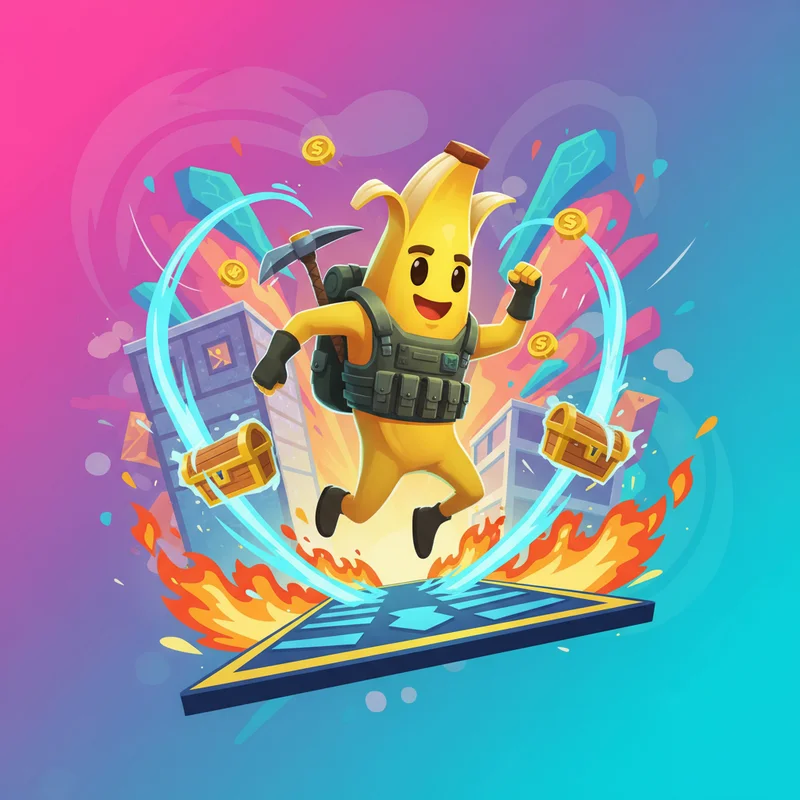
Battle royale phenomenon and dance move generator.

Battle Analysis

Durability rubber-duck Wins
30%
70%
Rubber Duck Fortnite

Rubber Duck

Fortnite

Fortnite's durability exists in a fundamentally different dimension—the precarious realm of digital preservation. Since its 2017 launch, the game has survived through constant metamorphosis, with Epic Games deploying updates that occasionally render previous versions entirely unplayable. Players who stepped away for mere months return to find an unrecognisable landscape.

The game's infrastructure depends upon server availability, internet connectivity, and corporate financial viability. When servers experience maintenance, Fortnite ceases to exist for its users. The experience leaves no physical artefact; should Epic Games discontinue support, Fortnite would evaporate entirely from human experience.

Yet one must acknowledge Fortnite's adaptive durability. Through reinvention—adding new seasons, crossover events, and mechanical innovations—it has maintained relevance far longer than industry predictions suggested. This is durability through perpetual transformation rather than static resilience.

VERDICT

The rubber duck's half-century operational lifespan and zero-maintenance requirements eclipse Fortnite's dependency on external infrastructure.
Accessibility rubber-duck Wins
30%
70%
Rubber Duck Fortnite

Rubber Duck

Fortnite

Fortnite's free-to-play model represents a revolutionary accessibility innovation within gaming. No initial purchase is required; any individual with compatible hardware can experience the core game without financial investment. This model enabled penetration into demographics previously excluded from premium gaming experiences.

Yet accessibility barriers remain substantial. Users require a gaming console, personal computer, or smartphone valued at minimum several hundred pounds. Reliable internet connectivity is mandatory. Account creation demands an email address and acceptance of extensive terms of service. Players must then navigate a steep learning curve involving construction mechanics, weapon management, and spatial awareness.

The game's skill-based matchmaking attempts to address competency gaps, yet new players routinely face humiliating defeats against experienced opponents. This psychological barrier proves insurmountable for many potential users.

VERDICT

Zero-cost acquisition, immediate mastery, and operation in any environment give the rubber duck unmatched accessibility credentials.
Aesthetic-appeal rubber-duck Wins
30%
70%
Rubber Duck Fortnite

Rubber Duck

Fortnite

Fortnite's aesthetic operates through calculated visual maximalism. The game's art style—a cell-shaded hybrid between cartoon and realism—was specifically engineered to appeal across age demographics whilst minimising hardware requirements. Environments burst with colour; character skins range from tactical operators to anthropomorphic bananas.

The customisation economy represents aesthetic appeal monetised. Players have collectively spent billions on virtual costumes, demonstrating profound investment in visual self-expression within the game world. Limited-edition skins achieve cultural cachet comparable to luxury fashion items.

However, this aesthetic requires constant refresh. Epic Games must perpetually introduce new visual content to maintain interest; the endless novelty cycle suggests the baseline aesthetic lacks the enduring appeal of simpler designs. What delights in January becomes mundane by March.

VERDICT

The rubber duck's timeless design has required no modification in decades, whilst Fortnite demands constant aesthetic reinvention.
Global-recognition fortnite Wins
30%
70%
Rubber Duck Fortnite

Rubber Duck

Fortnite

Fortnite's global recognition campaign operated with unprecedented velocity. Within three years of launch, the game had accumulated over 350 million registered accounts—a number exceeding the population of the United States. Its signature dances, particularly the 'Floss,' achieved such penetration that professional athletes performed them during televised events.

The game's crossover events with Marvel, Star Wars, and countless musical artists transformed it into a cultural nexus point. When Travis Scott performed a virtual concert within Fortnite, 12.3 million concurrent viewers attended—a figure that would fill Madison Square Garden 617 times over.

However, Fortnite's recognition remains demographically concentrated. Survey data consistently shows diminished awareness among populations over fifty, and its presence in regions with limited internet infrastructure remains minimal. The digital divide constrains its reach.

VERDICT

Fortnite's 350 million users and cross-media saturation represent recognition velocity the rubber duck took a century to approach.
Environmental-impact rubber-duck Wins
30%
70%
Rubber Duck Fortnite

Rubber Duck

Fortnite

Fortnite's environmental impact operates through electricity consumption at staggering scale. The game's server infrastructure, distributed across global data centres, consumes energy continuously. Each of the hundreds of millions of gaming sessions requires electricity for both servers and player devices. Estimates suggest popular online games generate carbon footprints equivalent to small nations.

The hardware upgrade cycle compounds this impact. Players seeking competitive advantage purchase new graphics cards, consoles, and peripherals—devices manufactured through energy-intensive processes involving rare earth minerals. The electronic waste generated when these devices reach obsolescence presents significant disposal challenges.

Epic Games has made carbon neutrality commitments, yet the fundamental model of continuous engagement through always-online infrastructure ensures substantial ongoing environmental cost. The digital realm proves far less ethereal than its name suggests.

VERDICT

Despite plastic concerns, the rubber duck's minimal energy requirements pale beside Fortnite's server farms and hardware upgrade cycles.
👑

The Winner Is

Rubber Duck

52 - 48

Our investigation reveals a conclusion that may startle devotees of digital entertainment: the rubber duck emerges victorious in this contest of cultural titans. With triumphs in durability, accessibility, aesthetic appeal, and environmental impact, the humble bath companion demonstrates that technological sophistication does not guarantee superiority.

Fortnite's solitary victory in global recognition—achieved through unprecedented marketing expenditure and platform ubiquity—cannot overcome the duck's accumulated advantages. The battle royale phenomenon represents an impressive achievement in engagement engineering, yet its dependence on external infrastructure, its accessibility barriers, and its environmental footprint reveal fundamental vulnerabilities.

The rubber duck requires nothing from its users but presence. It demands no skill development, no financial investment beyond acquisition, no ongoing commitment. It offers unconditional companionship in humanity's most vulnerable moments—alone, unclothed, in warm water. Fortnite, for all its spectacle, cannot match this intimacy.

Perhaps most significantly, the rubber duck will outlast Fortnite. When Epic Games' servers eventually fall silent, when the last victory royale fades from memory, rubber ducks will continue floating in bathrooms worldwide, their squeaks echoing through generations yet unborn.

Rubber Duck
52%
Fortnite
48%

Share this battle

More Comparisons