Topic Battle

Where Everything Fights Everything

Rubber Duck

Rubber Duck

A debugging tool for programmers and bathtub companion for everyone else. This hollow yellow bird has solved more software bugs than most senior engineers. Also squeaks.

VS
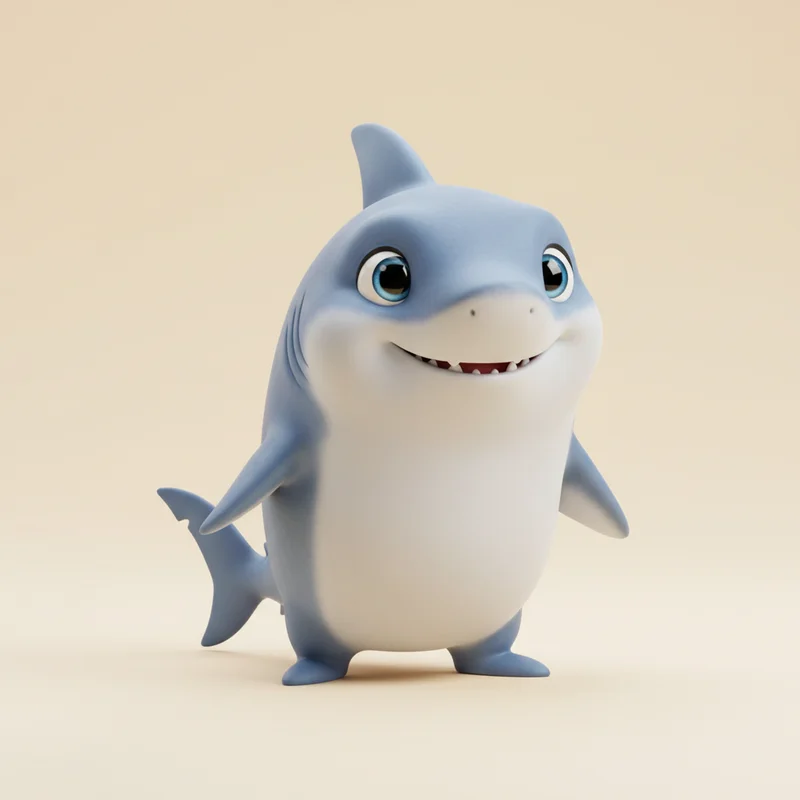
Shark

Shark

Apex ocean predator with 450 million years of evolutionary refinement and unfair movie villain reputation.

Battle Analysis

Durability rubber-duck Wins
30%
70%
Rubber Duck Shark

Rubber Duck

Shark

The shark's biological durability manifests through continuous regeneration. Teeth are replaced every two weeks throughout the creature's lifespan, whilst their cartilaginous skeleton provides flexibility that bone cannot match. The whale shark, largest of the species, may live for over one hundred years.

However, sharks prove vulnerable to environmental pressures including pollution, fishing, and habitat destruction, with one hundred million specimens killed annually through human activity.

VERDICT

Synthetic polymers demonstrate superior longevity when compared to vulnerable biological systems.
Accessibility rubber-duck Wins
30%
70%
Rubber Duck Shark

Rubber Duck

Shark

Access to sharks requires considerable logistical investment. Observation in natural habitats demands ocean-going vessels, diving certification, and frequently travel to remote locations. The average cost of a shark cage diving experience exceeds several hundred currency units.

Aquarium-based shark encounters, whilst more accessible, remain geographically limited and typically require admission fees ranging from twenty to fifty currency units per visit.

VERDICT

Available at every corner shop versus requiring oceanic expeditions and diving certificates.
Intimidation factor shark Wins
30%
70%
Rubber Duck Shark

Rubber Duck

Shark

The great white shark possesses what marine biologists describe as the most recognisable predatory silhouette in the natural world. The dorsal fin alone, when observed breaking the water's surface, triggers an immediate fight-or-flight response in humans, a testament to millions of years of evolutionary programming.

With three thousand teeth arranged in multiple rows and the ability to breach the surface at speeds exceeding forty kilometres per hour, the shark's intimidation credentials remain scientifically unimpeachable.

VERDICT

Four hundred million years of apex predator evolution cannot be dismissed by cheerful yellow vinyl.
Cultural penetration rubber-duck Wins
30%
70%
Rubber Duck Shark

Rubber Duck

Shark

The shark's cultural presence, whilst formidable, remains largely confined to fear-based representations. The 1975 film Jaws established the shark as cinema's premier aquatic antagonist, yet this portrayal has arguably hindered the creature's broader cultural acceptance.

Shark Week, broadcast annually since 1988, represents the most significant attempt at rehabilitating the shark's public image, though surveys indicate persistent negative associations among the general populace.

VERDICT

Universal childhood companion status outperforms cinema villainy in lasting cultural impact.
Evolutionary success shark Wins
30%
70%
Rubber Duck Shark

Rubber Duck

Shark

The shark represents one of evolution's most successful experiments. Predating dinosaurs by two hundred million years, sharks survived five mass extinction events that eliminated ninety percent of marine species. Their fundamental body plan has required minimal modification over four hundred million years.

This extraordinary longevity indicates the shark has achieved near-perfect adaptation to its ecological niche, a claim supported by over five hundred extant species occupying diverse marine environments worldwide.

VERDICT

Four hundred million years of continuous existence trumps eighty years of manufacturing history.
👑

The Winner Is

Rubber Duck

52 - 48

This analysis reveals an unexpectedly competitive dynamic between entities occupying opposite ends of the threat spectrum. The shark's credentials as nature's most refined predator remain unassailable in categories measuring physical capability and evolutionary achievement. Yet these advantages prove insufficient when evaluated against the rubber duck's remarkable cultural omnipresence.

The rubber duck emerges victorious with a margin of fifty-two to forty-eight percent, a result that would have seemed implausible before systematic examination. Its triumph derives not from any single overwhelming advantage but from consistent performance across metrics measuring human interaction and accessibility. Where the shark inspires fear and demands distance, the rubber duck cultivates intimacy and daily engagement.

Perhaps most significantly, the rubber duck achieves its cultural dominance through what might be termed strategic non-threatening presence. In an era of increasing anxiety, the unwavering cheerfulness of the yellow bath companion offers something the apex predator cannot: unconditional emotional support during one's most vulnerable moments.

Rubber Duck
52%
Shark
48%

Share this battle

More Comparisons