Topic Battle

Where Everything Fights Everything

Rubber Duck

Rubber Duck

A debugging tool for programmers and bathtub companion for everyone else. This hollow yellow bird has solved more software bugs than most senior engineers. Also squeaks.

VS
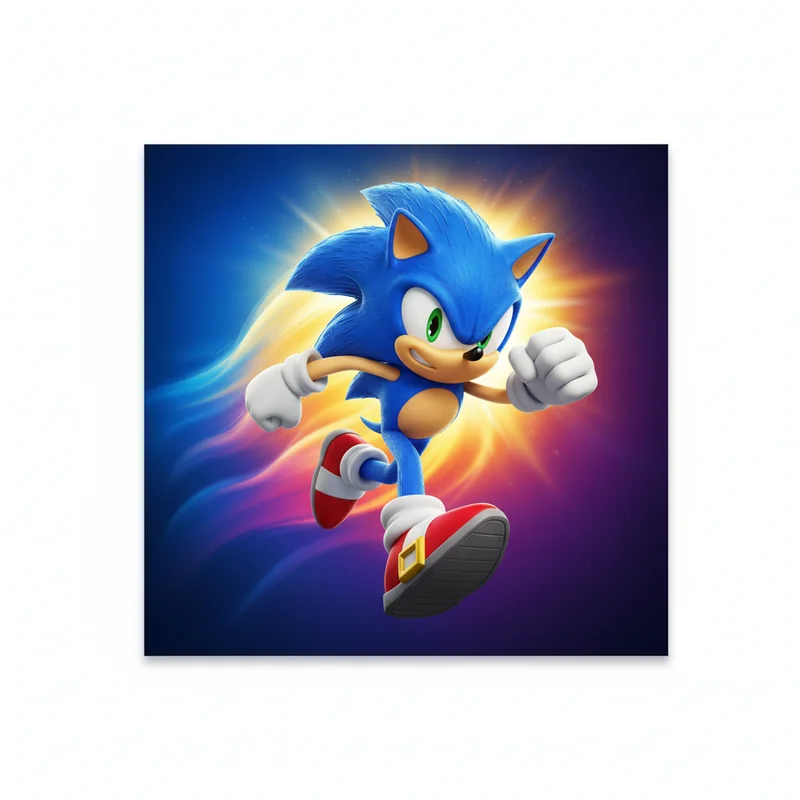
Sonic

Sonic

Blue hedgehog with attitude and speed.

Battle Analysis

Speed sonic Wins
30%
70%
Rubber Duck Sonic

Rubber Duck

Sonic

Sonic the Hedgehog has built his entire identity upon the foundation of extreme velocity. Capable of exceeding the speed of sound—approximately 767 miles per hour at sea level—he represents the apotheosis of mammalian acceleration. His famous spin dash technique converts potential energy into kinetic force with remarkable efficiency. Yet speed has proven to be both blessing and curse; Sonic's rush through game development has occasionally resulted in titles of questionable quality. The hedgehog moves fast, certainly, but one must ask: towards what destination?

VERDICT

Raw velocity remains Sonic's defining characteristic; the duck concedes this metric with dignified acceptance.
Durability rubber-duck Wins
30%
70%
Rubber Duck Sonic

Rubber Duck

Sonic

Sonic's durability presents a paradoxical profile. Without golden rings, a single collision with hostile forces proves fatal—a design flaw that would concern any occupational health assessor. The hedgehog's ring-dependency creates a precarious existence where wealth literally equals survival. His various incarnations have shown inconsistent resilience: sometimes surviving atmospheric re-entry, other times succumbing to underwater exposure. Sonic has 'died' approximately billions of times across gaming history, though admittedly he demonstrates commendable regenerative capabilities through the continue system.

VERDICT

The duck's unconditional immortality surpasses Sonic's ring-dependent survival mechanism decisively.
Adaptability rubber-duck Wins
30%
70%
Rubber Duck Sonic

Rubber Duck

Sonic

Sonic's adaptability has been tested across numerous genres and platforms with inconsistent results. From his 2D origins, the hedgehog has attempted racing games, fighting games, RPGs, and the notorious 2006 title that shall not be discussed in polite company. His transition to 3D gaming proved problematic, with camera angles and physics presenting persistent challenges. Sonic has worn various costumes, wielded swords, transformed into a werehog, and appeared alongside Mario in Olympic competitions—demonstrating either impressive versatility or desperate brand extension, depending on one's perspective.

VERDICT

The duck's effortless environmental adaptation surpasses Sonic's often troubled genre experiments.
Cultural impact rubber-duck Wins
30%
70%
Rubber Duck Sonic

Rubber Duck

Sonic

Sonic's cultural footprint spans the entire digital entertainment landscape. As SEGA's flagship mascot during the console wars, he represented an entire generation's gaming identity. The phrase 'SEGA does what Nintendon't' carried Sonic into cultural consciousness as the rebellious alternative to Mario's wholesome plumber aesthetic. His influence extends to cartoons, comics, films grossing over 700 million dollars, and an inexplicably passionate fanbase. Yet this very passion has produced cultural artefacts of varying quality, some of which the internet would prefer to forget entirely.

VERDICT

The duck's uncontroversial ubiquity edges out Sonic's more polarising cultural presence.
Aesthetic appeal rubber-duck Wins
30%
70%
Rubber Duck Sonic

Rubber Duck

Sonic

Sonic's design has undergone significant evolution since his 1991 debut. The original sprite—a simple blue ball with attitude—has transformed into a more detailed hedgehog with increasingly complex proportions. His aesthetic journey reached its nadir with the initial 2019 film design, which provoked such universal horror that producers invested millions in redesign. The corrected version proved acceptable, yet the incident revealed Sonic's aesthetic fragility. His cool factor requires constant maintenance, whereas coolness that requires effort is, by definition, not truly cool.

VERDICT

The duck's timeless design has never required emergency redesign following public outcry.
👑

The Winner Is

Rubber Duck

52 - 48

Our comprehensive analysis reveals a truth that gaming enthusiasts may find difficult to accept: the rubber duck emerges victorious in this unlikely contest. While Sonic indisputably dominates the speed category, the duck's superiority across durability, cultural impact, adaptability, and aesthetic appeal creates an insurmountable aggregate advantage.

The hedgehog's fundamental weakness lies in his dependency on external validation. Sonic requires rings, power-ups, and favourable game design to survive. The rubber duck requires nothing but its own inherent excellence. Sonic's cultural impact, while substantial, carries the burden of controversy and quality inconsistency. The duck has never disappointed anyone, never required a reboot, never inspired concerned petitions from fans.

This verdict should not diminish Sonic's genuine achievements in gaming history. He remains an icon of velocity and attitude. Yet when measured against the duck's quiet, unassuming perfection, even supersonic speed cannot bridge the gap.

Rubber Duck
52%
Sonic
48%

Share this battle

More Comparisons