Where Everything Fights Everything

Rubber Duck vs The Moon

😜 Just for fun — a tongue-in-cheek, gloriously unscientific showdown.

Rubber Duck

Rubber Duck

A debugging tool for programmers and bathtub companion for everyone else. This hollow yellow bird has solved more software bugs than most senior engineers. Also squeaks.

VS
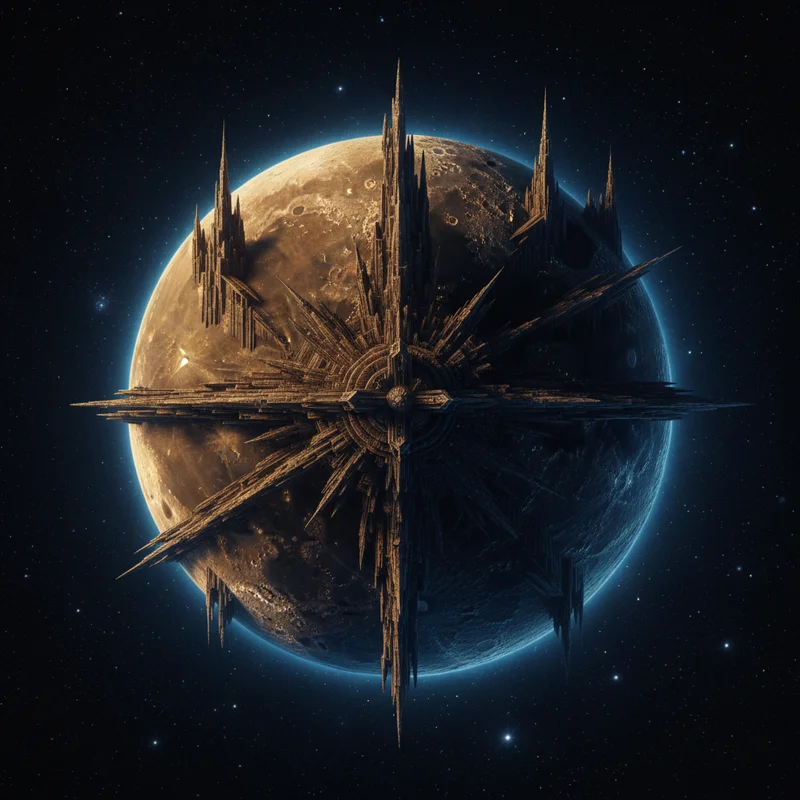
The Moon

The Moon

Earth's natural satellite and space race destination.

Battle Analysis

Mystery The Moon Wins
🏆 The Moon takes this round

Rubber Duck

The rubber duck harbours surprisingly few mysteries. We know its origins, its manufacturing process, and its precise chemical composition (polyvinyl chloride, typically). The only genuine enigma involves the 28,800 rubber ducks lost from a cargo ship in 1992, which subsequently circumnavigated the globe on ocean currents, teaching scientists more about maritime drift patterns than any planned experiment. These 'Friendly Floatees' have washed up on shores from Alaska to Scotland, their journey spanning decades. Yet fundamentally, the duck remains knowable—one can disassemble it entirely, understand every molecule, and reassemble it without losing any essential duckness.

The Moon

The Moon bristles with mysteries that humanity has barely begun to unravel. The Giant Impact Hypothesis suggests a Mars-sized body called Theia collided with early Earth, yet we cannot prove it definitively. The Moon's far side remained unseen until 1959. We do not fully understand its mascons—gravitational anomalies that nearly crashed early spacecraft. The presence of water ice in permanently shadowed craters was only confirmed in 2018. Even the lunar samples returned by Apollo missions continue yielding surprises. The Moon has been our nearest celestial companion for billions of years, yet it keeps its secrets with the discretion of a Victorian butler.

VERDICT

An unknowable cosmic entity versus a fully documented bath toy represents no contest in enigmatic qualities.
Durability The Moon Wins
🏆 The Moon takes this round

Rubber Duck

The modern rubber duck demonstrates remarkable resilience for an object designed primarily to be squeezed by infants. Quality specimens can survive years of bathtime abuse, occasional dog attacks, and the indignity of being forgotten in hot cars. The Friendly Floatees mentioned previously have survived three decades at sea, bleached by sun and battered by waves yet still recognisably duck-shaped. However, the material degrades inevitably—UV radiation causes brittleness, mould colonises internal cavities, and the characteristic squeak fades to a wheeze. A rubber duck might last a childhood; it will not last a geological epoch.

The Moon

The Moon has endured for approximately 4.5 billion years, weathering meteor bombardments that would vapourise every rubber duck in existence simultaneously. Its surface bears craters from impacts that occurred before life existed on Earth. It has no atmosphere to erode it, no water to weather it, no biological processes to decay it. The footprints left by Apollo astronauts will remain visible for millions of years. Barring collision with a sufficiently massive body or the Sun's eventual red giant expansion, the Moon will outlast human civilisation, Earth itself, and certainly every polymer-based waterfowl ever manufactured.

VERDICT

Billions of years of cosmic endurance versus decades of bathtime service presents an insurmountable advantage.
Accessibility Rubber Duck Wins
🏆 Rubber Duck takes this round

Rubber Duck

The rubber duck represents perhaps the most democratically accessible object in modern civilisation. Available at pound shops, supermarkets, and increasingly dubious online marketplaces, the average human can acquire one within approximately fifteen minutes of deciding they require vinyl waterfowl companionship. The duck asks nothing of its owner—no special equipment, no training, no gravitational assistance. One simply places it in water, and it floats. This elegant simplicity has made it a universal constant in bathrooms across six continents. Even in regions without reliable plumbing, the rubber duck persists, adapted to buckets, rivers, and the occasional decorative shelf.

The Moon

Accessing the Moon presents somewhat more substantial logistical challenges. To date, precisely twelve humans have walked upon its surface, all of them American, all of them between 1969 and 1972. The journey requires approximately three days of travel, several billion pounds in funding, and a complete disregard for one's cardiovascular system. Even visual access depends upon orbital mechanics, weather conditions, and the absence of light pollution. One cannot simply pop to Tesco for a Moon. One cannot hold it in one's hands. The Moon remains perpetually out of reach, a cosmic tease of the highest order, forever visible yet fundamentally unobtainable.

VERDICT

The duck's immediate availability versus the Moon's 384,400km commute makes this criterion rather straightforward.
Cultural impact The Moon Wins
🏆 The Moon takes this round

Rubber Duck

The rubber duck has achieved remarkable cultural penetration for an object that does precisely nothing functional. It has become synonymous with innocence, childhood, and the peculiar human desire to anthropomorphise inanimate objects. The famous Florentijn Hofman installation—a fifteen-metre inflatable duck—toured the world's harbours to unprecedented acclaim. In programming, 'rubber duck debugging' has become legitimate methodology, wherein developers explain code problems to plastic waterfowl. The duck has transcended its humble origins to become a symbol of whimsy itself, appearing in films, protests, and the occasional diplomatic incident.

The Moon

The Moon has influenced human culture for considerably longer than synthetic polymers have existed. It has been worshipped as a deity by countless civilisations—Selene, Luna, Chandra, Tsukuyomi—each culture projecting its own mythology upon that pale disc. It gave us the word 'month,' the concept of the menstrual cycle's lunar connection, and the persistent belief in lycanthropy. The Moon inspired the greatest technological achievement in human history, poetry spanning five millennia, and approximately forty percent of all romantic clichés. It has been blamed for madness (hence 'lunatic'), credited with agricultural success, and remains the only extraterrestrial body to bear human footprints.

VERDICT

Four and a half billion years of cultural influence versus eight decades of bathtime charm proves decisive.
Aesthetic appeal The Moon Wins
🏆 The Moon takes this round

Rubber Duck

The rubber duck achieves something remarkable: universal aesthetic approval. Its proportions—the oversized head, the simplified features, the cheerful yellow—trigger nurturing responses across cultures. This is deliberate design brilliance, exploiting the same kindchenschema that makes human babies appear adorable. The duck's colour, typically Pantone 109 C, registers as friendly and non-threatening. It photographs beautifully, contrasting against both blue water and white porcelain. The form has been adapted into countless variations—punk ducks, superhero ducks, ducks wearing tiny crowns—each preserving the essential appeal whilst adding novelty.

The Moon

The Moon's aesthetic impact operates on an entirely different register: the sublime. Its beauty inspires not comfort but awe, not intimacy but contemplation of infinity. A full moon rising over water has moved poets since language existed. The interplay of maria and highlands, those dark 'seas' and bright craters, creates a face that humans have projected meaning upon for millennia. The Moon changes—waxing, waning, occasionally eclipsing—offering variety the static duck cannot match. It has been rendered in paint by Turner, in music by Debussy, in verse by everyone from Li Bai to Pablo Neruda. Its beauty is literally otherworldly.

VERDICT

The sublime grandeur of a celestial body transcends even the most perfectly designed bathtime companion.
👑

The Winner Is

The Moon

Takes 4 of 5 rounds

This comparative analysis reveals fundamental truths about scale and significance in human experience. The rubber duck excels in accessibility and immediate charm—it is the friend one can hold, the companion that asks nothing and offers simple joy. It represents humanity's capacity to find comfort in the absurd, meaning in the meaningless, and genuine affection for hollow vinyl.

The Moon, however, operates on a scale that renders such comparisons almost cosmically impolite. It controls our tides, stabilises our planet's axial tilt, and may well have been essential for life's development on Earth. It has inspired more art, more science, and more wonder than any single object in human history. The Moon does not float in one's bath; it floats in one's consciousness.

Yet perhaps the most profound observation is this: humans have placed both objects in positions of affection. We have launched missions to the Moon and launched rubber ducks across oceans. Both have become symbols of something greater than themselves—one of cosmic aspiration, one of simple happiness. In this, they are not opponents but complementary forces in the human experience.

Share this battle

More Comparisons