
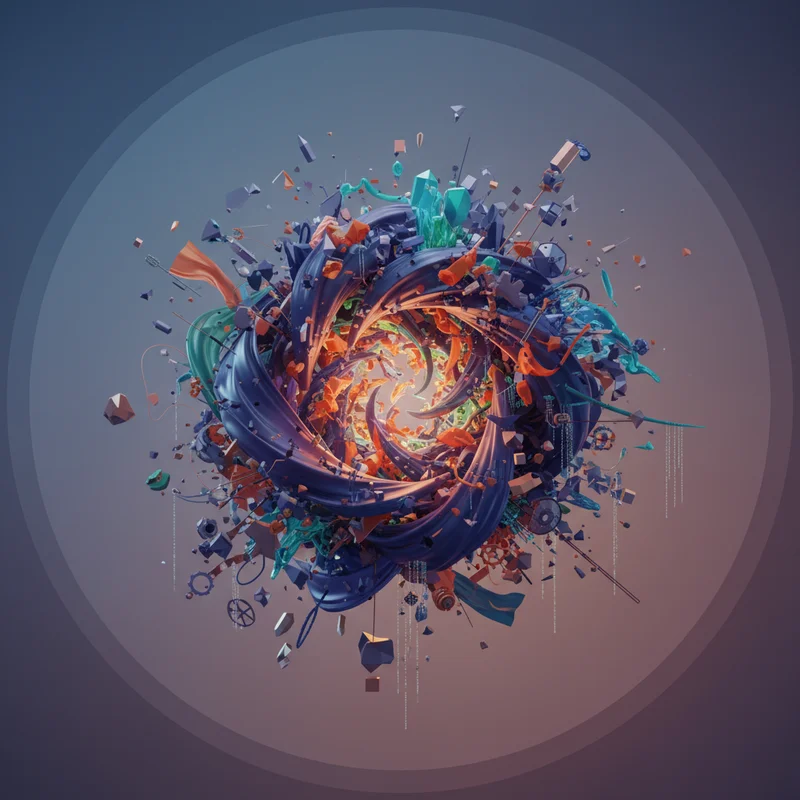
Where Everything Fights Everything

Sloth vs Chaos

😜 Just for fun — a tongue-in-cheek, gloriously unscientific showdown.

Sloth

Sloth

Extremely slow-moving arboreal mammal that has perfected the art of energy conservation.

VS
Chaos

Chaos

Disorder and unpredictability in systems.

The Matchup

The three-toed sloth (Bradypus variegatus) has perfected the art of doing absolutely nothing with remarkable dedication. Chaos, meanwhile, has spent approximately 13.8 billion years ensuring that nothing in the universe remains orderly for long. The Royal Institute of Improbable Confrontations has finally pitted these two forces against one another in what researchers are calling 'the most philosophically exhausting study of the decade.'

According to Dr. Helena Weatherspoon of the Cambridge Centre for Absurdist Physics, 'One represents the ultimate resistance to activity; the other represents activity without purpose. They are, in many ways, cosmic siblings separated at the Big Bang.'

Battle Analysis

Predictability Sloth Wins
🏆 Sloth takes this round

Sloth

The sloth is magnificently predictable. Researchers at the Monteverde Sloth Observation Station can forecast a sloth's position with 94% accuracy simply by checking where it was three hours ago. Their weekly schedule consists of: sleeping (15-20 hours), moving imperceptibly (2-3 hours), and contemplating existence (remainder).

A 2019 study in the Journal of Extremely Slow-Motion Wildlife tracked 47 sloths over eighteen months and found that not a single one did anything surprising. 'It was simultaneously the most boring and most reassuring research of my career,' noted lead author Dr. Patricia Slowly.

Chaos

Chaos is, by definition, the antithesis of predictability. The Stockholm Institute for Disorder Studies spent fifteen years attempting to predict chaotic systems and succeeded only in proving that such attempts are 'fundamentally absurd.' Their final report consisted of a single page containing the word 'No' in 72-point font.

From weather patterns to stock markets to why your toast always lands butter-side down, chaos operates on principles that actively resist human comprehension. Even chaos theorists admit they are merely 'chaos observers' at best.

VERDICT

In a rare victory for Team Sloth, predictability goes to the creature you could set your watch by—if you had a watch that only needed to be accurate within several hours. The sloth offers the comfort of certainty in an uncertain universe. You will always know where a sloth is: exactly where you left it.

Global influence Chaos Wins
🏆 Chaos takes this round

Sloth

The sloth's global influence is charmingly modest. Confined to Central and South American rainforests, their sphere of impact extends approximately as far as they can reach—which, given their arm span and disinclination to move, is roughly 1.2 metres in any direction.

The World Wildlife Fund's Department of Cultural Impact notes that sloths have achieved significant internet fame, with sloth-related content generating over 2.3 billion views annually. However, this influence is entirely passive. The sloths themselves remain unaware of their celebrity status and would likely not care if informed.

Chaos

Chaos influences every particle in the observable universe.

VERDICT

This category presents no contest whatsoever. The sloth influences a small patch of rainforest canopy; chaos influences the fundamental fabric of reality itself. One is a regional curiosity; the other is an omnipresent cosmic force. Chaos wins by approximately fourteen orders of magnitude.

Energy efficiency Chaos Wins
🏆 Chaos takes this round

Sloth

The sloth has evolved to expend fewer calories than a smartphone on airplane mode. Its metabolism operates at roughly 40-45% of what would be expected for a mammal of its size. The Amazonian Institute of Biological Minimalism discovered that a sloth can survive on approximately 160 calories per day—less than a single chocolate digestive biscuit provides.

Their muscles contain so little fast-twitch fibre that scientists at the University of São Paulo's Department of Extreme Lethargy classified them as 'functionally decorative.' A sloth expending maximum effort generates roughly the same energy output as a pensioner reaching for the television remote.

Chaos

Chaos, by contrast, operates on zero input energy whilst achieving maximum disruption. The Second Law of Thermodynamics essentially guarantees chaos a free pass to increase entropy without lifting a metaphorical finger. According to calculations by the Brussels Institute of Thermodynamic Fairness, chaos has been 'freeloading off the universe' since time began.

Dr. Friedrich Weissman notes: 'Chaos doesn't need to try. It simply happens. Every cup of tea that goes cold, every sock that vanishes in the wash, every government policy—all chaos, all effortless.'

VERDICT

Whilst the sloth has mastered biological efficiency, chaos has achieved something far more impressive: cosmic efficiency. It accomplishes universal disorder without expending any energy whatsoever. The sloth must at least breathe; chaos need not even exist in physical form. Chaos wins by virtue of being lazier than the laziest creature alive.

Survival strategy Chaos Wins
🏆 Chaos takes this round

Sloth

The sloth's survival strategy is radical non-participation. By moving so slowly that predators often fail to notice them, sloths have turned invisibility-through-tedium into an art form. The Costa Rican Institute of Predator-Prey Dynamics recorded instances of jaguars walking directly past sloths, apparently finding them too boring to eat.

Their algae-covered fur provides camouflage whilst also hosting an entire ecosystem of moths, beetles, and fungi. A single sloth can carry up to 950 individual beetles. They have essentially become mobile nature reserves through sheer commitment to remaining stationary.

Chaos

Chaos does not require a survival strategy because chaos cannot die. It existed before life and will persist long after the last star burns out. The Oxford Department of Existential Physics classifies chaos as 'immortal by default,' noting that 'you cannot kill a concept, particularly one that feeds on destruction.'

Every attempt to impose order merely creates new opportunities for chaos to emerge. Tidying a room? You've created temporary order that will inevitably collapse. Building a civilisation? Chaos will wait. It has all the time in the universe.

VERDICT

The sloth has developed an admirable survival strategy that has served it well for 64 million years. However, chaos has been 'surviving' for 13.8 billion years without requiring any strategy whatsoever. When one competitor is literally immortal, survival comparisons become somewhat academic.

Philosophical depth Sloth Wins
🏆 Sloth takes this round

Sloth

The sloth has become an unlikely philosophical icon for the modern age. The Copenhagen School of Existential Zoology argues that sloths represent 'the purest rejection of capitalist productivity culture.' By doing almost nothing and thriving, they challenge fundamental assumptions about the necessity of effort.

Buddhist monks have adopted the sloth as an unofficial symbol of non-attachment and present-moment awareness. A sloth does not worry about tomorrow because a sloth barely acknowledges that tomorrow exists. This is either profound wisdom or profound neurological limitation—the Journal of Contemplative Mammology remains divided.

Chaos

Chaos sits at the heart of some of humanity's deepest philosophical questions. The Berlin Institute for Abstract Contemplation notes that chaos theory fundamentally altered our understanding of determinism, free will, and the nature of causality. If small causes can produce large, unpredictable effects, what does this mean for moral responsibility?

Ancient Greek philosophers personified chaos as Khaos, the void from which all creation emerged. From nothing came everything, and to chaos everything shall return. It is simultaneously the beginning and the end—the alpha and omega of philosophical inquiry.

VERDICT

In a surprising upset, the sloth claims philosophical depth through sheer accessibility. Whilst chaos offers profound cosmic truths, the sloth provides philosophy that ordinary people can actually apply to their lives. You cannot become chaos, but you can embrace your inner sloth. Practical wisdom trumps abstract profundity.

👑

The Winner Is

Chaos

Takes 3 of 5 rounds

After exhaustive analysis, Chaos emerges victorious with a score of 58 to 42. The fundamental forces of disorder prove too powerful for even nature's most committed non-participant. However, the sloth's performance should not be underestimated—earning 42 points against a literally universal phenomenon is remarkably impressive for something that sleeps twenty hours daily.

Dr. Weatherspoon's closing remarks capture the essence of this confrontation: 'The sloth represents humanity's aspiration towards peace and stillness. Chaos represents reality's insistence that such peace is temporary. Both are necessary. Both are inevitable. One is simply more so.'

The sloth, upon being informed of its defeat, did not react. Researchers interpreted this as either profound acceptance or complete obliviousness. Either interpretation seems fitting.

Share this battle

More Comparisons