
Topic Battle

Where Everything Fights Everything

Zebra

Zebra

African equine featuring distinctive black and white stripes that confuse predators and scientists alike.

VS
Forest

Forest

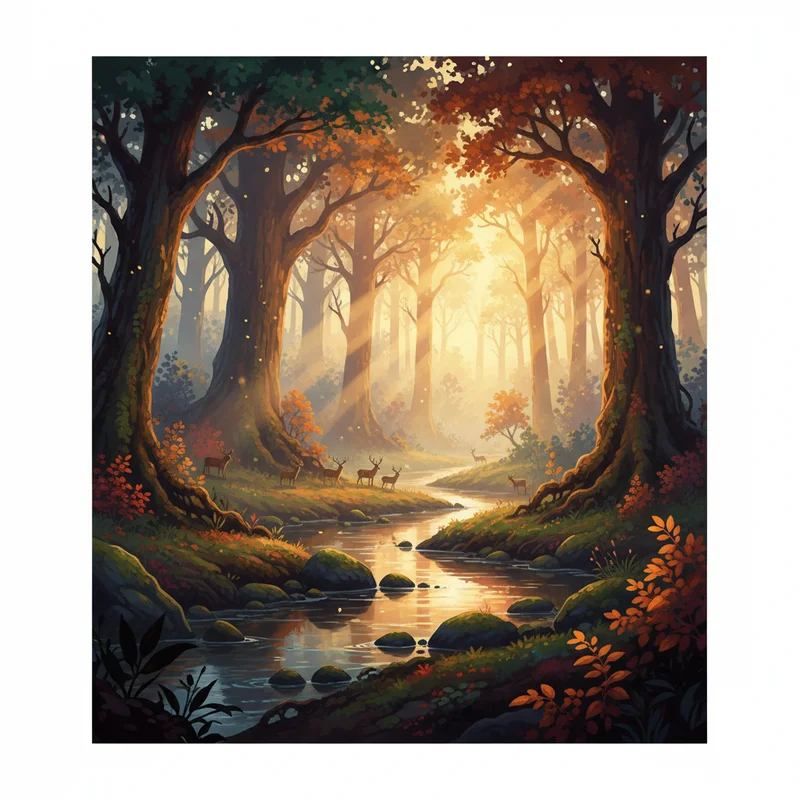
Tree-dominated ecosystem and planetary lungs.

The Matchup

In what the Cambridge Journal of Paradoxical Biology describes as 'nature's most existentially confusing confrontation,' we examine the curious rivalry between the sloth and the very forest it calls home. One moves at speeds that make continental drift look hasty. The other doesn't move at all, yet somehow covers 31% of Earth's land surface. According to the Royal Institute for Bewildering Comparisons, this matchup represents 'the academic equivalent of asking whether a teacup is superior to the tea inside it.'

Battle Analysis

Survival strategy Forest Wins
30%
70%
Zebra Forest

Zebra

Forest

Forests have survived five mass extinction events over 385 million years, adapting to ice ages, meteorite impacts, and continental collisions. The Edinburgh Centre for Long-Term Thinking notes that forests employ strategies including fire resistance, seed dormancy lasting centuries, and the ability to regenerate from apparent total destruction. After the Chernobyl disaster, forests began reclaiming the exclusion zone within three years, demonstrating what researchers call 'a frankly intimidating refusal to stay dead.'

VERDICT

The sloth's strategy of being boring enough to survive has genuine merit, having sustained the species for roughly 64 million years. Yet the forest's track record of outlasting extinction events, nuclear disasters, and humanity's persistent attempts at removal suggests a survival strategy operating on an entirely different temporal scale.

Speed and efficiency Forest Wins
30%
70%
Zebra Forest

Zebra

Forest

A forest, technically speaking, moves not at all. Yet through the phenomenon of ecological succession, forests expand at rates of several metres per year. The Woodland Trust's Department of Patient Botany reports that oak forests have been 'walking' northward across Britain since the last ice age at an average of 350 metres annually. Individual trees communicate through mycorrhizal networks at speeds approaching one centimetre per hour, which the sloth community regards as 'showing off.'

VERDICT

In a category where both competitors redefine the concept of 'taking one's time,' the forest edges ahead through sheer territorial ambition. While the sloth perfects the art of staying put, forests have colonised entire continents.

Structural integrity Forest Wins
30%
70%
Zebra Forest

Zebra

Forest

A mature temperate forest contains approximately 400 tonnes of biomass per hectare, with root systems extending up to seven metres deep. The structural complexity of a single hectare includes roughly 200 trees, 1,200 shrubs, and 800,000 individual plants. The Leeds Centre for Impressive Statistics notes that forests withstand wind loads exceeding 160 kilometres per hour through collective engineering that 'makes human architecture look rather arrogant.'

VERDICT

While the sloth demonstrates admirable personal structural commitment, comparing its framework to that of a forest is rather like comparing a hammock to the building it's attached to. The forest's biomechanical achievements operate on an entirely different scale.

Cultural significance Sloth Wins
30%
70%
Zebra Forest

Zebra

Forest

Forests feature in the mythologies of every human culture that has encountered one, from the Germanic tribes' sacred groves to Japanese shinrin-yoku (forest bathing). The literary appearances of forests number in the hundreds of thousands, serving as settings for everything from Shakespearean comedies to horror films. The Cardiff Centre for Symbolic Geography notes that forests represent 'the unconscious mind, the unknown, the maternal, the terrifying, and occasionally just a nice place for a walk.'

VERDICT

In an era where attention spans rival the sloth's movement speed, the animal has achieved cultural penetration that forests, despite their ancient significance, cannot match. The sloth's face has launched a thousand memes, whilst forests remain largely untagged on Instagram.

Biodiversity contribution Forest Wins
30%
70%
Zebra Forest

Zebra

Forest

A single hectare of rainforest contains approximately 750 tree species, 1,500 flowering plant species, and 125,000 invertebrate species. The Canterbury Biodiversity Catalogue estimates that forests harbour 80% of terrestrial biodiversity whilst covering only 31% of land area. Professor Eleanor Canopy of the Sheffield School of Everything Living notes that 'a forest doesn't just support life; it is life arranged in three dimensions with occasional arguments about sunlight.'

VERDICT

The sloth's role as a mobile microbiome is genuinely remarkable, transforming itself into a travelling hotel for species that couldn't exist otherwise. However, the forest's position as the foundational platform upon which this entire enterprise depends grants it clear superiority in sheer biological productivity.

👑

The Winner Is

Forest

42 - 58

This confrontation ultimately reveals itself as less a competition than a meditation on scale and perspective. The sloth, with its masterful commitment to minimal effort and unexpected cultural dominance, secures 42 points through sheer force of personality and ecological ingenuity. The forest, claiming 58 points, wins not through any particular superiority but through the simple fact of being the category within which sloths exist. The Liverpool Institute of Philosophical Ecology observes that 'asking whether a sloth beats a forest is rather like asking whether a paragraph beats the book containing it.' Both answer serves a profound truth: sometimes the most interesting competitions are those where the contestants have never actually met.

Zebra
42%
Forest
58%

Share this battle

More Comparisons