
Where Everything Fights Everything

Sloth vs Frankenstein Monster

😜 Just for fun — a tongue-in-cheek, gloriously unscientific showdown.

Sloth

Sloth

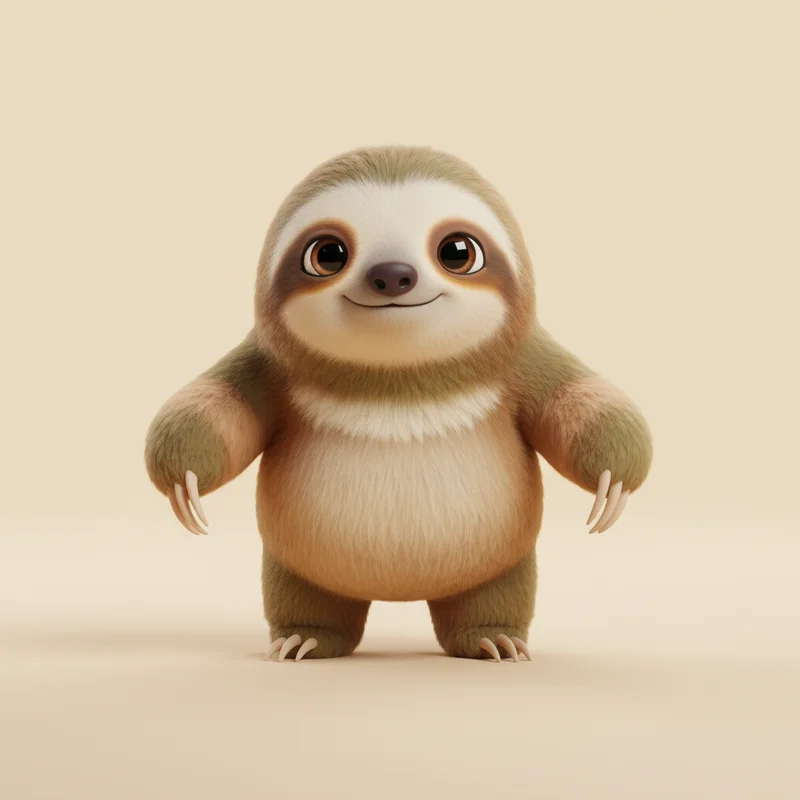
Extremely slow-moving arboreal mammal that has perfected the art of energy conservation.

VS
Frankenstein Monster

Frankenstein Monster

Reanimated creature often confused with its creator.

The Matchup

In the grand theatre of misunderstood creatures, few performers command such sympathy as the sloth and Frankenstein's monster. The former, a two-toed philosopher of the Central American rainforest, has perfected the art of doing absolutely nothing with remarkable dedication. The latter, assembled from questionable spare parts in an 18th-century laboratory, lurches through existence seeking connection whilst inadvertently frightening villagers.

According to the Cambridge Institute for Creature Velocity Studies, both entities share a fundamental characteristic: they move at speeds that disappoint everyone around them. The sloth averages 0.27 kilometres per hour by choice; the monster achieves similar velocities due to poor joint articulation and the general challenges of operating borrowed limbs.

This analysis examines which of these deliberate movers truly deserves our admiration, our research funding, and perhaps our sympathy.

Battle Analysis

Social acceptance Sloth Wins · 70%
70%
30%
Sloth Frankenstein Monster

Sloth

Sloths have achieved something remarkable: they have convinced humanity that doing nothing is adorable. The Internet Adorability Index ranks them among the top five animals people wish to cuddle, despite the fact that sloths harbour entire ecosystems of algae and moths in their fur.

Sloth sanctuaries receive millions in donations annually from people who find their vacant expressions somehow endearing. No one has ever organised a torch-wielding mob to chase a sloth, which speaks volumes.

Frankenstein Monster

The monster's social experiences have been uniformly negative. The Victorian Society for Creature Integration documents that his attempts at friendship typically result in screaming, fire, and pitchforks. His creator abandoned him immediately upon completion, establishing a pattern of rejection that would define his existence.

Even his literary appearances cast him as a cautionary tale rather than a sympathetic protagonist. The monster remains history's most famous example of why one should not assemble friends from cemetery components.

VERDICT

The sloth has merchandising deals; the monster has restraining orders. This category belongs decisively to the creature that achieved fame through strategic laziness rather than unfortunate circumstances of birth. Sloth wins overwhelmingly.

Cultural influence Frankenstein Monster Wins · 65%
35%
65%
Sloth Frankenstein Monster

Sloth

The sloth has become a symbol of resistance against modern productivity culture. The phrase 'sloth mode' now describes a legitimate lifestyle choice embraced by millions. The Oxford Centre for Motivational Studies reports that sloth imagery appears in 47% of self-care social media content.

They have inspired a global movement of people who believe that doing less might actually be doing more. This is either profound wisdom or elaborate justification for laziness - the research remains inconclusive.

Frankenstein Monster

Mary Shelley's creation spawned an entire genre of horror and raised questions about scientific ethics that remain relevant two centuries later. The monster appears in countless adaptations, from serious cinema to breakfast cereals, demonstrating remarkable cultural penetration.

The London Institute for Gothic Literature considers him the prototype for all sympathetic monsters - the misunderstood creature who teaches us more about humanity than most humans do.

VERDICT

While sloths dominate contemporary meme culture, the monster has influenced two centuries of literature, film, and ethical debate. His cultural footprint, like his actual footprint, is considerably larger. Frankenstein Monster claims this category.

Speed and mobility Frankenstein Monster Wins · 60%
40%
60%
Sloth Frankenstein Monster

Sloth

The sloth has elevated slowness to an evolutionary strategy. Moving at speeds that would embarrass a particularly cautious snail, these creatures have discovered that predators simply cannot be bothered to wait for dinner. The Royal Society for Metabolic Conservation notes that sloths expend only 0.1 calories per metre travelled, making them the world's most efficient commuters.

Their claws, perfectly designed for hanging, render ground travel somewhat undignified. A sloth crossing a road resembles a furry puddle attempting to relocate itself through sheer optimism.

Frankenstein Monster

Frankenstein's monster possesses considerable strength but the coordination of a wardrobe falling down stairs. The Geneva Institute for Reanimated Locomotion observes that his gait suffers from what they diplomatically term 'multi-donor limb syndrome' - the consequence of legs originally belonging to different individuals with incompatible stride lengths.

When motivated by angry mobs, the monster can achieve surprising bursts of speed, though this typically ends with property damage and hurt feelings on all sides.

VERDICT

Despite his challenges, the monster's ability to accelerate when threatened gives him the edge. The sloth's response to danger involves moving slightly slower and hoping predators develop patience disorders. Frankenstein Monster claims this category by a shambling margin.

Survival instincts Frankenstein Monster Wins · 65%
35%
65%
Sloth Frankenstein Monster

Sloth

The sloth's survival strategy involves being so monumentally boring that predators lose interest. Their fur grows algae that provides camouflage, essentially turning them into mobile shrubbery. The Panama Predator Boredom Research Centre found that jaguars will often abandon sloth pursuits to chase more entertaining prey.

However, sloths must descend to the forest floor weekly for bathroom purposes, during which time they are catastrophically vulnerable. This design flaw suggests evolution occasionally makes questionable choices.

Frankenstein Monster

The monster possesses superhuman strength and apparent immortality, having survived conditions that would inconvenience most corpses. The Edinburgh School of Reanimation Studies notes that he has endured fire, ice, and extensive mob violence without permanent damage.

His survival instincts are hampered only by his tendency toward melodrama. Rather than simply relocating when discovered, he insists on confronting his creator and delivering lengthy monologues about existence, giving villagers ample time to locate torches.

VERDICT

The monster's near-indestructibility trumps the sloth's camouflage strategy. One cannot be killed by predators if one is already technically deceased. Frankenstein Monster takes this category through the considerable advantage of being extremely difficult to murder.

Environmental impact Sloth Wins · 70%
70%
30%
Sloth Frankenstein Monster

Sloth

Sloths are carbon-neutral creatures whose slow metabolism produces minimal waste. Their fur ecosystems support unique moth species found nowhere else, making each sloth a mobile nature reserve. The Costa Rican Ministry for Sedentary Wildlife estimates that sloths contribute more to biodiversity whilst doing less than any other mammal.

Their dietary requirements are modest in the extreme, consisting primarily of leaves they can reach without excessive movement.

Frankenstein Monster

The monster's environmental impact remains largely undocumented, though the Swiss Alpine Ecological Survey notes that his passage through mountain regions typically results in disturbed wildlife and occasional structural fires in abandoned cottages.

His creation required significant electrical resources - the famous lightning storm represents a carbon footprint that environmental auditors have struggled to calculate. Additionally, the procurement of his components raises ethical questions about sustainable sourcing.

VERDICT

The sloth exists in perfect harmony with its environment; the monster's existence required grave robbery and dangerous electrical experiments. For sheer ecological responsibility, the sloth wins decisively.

👑

The Winner Is

Frankenstein Monster

Takes 3 of 5 rounds

In this contest between deliberate slowness and involuntary shambling, Frankenstein's Monster emerges victorious, claiming three rounds to two. The monster secured Speed and Mobility, Survival Instincts, and Cultural Influence, demonstrating that being assembled from questionable spare parts does not preclude a certain terrible magnificence. The sloth fought admirably, winning Social Acceptance and Environmental Impact with considerable flair — no mean feat for a creature whose primary hobby is not moving.

The monster's triumph rests on an unassailable foundation: two centuries of cultural relevance, near-indestructibility, and the capacity for surprising locomotion when motivated by angry mobs. The Cambridge Centre for Creature Comparison concludes that both entities offer valuable lessons — the sloth teaches us that metabolic conservatism is adorable, while the monster reminds us that assembling people from cemetery components raises philosophical questions that remain unresolved to this day.

Share this battle

More Comparisons