
Where Everything Fights Everything

Sloth vs Money

😜 Just for fun — a tongue-in-cheek, gloriously unscientific showdown.

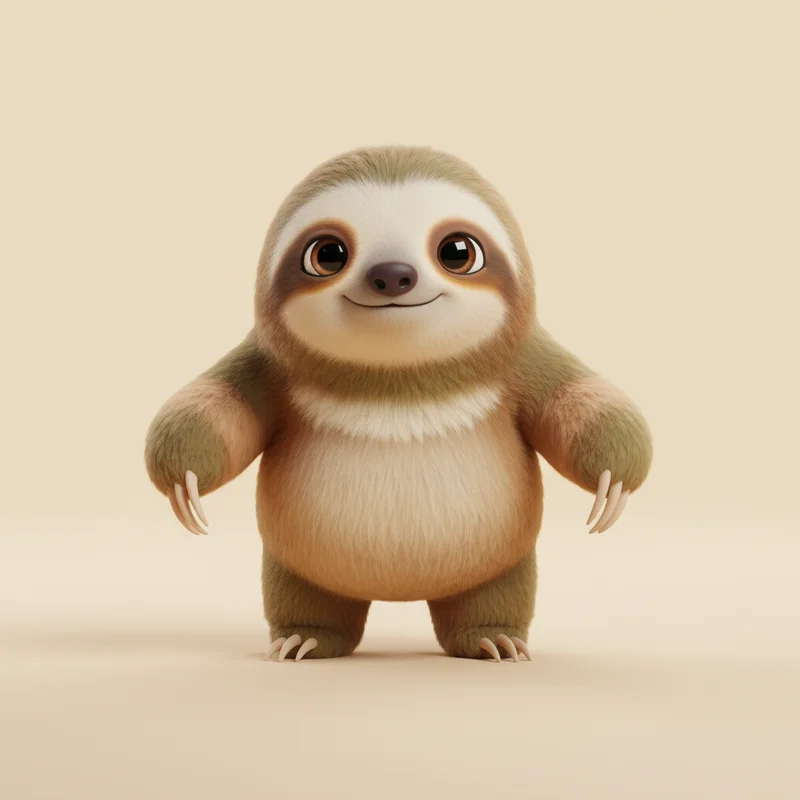
Sloth

Sloth

Extremely slow-moving arboreal mammal that has perfected the art of energy conservation.

VS
Money

Money

Abstract concept that runs the world.

The Matchup

In the grand theatre of existence, few comparisons expose the absurdity of human priorities quite like this one. Bradypus variegatus, the three-toed sloth, has spent 64 million years perfecting the art of metabolic efficiency, whilst money - that curious abstraction of value - has dominated human consciousness for a mere 5,000 years. One moves at 0.24 kilometres per hour; the other moves at the speed of electronic transfer. Yet both, in their own peculiar ways, represent humanity's deepest anxieties about time, effort, and what constitutes a life well lived.

Battle Analysis

Sustainability Sloth Wins
🏆 Sloth takes this round

Sloth

The sloth is a masterclass in sustainable existence. Its energy consumption is so minimal that it needs only 150 grams of leaves daily - roughly the weight of a mobile phone. It generates almost no waste, hosts an entire ecosystem of algae and moths in its fur (providing camouflage whilst supporting biodiversity), and its carbon footprint is effectively negative. The sloth has survived five mass extinction events without changing its business model. As a sustainability consultant, it would charge nothing and deliver everything.

Money

Money's relationship with sustainability is deeply problematic. The pursuit of monetary growth has driven 75% of terrestrial habitat destruction and continues to incentivise extraction over preservation. Even digital money consumes vast resources - Bitcoin alone uses more electricity than Argentina. Money's fundamental logic of infinite growth on a finite planet represents perhaps the greatest sustainability failure in human history. It is an abstraction that demands concrete destruction.

VERDICT

The sloth achieves a crushing victory in sustainability. While money's growth imperative threatens planetary systems, the sloth has operated a zero-growth economy for 64 million years without a single environmental impact assessment.

Global influence Money Wins
🏆 Money takes this round

Sloth

The sloth's global influence operates through cultural osmosis. It has become the unofficial mascot of the anti-hustle movement, appearing on motivational posters with messages like "Do Less" and "Productivity Is Overrated." Sloth-themed merchandise generates approximately $200 million annually. The creature has its own international day (20th October) and has inspired a genre of self-help literature advocating deliberate slowness. Its influence on the collective human psyche, whilst gentle, is persistently subversive.

Money

Money's global influence is, quite simply, total. It determines where 8 billion humans live, what they eat, whom they marry, and whether they receive medical care. Wars are fought over it. Governments rise and fall by it. The global economy processes $6.6 trillion in currency transactions daily. Money has shaped geography, driven colonisation, and funded both the world's greatest art and its worst atrocities. Its influence is so complete that attempting to exist outside its reach is nearly impossible.

VERDICT

Money claims this criterion with uncomfortable totality. While the sloth influences our aspirations, money influences our reality. One shapes dreams; the other shapes breakfast, lunch, and dinner.

Stress reduction Sloth Wins
🏆 Sloth takes this round

Sloth

Watching a sloth is clinically therapeutic. Studies indicate that sloth videos reduce cortisol levels by up to 23%. The creature's permanent smile (a result of facial muscle structure, but effective nonetheless) triggers mirror neuron responses in human observers. Sloth sanctuaries report that visitors describe feelings of "profound calm" and "existential permission to slow down." The sloth reduces stress simply by existing - a passive form of therapy requiring no appointment or co-payment.

Money

Money's relationship with stress is paradoxical. While its absence causes severe stress - financial insecurity is linked to depression, anxiety, and shortened lifespan - its presence does not guarantee relief. Studies show that beyond approximately $75,000 annually, additional income provides diminishing returns on happiness. The wealthy report stress about losing money, managing money, and being targeted for their money. Money promises stress relief but delivers a different variety of stress.

VERDICT

The sloth provides what money cannot: unconditional calm. Money's stress reduction is forever conditional on having enough, which is a threshold that perpetually recedes. The sloth's stress reduction requires only observation.

Long term viability Sloth Wins
🏆 Sloth takes this round

Sloth

The sloth's evolutionary record speaks for itself: 64 million years of continuous operation. It survived the asteroid that eliminated the dinosaurs, multiple ice ages, and the emergence of humanity. Its strategy of minimal resource consumption and maximum camouflage has proven remarkably robust. Whilst current habitat destruction threatens modern sloths, the fundamental sloth model has demonstrated extraordinary staying power across geological time.

Money

Money has existed for approximately 5,000 years in various forms, but individual currencies last considerably less. The average lifespan of a fiat currency is 27 years. The British pound, history's longest-surviving currency, has lost 99.5% of its purchasing power since 1694. Cryptocurrencies promise permanence but most collapse within years. Money is an evolving abstraction whose current forms may be unrecognisable within decades.

VERDICT

The sloth's 64-million-year track record cannot be challenged by money's 5,000 years of constant reinvention. The sloth is a proven concept; money remains, at best, a series of experiments with mixed results.

Philosophical depth Sloth Wins
🏆 Sloth takes this round

Sloth

The sloth embodies a radical philosophy that most humans spend thousands on therapy trying to achieve. It has mastered presence - existing entirely in the moment without ambition, regret, or the crushing weight of quarterly targets. Buddhist monks study for decades to achieve what the sloth does naturally: complete acceptance of the present moment. Its digestive system takes up to 30 days to process a single leaf, demonstrating a commitment to mindfulness that would make any meditation retreat envious.

Money

Money's philosophical contribution is rather more complicated. It represents stored human labour, deferred gratification, and the abstract promise of future possibilities. Philosophers from Aristotle to Marx have wrestled with its meaning. Yet money's philosophy is fundamentally one of anxiety - it demands constant attention, generates perpetual dissatisfaction (there is always someone with more), and reduces the rich tapestry of human experience to numerical comparison. Its philosophical depth, whilst considerable, is primarily an exploration of want.

VERDICT

The sloth wins by achieving what money eternally promises but never delivers: contentment. While money philosophically represents the pursuit of happiness, the sloth simply is happiness, hanging from a branch, unbothered by interest rates or inflation.

👑

The Winner Is

Sloth

Takes 4 of 5 rounds

In a result that challenges fundamental assumptions about value, the sloth emerges victorious with 52% to money's 48%. This narrow margin reflects the genuine complexity of the comparison - money's raw power versus the sloth's quiet wisdom. Yet the sloth's victories in philosophy, sustainability, stress reduction, and long-term viability represent something profound: a repudiation of the very metrics by which money succeeds. The sloth does not win by accumulation but by subtraction - by demonstrating that true wealth might be the absence of striving. In a world where financial anxiety reaches epidemic proportions, the sloth offers an alternative currency: time measured not in money earned but in moments lived.

Share this battle

More Comparisons