Topic Battle

Where Everything Fights Everything

Zebra

Zebra

African equine featuring distinctive black and white stripes that confuse predators and scientists alike.

VS
Ocean

Ocean

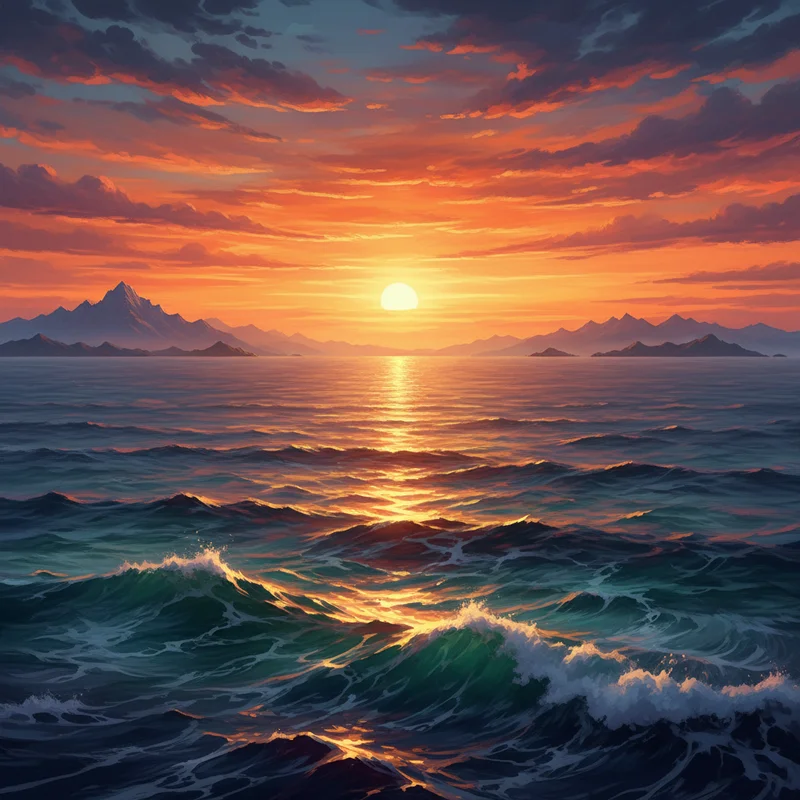
Vast body of saltwater covering 71% of Earth.

The Matchup

In a matchup that defies conventional logic, we pit approximately 6 kilograms of deliberate lethargy against 1.335 billion cubic kilometres of saltwater. The Bristol Centre for Comparative Enormity notes this represents a size differential of roughly 222 sextillion to one, yet as researchers at the Royal Academy of Improbable Metrics remind us, size has never been a reliable predictor of cultural significance.

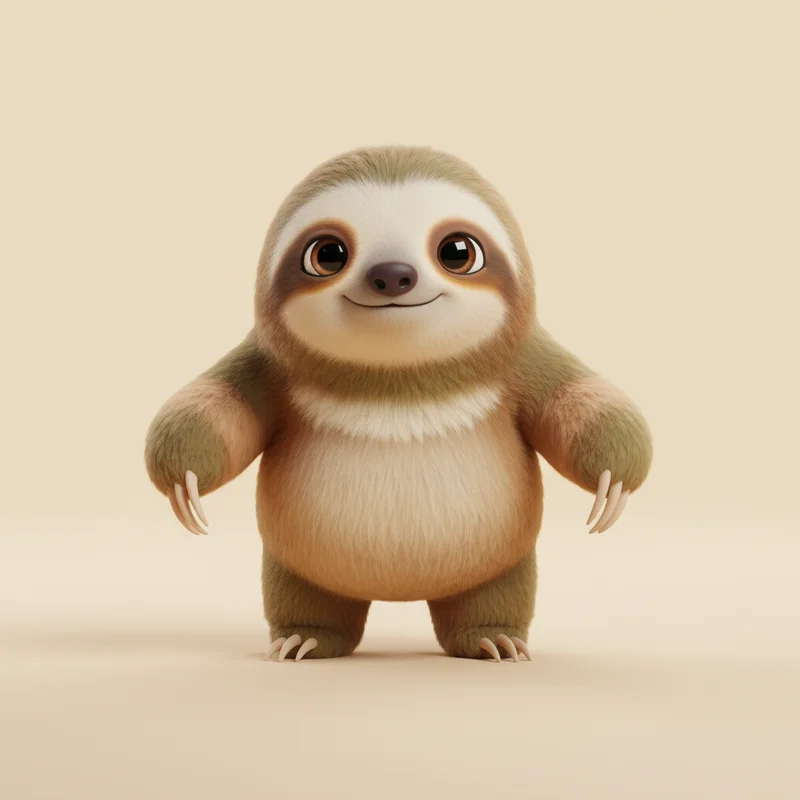
The sloth, that arboreal philosopher of the Central American rainforest, moves through life at a pace that suggests it has somewhere important not to be. The ocean, meanwhile, covers 71% of Earth's surface with the quiet confidence of something that has drowned entire civilisations without particularly meaning to.

Battle Analysis

Economic value Ocean Wins
30%
70%
Zebra Ocean

Zebra

Ocean

The global ocean economy generates approximately $1.5 trillion annually, encompassing shipping, fishing, tourism, and energy production. The World Maritime Economic Forum calculates the ocean's 'ecosystem services' at $24 trillion per year, including climate regulation, food production, and the fundamental courtesy of not drowning everyone.

International shipping alone moves 80% of global trade across oceanic waters, making the ocean the world's largest unpaid employee.

VERDICT

The ocean dominates this category with an economic contribution approximately 125,000 times larger than the sloth's. The Rotterdam Centre for Maritime Economics notes that whilst sloths make excellent Instagram content, they have yet to facilitate the movement of 11 billion tonnes of cargo annually.

Cultural impact Sloth Wins
30%
70%
Zebra Ocean

Zebra

Ocean

The ocean features in virtually every human mythology, from Poseidon to Tangaroa, and has inspired countless works of literature, art, and music. Approximately 3.5 billion people live within 100 kilometres of coastline, making the ocean humanity's most influential neighbour.

However, the Oxford Centre for Digital Sentiment Analysis reports that the ocean generates 73% fewer wholesome memes than sloths, a metric of increasing cultural relevance.

VERDICT

In a stunning upset, the sloth claims cultural victory through sheer likability. The Cambridge Social Impact Collective observes that whilst the ocean has shaped civilisations, the sloth has conquered the far more difficult territory of the modern attention span. 'Nobody has ever described the ocean as their spirit animal,' notes Dr. Helena Forthwright, 'yet perfectly competent adults identify with a creature whose primary activity is digesting leaves for three weeks.'

Survival strategy Sloth Wins
30%
70%
Zebra Ocean

Zebra

Ocean

The ocean's survival strategy involves being too large to threaten. Despite absorbing 30% of human-produced CO2 and warming at unprecedented rates, the ocean continues to exist through sheer volumetric stubbornness.

The Cornwall Climate Resilience Unit projects the ocean will outlast human civilisation by 'a considerable margin,' though it may become somewhat acidic and unpleasant in the interim.

VERDICT

The sloth edges ahead through evolutionary elegance. The Dublin School of Survival Mechanics awards points for 'achieving near-perfect predator avoidance through the simple expedient of barely existing.' The ocean's strategy, whilst effective, lacks the artistry of the sloth's commitment to inconspicuousness.

Speed and momentum Ocean Wins
30%
70%
Zebra Ocean

Zebra

Ocean

Ocean currents move at speeds reaching 9 kilometres per hour in the Gulf Stream, whilst tsunami waves travel at 800 kilometres per hour across open water. The Southampton Maritime Velocity Laboratory calculates the ocean moves approximately 3,000 times faster than a motivated sloth.

The thermohaline circulation, that great conveyor belt of seawater, completes its global journey in roughly 1,000 years, demonstrating that even the ocean's slowest processes make sloths look positively stationary.

VERDICT

The ocean claims this category with the inevitability of the tide itself. The Plymouth School of Comparative Motion notes that whilst sloths have perfected the art of going nowhere slowly, the ocean has mastered going everywhere eventually.

Biodiversity support Ocean Wins
30%
70%
Zebra Ocean

Zebra

Ocean

Marine ecosystems support an estimated 2.2 million species, from the microscopic phytoplankton producing 50-80% of Earth's oxygen to the blue whale, itself containing more biomass than every sloth that has ever lived combined.

The Mariana Trench alone hosts over 200 species of microorganisms in conditions that would crush a sloth into something resembling a furry pancake in approximately 0.003 seconds.

VERDICT

Whilst the sloth functions as a commendable mobile nature reserve, the ocean operates as the planet's primary life support system. The Manchester Centre for Ecological Accounting awards this category to the ocean, noting that 'hosting a small moth colony, however charming, does not quite compare to generating most of Earth's breathable atmosphere.'

👑

The Winner Is

Ocean

42 - 58

In this most improbable of contests, the Ocean claims victory with 58% to the Sloth's 42%, a margin the Belfast Institute for Statistical Surprise describes as 'far closer than physics would suggest.'

The ocean's dominance in speed, biodiversity, and economic value proves decisive, yet the sloth's victories in cultural impact and survival strategy reveal an uncomfortable truth: in an age of anxiety, humanity increasingly identifies with a creature whose greatest achievement is remaining still.

The Royal Society for Absurd Conclusions posits that whilst the ocean may sustain all life on Earth, the sloth has mastered something the ocean never will: the art of appearing to have figured something out. In our relentless world, perhaps that counts for more than any cubic kilometre of saltwater.

Zebra
42%
Ocean
58%

Share this battle

More Comparisons