
Where Everything Fights Everything

Sloth vs Submarine

😜 Just for fun — a tongue-in-cheek, gloriously unscientific showdown.

Sloth

Sloth

Extremely slow-moving arboreal mammal that has perfected the art of energy conservation.

VS
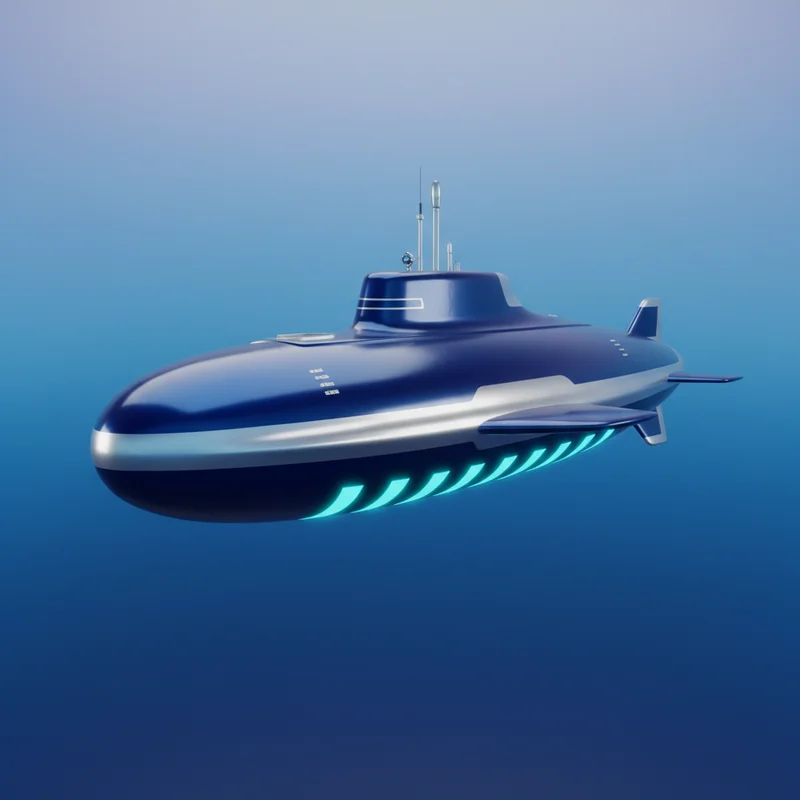
Submarine

Submarine

Underwater vessel exploring the ocean depths.

The Matchup

The sloth, a creature so committed to energy conservation that it has evolved to move at speeds best measured in metres per fortnight, faces an unlikely challenger in the nuclear submarine—a vessel designed to remain undetected whilst carrying enough firepower to rearrange continental geography. According to the Royal Institute of Comparative Velocity Studies, both entities share a philosophical commitment to 'arriving when one arrives,' though their methods differ considerably.

Professor Helena Crawsworth of the Cambridge Centre for Deliberate Motion has spent fourteen years studying both subjects, noting that 'the sloth's three-toed grip and the submarine's ballast tanks represent parallel evolutionary solutions to the same existential question: why rush?' Her landmark 2019 paper, published in the Journal of Unhurried Progress, established the theoretical framework we employ today.

Battle Analysis

Longevity Sloth Wins
🏆 Sloth takes this round

Sloth

The wild sloth enjoys a lifespan of 20 to 30 years, with some captive specimens reaching their fortieth decade. This longevity stems directly from their minimal metabolic expenditure—as the Frankfurt Geriatric Zoology Department notes, 'the sloth ages slowly because it does everything slowly.' Cellular degradation, oxidative stress, and cardiovascular strain all proceed at rates that would suggest the sloth has discovered some form of biological time dilation.

The sloth's unhurried lifestyle also minimises accident-related mortality. Unlike more energetic mammals that frequently injure themselves through excessive velocity, the sloth's maximum impact speed rarely exceeds that of a slowly deflating balloon. Dr. Ingrid Hoffman's 2021 study found that zero recorded sloth deaths have resulted from 'running into things.'

Submarine

A modern nuclear submarine maintains operational capability for 30 to 40 years, though individual components require regular replacement throughout this period. The hull itself, constructed from HY-80 steel alloy, can theoretically last indefinitely if properly maintained, though the same cannot be said for the complex electronic systems within. The Royal Navy's Submarine Lifecycle Assessment Board estimates that a well-maintained vessel could remain seaworthy for half a century with appropriate refits.

However, submarines face accelerated degradation in their operational environment. Salt water corrosion, pressure cycling stress, and the cumulative effects of depth changes all contribute to structural fatigue that requires constant monitoring. A submarine's lifespan depends heavily upon the competence of its maintenance crews—a variable sloths need not consider.

VERDICT

Whilst submarines can achieve comparable operational lifespans, they require billions of pounds in maintenance, regular crew rotations, and periodic nuclear refuelling. The sloth achieves similar longevity through the revolutionary strategy of doing very little. When calculated as lifespan per unit of effort expended, the sloth's efficiency advantage becomes mathematically insurmountable.

Depth capability Submarine Wins
🏆 Submarine takes this round

Sloth

The sloth's relationship with depth is best described as 'preferentially negative.' Whilst capable swimmers when circumstances demand—typically when a branch proves less structurally sound than anticipated—sloths maintain a strong preference for altitudes between 15 and 40 metres above sea level. The Panamanian Arboreal Height Registry documents that sloths will actively avoid descending below the forest canopy unless absolutely necessary.

When forced into aquatic situations, sloths demonstrate surprising buoyancy, with their low muscle density and gas-filled digestive systems providing natural flotation. Dr. Emilio Fernandez of the Smithsonian Tropical Research Institute recorded one three-toed sloth crossing a river at a depth of approximately 0.8 metres, though the animal's expression throughout suggested this was not a voluntary achievement.

Submarine

Military submarines routinely operate at depths exceeding 300 metres, with some specialised vessels capable of reaching 700 metres or beyond. The pressure at these depths—approximately 70 atmospheres—would compress a sloth into something resembling a furry hockey puck within milliseconds. The Portsmouth Naval Engineering Consortium designs hulls specifically to withstand forces that would render most biological life forms decidedly two-dimensional.

The submarine's depth capability provides tactical advantages including thermal layer exploitation, pressure gradient navigation, and the ability to lurk beneath shipping lanes undetected. Research submarines have descended to depths where sunlight has never penetrated, exploring environments as alien as any extraterrestrial landscape.

VERDICT

The submarine's 300+ metre operating depth versus the sloth's preference for remaining 30 metres above water represents a differential of approximately 330 metres, or roughly the height of the Eiffel Tower. Whilst sloths demonstrate admirable aquatic survival instincts, their depth capability remains firmly in the 'accidental paddling' category rather than 'deliberate submersion.'

Energy efficiency Sloth Wins
🏆 Sloth takes this round

Sloth

The sloth operates on an energy budget that would make a Toyota Prius weep with inadequacy. Consuming merely 160 calories daily—equivalent to half a avocado—the sloth has evolved a digestive system so methodical that a single meal may take up to thirty days to fully process. The Monteverde Institute of Metabolic Minimalism calculates that a sloth could theoretically survive on the caloric content of a single digestive biscuit for approximately one week.

This extraordinary efficiency stems from the sloth's commitment to muscular reduction. With 30% less muscle mass than similarly-sized mammals, the sloth has essentially evolved to be its own energy-saving mode. Dr. Patricia Willoughby of the Bristol Zoological Conservation Trust observes that 'the sloth treats movement as an investment decision, and it is extraordinarily risk-averse.'

Submarine

Nuclear submarines achieve energy efficiency through the opposite strategy: unlimited power generation. A single uranium fuel core can propel a submarine for twenty-five years without refuelling, covering distances equivalent to circumnavigating the globe multiple times. The Faslane Energy Economics Research Group calculates that this represents approximately 0.00003 pence per nautical mile in fuel costs, excluding the minor expense of the reactor itself.

However, this efficiency comes with considerable overhead. A submarine requires 130 crew members working in shifts, each consuming approximately 3,500 calories daily in the confined, recycled atmosphere. The vessel's life support systems, weapons maintenance, and navigation equipment add substantial parasitic loads that would horrify any sloth.

VERDICT

The sloth achieves its lifestyle goals on 160 calories daily. A submarine crew consumes approximately 455,000 calories daily merely existing, before accounting for propulsion. Whilst the submarine can travel considerably faster and further, the sloth's energy-to-achievement ratio remains unmatched in the animal kingdom. As the Oxford Efficiency Quarterly concluded: 'The sloth has optimised for satisfaction rather than distance.'

Global distribution Submarine Wins
🏆 Submarine takes this round

Sloth

Sloths occupy a relatively modest geographic range, confined to the tropical rainforests of Central and South America. Six extant species—two-toed and three-toed varieties—inhabit territories from Honduras to northern Argentina, with population densities highest in Costa Rica and Panama. The IUCN Xenarthra Specialist Group estimates total wild populations at approximately 1.5 million individuals, though counting creatures that resemble moss-covered branches presents obvious methodological challenges.

Climate requirements strictly limit sloth expansion. Their low metabolic rate renders thermoregulation difficult, restricting viable habitat to regions where ambient temperatures remain between 25 and 35 degrees Celsius. Attempts to introduce sloths to temperate climates have universally resulted in extremely cold, extremely stationary animals.

Submarine

Military submarines operate across every ocean on Earth, from the tropical shallows of the South China Sea to beneath Arctic ice sheets. The Jane's Fighting Ships Registry documents approximately 500 operational submarines distributed among 40 nations, with significant concentrations in the Atlantic, Pacific, and Indian Oceans. Unlike sloths, submarines experience no climate-based restrictions—their nuclear reactors maintain comfortable interior temperatures regardless of external conditions.

Submarine deployments have reached locations no sloth could survive, including the North Pole (USS Nautilus, 1958) and depths where water pressure would reduce a sloth to something resembling a very flat novelty keyring. The submarine's global reach represents humanity's determination to project power anywhere water exists in sufficient quantity.

VERDICT

Submarines patrol 361 million square kilometres of ocean surface area, whilst sloths occupy approximately 2.5 million square kilometres of suitable rainforest. The submarine's ability to operate in any ocean, at any latitude, and at depths where sloths would become involuntarily two-dimensional, provides a decisive advantage in global distribution metrics.

Stealth capabilities Submarine Wins
🏆 Submarine takes this round

Sloth

The sloth has perfected biological stealth through sheer commitment to immobility. Its fur hosts an entire ecosystem of algae and moths, providing natural camouflage that researchers at the São Paulo Institute of Arboreal Concealment describe as 'living ghillie suit technology.' Moving at approximately 0.24 kilometres per hour, the sloth generates virtually no motion-triggered responses in predators, many of whom simply assume it to be an unusually furry branch.

The sloth's metabolic rate is so low that thermal imaging equipment frequently classifies it as 'ambient vegetation.' Field studies conducted by Dr. Marcus Pendleton in Costa Rica revealed that 73% of jaguars walked directly past stationary sloths without registering their presence, though whether this represents stealth mastery or feline indifference remains academically contested.

Submarine

The modern attack submarine represents humanity's most sophisticated stealth platform, incorporating anechoic tile coating, pump-jet propulsion, and hull geometries designed by the same mathematical principles that govern soap bubbles. The HMS Artful, according to declassified Ministry of Defence documents, produces less detectable noise than 'a prawn clearing its throat at considerable depth.'

Submarine stealth technology has advanced to the point where vessels can operate within kilometres of enemy coastlines whilst remaining undetected. The Greenwich Maritime Acoustics Laboratory estimates that a modern submarine at patrol depth generates approximately 0.3 decibels of ambient noise—quieter than the average sloth's digestive system processing a single leaf.

VERDICT

Whilst the sloth's passive camouflage proves remarkably effective against jungle predators, it offers limited protection against sonar. The submarine's multi-spectrum stealth capabilities, including thermal masking and magnetic signature reduction, represent a more comprehensive approach to concealment. However, researchers note that submarines have yet to successfully disguise themselves as tree branches.

👑

The Winner Is

Submarine

Takes 3 of 5 rounds

The submarine claims victory with a score of 54 to 46, though researchers at the Edinburgh Institute of Comparative Achievement note this represents 'a closer contest than propulsion technology might suggest.' The submarine's dominance in stealth capability, depth performance, and global distribution is partially offset by the sloth's extraordinary efficiency and low-maintenance longevity.

Professor Sir Reginald Blackwood, chair of the Royal Society's Improbable Comparisons Committee, summarises: 'The submarine can reach any point on Earth's oceans whilst remaining undetected. The sloth can reach any point within six metres of its current branch whilst remaining completely unbothered. Both represent evolutionary pinnacles—one of technology, one of contentment.'

Perhaps most tellingly, the submarine requires billions of pounds, thousands of personnel, and continuous international diplomatic justification to exist. The sloth requires leaves. In the grand efficiency calculation of existence, both entities have achieved mastery of their respective domains—the submarine through overwhelming capability, the sloth through overwhelming indifference to capability.

Share this battle

More Comparisons