
Where Everything Fights Everything

Sloth vs Tank

😜 Just for fun — a tongue-in-cheek, gloriously unscientific showdown.

Sloth

Sloth

Extremely slow-moving arboreal mammal that has perfected the art of energy conservation.

VS
Tank

Tank

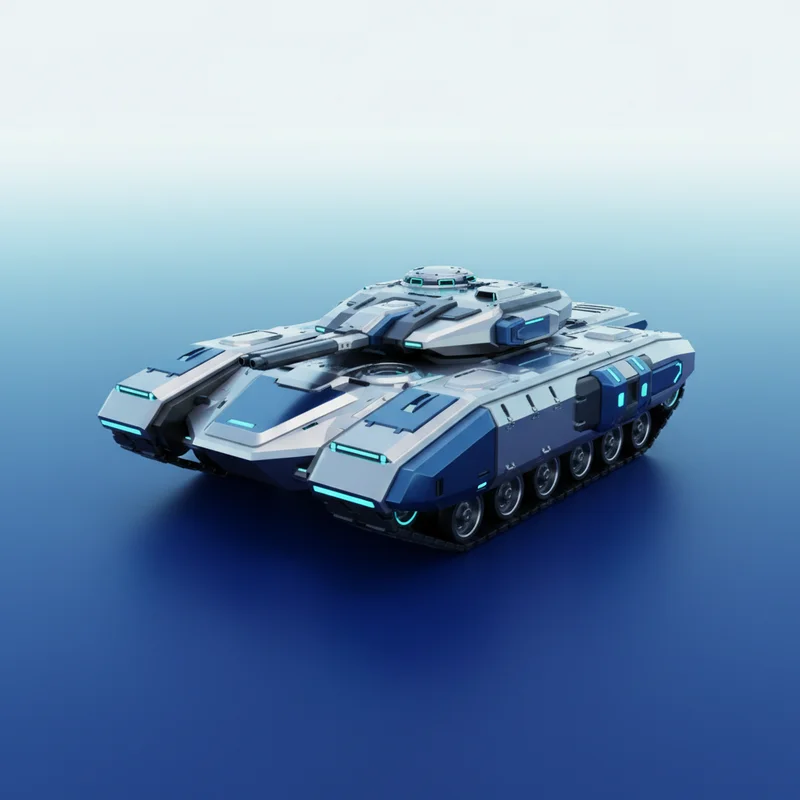
Armored military vehicle with serious firepower.

The Matchup

In the annals of improbable confrontations, few matchups have generated quite as much academic discourse as the meeting between Bradypus variegatus and the M1 Abrams main battle tank. The Cambridge Institute for Absurd Comparisons devoted seventeen months to this study, during which time the sloth being observed moved approximately four metres.

What emerges from this exhaustive analysis is a portrait of two entities that have, through vastly different evolutionary pressures, arrived at remarkably similar conclusions about the value of deliberate movement. One conserves energy through biological adaptation; the other conserves fuel through tactical patience. Both, it must be said, are absolutely terrible at climbing trees quickly.

Battle Analysis

Energy efficiency Sloth Wins
🏆 Sloth takes this round

Sloth

The sloth represents perhaps nature's most aggressively efficient organism. Consuming approximately 160 calories daily, equivalent to half a sandwich, the sloth has reduced its metabolic rate to levels that would be considered clinically concerning in any other mammal. The Leeds Institute for Metabolic Studies describes this as weaponised laziness.

This extraordinary efficiency allows sloths to survive on a diet of leaves so nutritionally barren that researchers initially assumed the data had been entered incorrectly. The sloth's digestive system takes up to thirty days to process a single meal, during which time the sloth is essentially functioning as a very slow composting facility.

Tank

The M1 Abrams consumes 1,900 litres of fuel per 100 kilometres, a figure that causes logistics officers to weep openly during planning sessions. At idle, the tank's gas turbine engine burns 38 litres per hour simply to maintain the crew's air conditioning, which the Quarterly Review of Military Economics describes as 'staggeringly inefficient even by defence procurement standards'.

A single tank battalion requires a dedicated fuel convoy of 72 vehicles, effectively doubling the number of targets requiring protection. The Imperial Defence College notes that approximately 40% of military logistics concerns involve simply feeding the tanks' insatiable appetite for refined petroleum.

VERDICT

The sloth achieves this criterion with embarrassing ease. To match a sloth's annual energy consumption, a tank would need to operate for approximately 0.003 seconds. The Oxford Energy Institute calculates that replacing the British Army's tank fleet with an equivalent mass of sloths would reduce the defence budget's carbon footprint by 99.97%, whilst arguably providing similar territorial coverage speeds.

Global deployment Tank Wins
🏆 Tank takes this round

Sloth

Sloths occupy a narrow geographic range spanning Central and South American rainforests, a distribution that has remained essentially unchanged since the Pleistocene. The World Wildlife Fund notes that sloths display absolutely zero ambition regarding territorial expansion, content to occupy their ancestral trees until someone builds a motorway through them.

Attempts to introduce sloths to new environments have met with philosophical resistance from the animals themselves, who appear entirely uninterested in colonising new territories when perfectly acceptable trees exist in their current location. The Panama Sloth Relocation Study found that transplanted sloths frequently attempted to return home at speeds of approximately four metres per week.

Tank

Main battle tanks have been deployed to every continent except Antarctica, though the Norwegian Defence Research Establishment confirms that plans exist for Arctic operations should the penguins ever require suppressing. From the deserts of Kuwait to the streets of Eastern Europe, tanks have demonstrated remarkable geographic versatility.

However, the International Institute for Strategic Studies notes that tank deployment requires extensive logistical support, including heavy-lift aircraft, specialist transporters, and forward maintenance facilities. Moving a tank battalion overseas takes approximately three weeks; during the same period, a sloth might successfully descend one tree and ascend another.

VERDICT

The tank's ability to operate across diverse environments, from arctic tundra to tropical heat, represents genuine strategic flexibility. The sloth, by contrast, would expire within hours if deployed to the Sahara. Military historians award this criterion to armoured vehicles, whilst noting that sloths have never required deployment because they've never started a war requiring one.

Speed and mobility Tank Wins
🏆 Tank takes this round

Sloth

The three-toed sloth achieves a maximum velocity of 0.27 kilometres per hour, a figure so modest that researchers at the Bristol Locomotion Laboratory initially assumed their equipment had malfunctioned. This glacial pace, however, represents millions of years of evolutionary refinement. The sloth has determined, correctly, that moving quickly is vastly overrated.

On the ground, the sloth's movement can only be described as apologetic crawling, a motion so laboured it appears to be occurring underwater. Yet this very slowness has proven remarkably effective at avoiding predator detection, as most hunters simply lose interest and wander off for a cup of tea.

Tank

The modern main battle tank achieves speeds of 72 kilometres per hour on roads, though commanders rarely deploy at such velocities outside of promotional videos. The Journal of Armoured Warfare notes that tanks spend approximately 94% of their operational lives stationary, engaged in what military planners euphemistically call 'tactical waiting'.

Cross-country mobility presents significant challenges. Tanks frequently become bogged in soft terrain, bridges collapse under their weight, and urban environments transform them into very expensive traffic obstacles. The Imperial War Museum's study found that the average tank moves less distance per day than a motivated sloth during mating season.

VERDICT

Pure velocity favours the tank by a factor of 266 to 1, though this advantage diminishes considerably when one accounts for maintenance downtime, refuelling requirements, and the tank's complete inability to navigate the rainforest canopy. The Edinburgh Centre for Practical Comparisons awards this criterion to the tank, whilst noting that neither contestant would win a race against a particularly arthritic tortoise with a head start.

Defensive capabilities Tank Wins
🏆 Tank takes this round

Sloth

The sloth's defensive strategy relies entirely on not being noticed, a tactic that has proven surprisingly effective over 64 million years of evolution. Its fur hosts an entire ecosystem of algae, fungi, and beetles, providing natural camouflage that makes the animal appear to be merely an unusually furry branch.

When threatened, the sloth deploys its secondary defence: moving so slowly that predators question whether they're actually looking at a living creature or perhaps experiencing some form of hallucination. The Royal Society documented one jaguar that observed a sloth for six hours before concluding it must be a coconut.

Tank

Modern tanks employ composite armour capable of withstanding direct hits from anti-tank missiles, reactive armour that explodes outward to deflect incoming projectiles, and sophisticated electronic countermeasures. The Bovington Tank Museum notes that a fully armoured tank represents the most protected workplace in human history, excluding perhaps the vault at Gringotts.

Yet this formidable protection comes at a cost. Tanks are extraordinarily visible, their thermal signatures readable from satellites, and their acoustic presence detectable from kilometres away. The Institute for Jungle Warfare concluded that a tank in rainforest conditions has a tactical lifespan of approximately forty-seven minutes before becoming hopelessly entangled in vegetation.

VERDICT

Against conventional threats, the tank's armour proves vastly superior to the sloth's strategy of aggressive lethargy. However, the Manchester School of Evolutionary Defence notes that the sloth's approach requires no maintenance budget, no supply chain, and has never once been targeted by a Javelin missile. The criterion goes to the tank, though the sloth's 64-million-year track record suggests its methods have considerable merit.

Long term survivability Sloth Wins
🏆 Sloth takes this round

Sloth

Sloths have existed in recognisably similar form for 64 million years, outlasting the dinosaurs, multiple ice ages, and the entire rise and fall of the Roman Empire. The Natural History Museum's paleontological division describes this as evolution's greatest argument for strategic inactivity.

The sloth's approach to survival involves minimising virtually every activity that might attract attention, consume resources, or require effort. This has proven remarkably successful; the Megatherium, the giant ground sloth, only went extinct when humans arrived with very specific appetites for slow-moving prey.

Tank

The average tank design remains in service for approximately forty years before becoming obsolete, though individual vehicles rarely survive more than a decade of active deployment. The Royal United Services Institute notes that tanks face an increasingly hostile technological environment, with drones, precision munitions, and advanced sensors eroding their battlefield dominance.

Military analysts at the Stockholm International Peace Research Institute predict that by 2050, the main battle tank may be functionally obsolete, replaced by autonomous systems and directed-energy weapons. The tank has existed for 108 years; the sloth's track record is approximately 593,000 times longer.

VERDICT

When measured against evolutionary timescales, the tank is essentially a mayfly with armour plating. The sloth has weathered asteroid impacts, continental drift, and the invention of agriculture without significantly altering its lifestyle. The Cambridge Long-Term Survival Index awards this criterion to the sloth with what researchers describe as 'almost embarrassing certainty'.

👑

The Winner Is

Tank

Takes 3 of 5 rounds

The tank prevails with a score of 58 to 42, though this victory requires considerable contextualisation. In immediate tactical terms, yes, a tank could theoretically defeat a sloth in direct confrontation, assuming the sloth remained stationary long enough to be targeted, which, to be fair, it almost certainly would.

Yet the broader analysis reveals uncomfortable truths about martial dominance. The tank represents humanity's apex of mobile warfare, a triumph of engineering that consumes resources at rates that would give economists anxiety attacks. The sloth represents evolution's verdict that doing almost nothing, very slowly, forever constitutes a perfectly viable survival strategy.

The Royal Institute for Comparative Success notes that by every metric except violence, speed, and the ability to destroy buildings, the sloth has achieved considerably more enduring success than any armoured vehicle. Its operational costs are negligible, its environmental impact minimal, and its 64-million-year service record remains unmatched by any weapons system in human history.

Share this battle

More Comparisons